



Ebola disease in DRC: find out how we're responding
Learn more
1993 Results
 
msf-placeholder
India

Providing healthcare in the red forests

In the forests of central India, Maoist rebels called Naxalites are fighting government forces to control great swathes of the interior.
People living in dozens of tribal villages are caught up in the conflict, unable to reach the Health Ministry’s clinics in Chhattisgarh state.
Dr Rebecca Cuthbert describes how MSF takes the clinics to them.
Project Update - 25 Jan 2012
 
msf-placeholder
Haiti

MSF increases hospital capacity in the area affected by the earthquake

January 12, 2010 will forever remain engraved in Haiti's collective memory. Nearly everyone in the country lost a relative, friend or neighbour in the earthquake that hit that day, and many survivors continue to suffer physical or psychological after-effects. The piles of rubble and gaping holes in the streets of Port-au-Prince show that the city itself still bears the scars as well. Project Update - 12 Jan 2012
 
msf-placeholder
Chad

Preventing another cholera epidemic

A cholera epidemic in Chad in 2010-2011 was the largest to hit the country in the last 15 years, with more than 17, 000 registered cases. Over the last year, MSF treated more than 12,700 patients – approximately three quarters of all the cases in the country. In order to prevent another emergency, there must be improved access to uncontaminated water and sanitation facilities. Project Update - 11 Jan 2012
 
msf-placeholder
Brazil

MSF provides humanitarian aid to Haitian asylum seekers

MSF teams have been monitoring the situation of Haitians in this small town, located at the border between Brazil, Colombia and Peru, since November. In December, MSF started distributing more than 1,300 personal hygiene kits and other relief items. Project Update - 10 Jan 2012
 
msf-placeholder
South Sudan

MSF scales up emergency response

The registered number of refugees gathering at the tiny village of Doro, as of 7th December, was 21,500 and increasing daily. Anywhere from 500 to 1,000 newcomers are registering every day.
The walk from their homelands in Blue Nile State, Sudan (north), took anywhere from one week to one month. Although the work to set up a properly organised refugee camp is under way, no family groups arriving at the gathering point at Doro have yet been allocated a plot. So the reality for most is still to find a small tree or bush under which to spread the belongings they were able to carry.
Project Update - 12 Dec 2011
 
msf-placeholder
Afghanistan

MSF treats victims of bomb blast in central Kunduz

Following a bomb blast in the capital of Kunduz province in northern Afghanistan on 10 December, MSF treated fourteen patients in the organization’s surgical hospital. Project Update - 12 Dec 2011
 
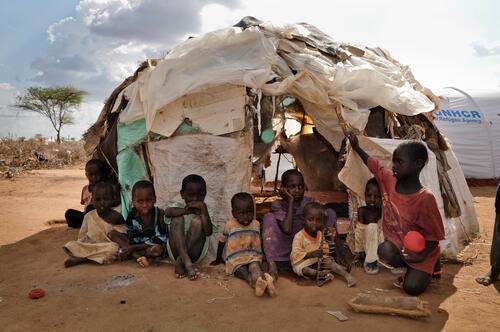
Newly arrived refugee children sit outside a makeshift shelter, near Dagahaley refugee camp, Dadaab, Kenya.
Refugees, IDPs and people on the move

Sixty years on, governments still failing refugees

This week, world leaders will gather in Geneva to commemorate 60 years of the UN Convention relating to the Status of Refugees. Yet it is an anniversary the world’s 15.1 million refugees have little reason to celebrate. Today, states are increasingly shutting their borders and restricting the assistance they give to refugees and people seeking asylum. Project Update - 8 Dec 2011
 
msf-placeholder
South Sudan

MSF starts emergency medical response as thousands of refugees flee conflict

Over the past two weeks thousands of refugees have crossed the border from Sudan into the newly independent South Sudan. Project Update - 1 Dec 2011
 
msf-placeholder
Türkiye

MSF responds to mental health needs after quakes

In the aftermath of the earthquakes that have hit eastern Turkey, Médecins Sans Frontières (MSF) is extending its activities in the region through the provision of mental healthcare. Collaborating with the Turkish Ministry of Health and the Van Crisis Coordination Centre, MSF teams will address urgent needs for mental health support in Van. Project Update - 29 Nov 2011
 
msf-placeholder
Libya

In aftermath of war, MSF's medical work still sorely needed

Médecins Sans Frontières (MSF) continues to provide medical care to migrants, internally displaced persons, and prisoners in the Libyan cities of Tripoli and Misrata. MSF teams are also running a mental health program after many months of violence in the country.
MSF expects mental health needs to increase over the next few months, with levels remaining high over the long term. According to MSF, only an early, focused treatment strategy will help prevent war-related trauma from becoming generally prevalent and therefore more difficult to treat.
Project Update - 29 Nov 2011
Four mothers posing in a corridor of the Hospital in Bili. All four of them are staying in the hospital with their child, that's suffering from a severe case of malaria. Since the beginning of the project in 2016, the pediatric ward already treated more than 4.000 cases of complicated/severe form of malaria.
Médecins Sans Frontières (MSF)

Independent medical humanitarian assistance

We provide medical assistance to people affected by conflict, epidemics, disasters, or exclusion from healthcare. Our teams are made up of tens of thousands of health professionals, logistic and administrative staff - most of them hired locally. Our actions are guided by medical ethics and the principles of independence and impartiality. We are a non-profit, self-governed, member-based organisation.

Learn more