


Ebola disease in DRC: find out how we're responding
Learn more
1993 Results
 
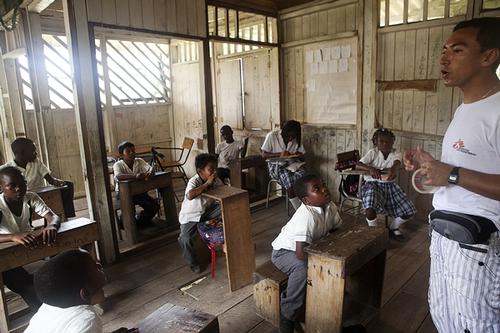
Children`s workshop on sexual violence in a school in Cauca department, Colombia.

For over 50 years, civilians have been caught up in the daily violence of Colombia's armed conflict. People from the most affected regions are exposed to forced displacement, massacres, murders, mines, kidnappings, threats and sexual violence. The state fails to respond effectively to their medical and psychological needs, and these vulnerable populations are left to face alone the repercussions of violence in their daily life.
MSF is one of the few international medical-humanitarian organizations that provides primary and mental healthcare in some of the regions most affected by conflict. During 2012, its teams ran mobile clinics and permanent and semi-permanent health posts in Cauca, Nariño, Caquetá and Putumayo.
The findings of MSF’s report “The less visible wounds: Mental health, violence and conflict in southern Colombia”, based on the testimonies of more than 4,400 patients treated in MSF’s mental health programmes in the south of the country between January and December 2012, show that the majority (67%) had experienced one or more violence-related events and had daily exposure to various risk factors associated directly or indirectly with the dynamics of the conflict.
Colombia

An invisible problem

The psychological consequences of violence on ordinary people in the south of the country Project Update - 8 Jul 2013
 
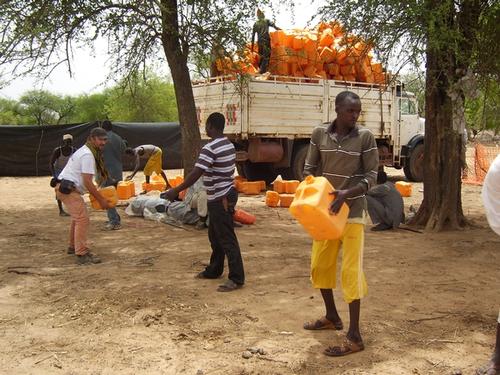
Relief goods, including water cans, arrive at the MSF base in Tissi, Chad.
MSF teams provide medical and humanitarian care to the refugee, returnee and local population in Tissi.
Since early 2013, multiple inter-ethnic conflicts have been occurring across the border in Darfur. Some of those conflicts are responsible for the current influx of 50 thousand displaced people into the area, who are living in makeshift camps along the border. MSF is providing primary and secondary care to patients with a focus in violent injuries, pregnant women and children under the age of five.
Chad

Conditions remain unacceptable for refugees in Tissi

Tens of thousands of refugees and returnees in Chad, who have fled violent clashes in neighbouring Darfur since early January, are still desperately in need of clean water, proper shelter and access to healthcare. Project Update - 24 Jun 2013
 
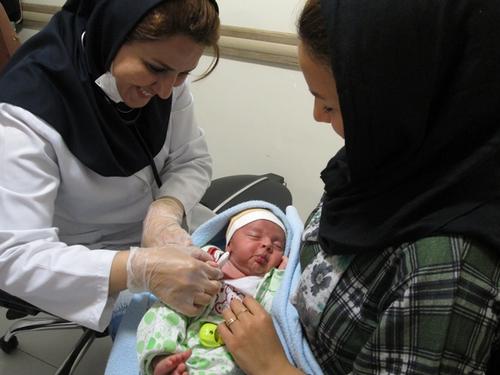
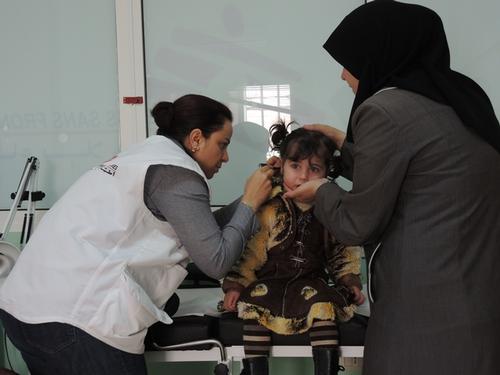
*** Local Caption ***Triage.<br/> Darvazeh Ghar district, south of the Grand Bazaar of Tehran, is one of the poorest in the Iranian capital. There coexist daily workers, traders, street children, sex workers and drug users. Marginalized, destitute and sometimes without identity papers, these people have very limited access to basic health care. In April 2012, Doctors without borders/Médecins  Sans Frontières (MSF) opened in this area a health facility dedicated to women and children under five years old with a specific attention to those most at risk of infectious diseases such as HIV/aids , tuberculosis or hepatitis. MSF teams receive on average sixty patients per day: antenatal and postnatal care, family planning counseling, and pediatric consultations. In one year, more than 12,000 consultations were carried out, including nearly 1,700 gynecology cases. A quarter of the patients are children under five years old.
Iran

Surviving in Tehran’s southern neighborhoods

Project Update - 21 Jun 2013
 
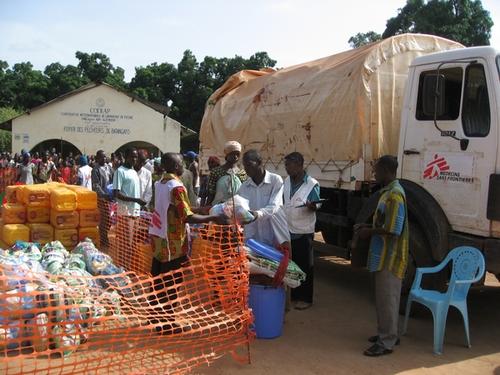
NFI distribution in villages close to Batangafo to displaced people affected by the clashes between farmers and nomadic cattle herders.
Central African Republic

MSF distributes essential items to 5000 displaced in Batangafo

MSF teams in Batangafo, Central African Republic, have just completed a distribution of essential items, including plastic sheeting, mosquito nets and blankets to more than five thousand people who were forced to flee their villages after they were burned down during heavy fighting with nomadic herdsmen coming from Chad. Project Update - 21 Jun 2013
 
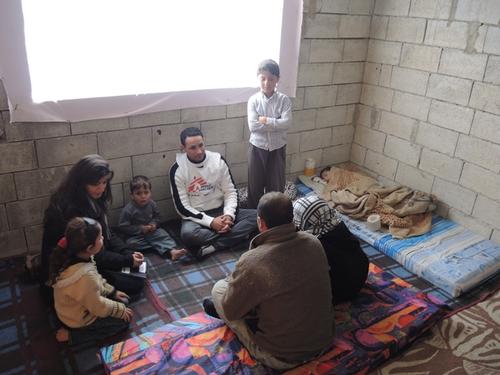
Syrian families have taken refuge in a building under construction in Al Marj. MSF social workers talk with the families, assessing their needs and referring them to MSF clinics if needed.
Lebanon

“We are not tourists – we are people fleeing a war”

For many refugees from Syria, getting a roof over their heads and keeping their families fed is a massive struggle. On World Refugee Day, MSF warns that dire living conditions are affecting people’s health. Project Update - 20 Jun 2013
 
 *** Local Caption *** Bangui avril 2013, Intervention d'urgence de MSF dans l'Hopital Communautaire de Bangui, après le coup le coup d'Etat survenu le 24 mars en RCA<br> MSF emergency operation in the Hopital Communautaire in Bangui, after the March 24 coup.
Central African Republic

Critical needs in the east of the country

Project Update - 14 Jun 2013
 
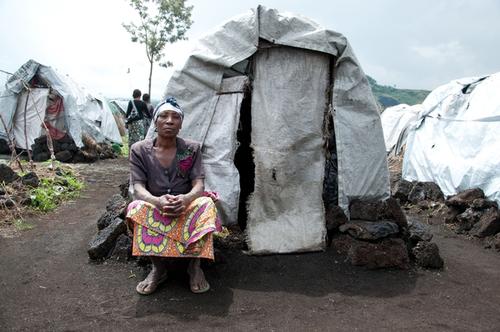
A women sitting in front of her shelter.

Since the end of 2012, MSF works in the Bulengo camp for displaced persons where it provides primary health care in mobile clinics as well as hospitalisation, vaccination, maternal health and care to survivors of sexual violence.
Democratic Republic of Congo

Situation still critical for displaced persons in Goma

Project Update - 7 Jun 2013
 
Victorine and her family fled their home during four days of violent clashes in late May between the Congolese army and the M23 rebel group around the city of Goma, in eastern Democratic Republic of Congo (DRC). Along with 4,500 others, she has taken refuge in Sotraki stadium, on the outskirts of the city. 
Victorine left her home village of Kibati, north of Goma, with her husband and four children. “We heard bombing, we were scared,” she says. Bullets were flying and bombs were dropping on houses. A neighbour was killed by a stray bullet.
Tensions have been high in the village of Kibati for several months. “Life is dangerous and there is suffering,” says Victorine, who grew soya and haricot beans in the fields outside the village to feed her family. “When we want to go and work in the fields, there are rebels who harass us,” she says. Threats, extortion and rape were commonplace.
As she waits in the stadium for the situation to improve, Victorine's primary concern is to find food for her children. “If I had money,” she says, “I could buy food at the market.” All she managed to bring with her from home was a bundle of clothes. 
The previous day, she brought two of her children to MSF’s mobile clinic, set up in a tent to provide basic healthcare to those sheltering in the stadium. Both children were sick with malnutrition and diarrhoea, most likely as a result of their poor living conditions since they left the village, with not enough food, no toilets and no clean water. Last night, the family slept out in the open. “Right here,” says Victorine, pointing to the patch of dirt where she is sitting now.
Democratic Republic of Congo

"Life is dangerous, there is suffering"

Project Update - 7 Jun 2013
 
In the Dar-al-Zahraa clinic in Tripoli, Dr Maha Naja from MSF examines a Syrian little girl who came with her mother. 

Dr Maha Naja, MSF: “We see many cases of enuresis (bedwetting) amongst children. We also see a lot of dermatological diseases, like leishmania and scabies that is linked to bad hygiene and the confinement of families in very small living spaces.  We also see other parasitosis, affecting primarily children. There are also nutritional disorders and deficiencies because of the refugees’ big financial problems. As of June, we can expect many gastro-enteritis cases during the period of high humidity and heat, with parasitosis.”
Lebanon

Abundant medical needs among Syrian refugees and victims of local conflict

More than 10,600 Syrian families who have fled their country have taken refuge in Tripoli, Lebanon’s second-largest city, located approximately 30 kilometres from the Syrian border. Its population includes 500,000 Lebanese citizens, Palestinian refugees living in the Baddawi and Nahr el-Bared camps, and, now, more than 42,000 Syrians who have sought refuge in the city. Project Update - 4 Jun 2013
 
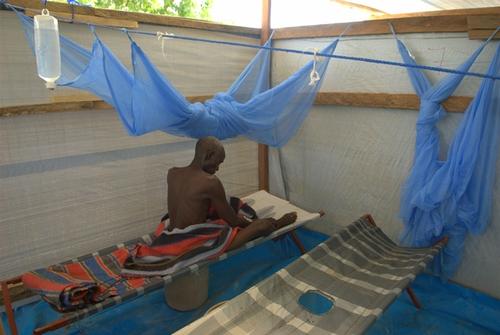
Niger: Zermou; centre de traitement du cholera.
  *** Local Caption ***   MSF et l ONG médicale nigérienne Forsani y gèrent une unité d hospitalisation et soutiennent trois centres de santé du ministère de la Santé nigérien.
Niger

MSF treats cholera patients

Cholera has broken out in northern Niger in an area which is hosting large number of Malian refugees and which was hit by a cholera epidemic last year. Project Update - 23 May 2013
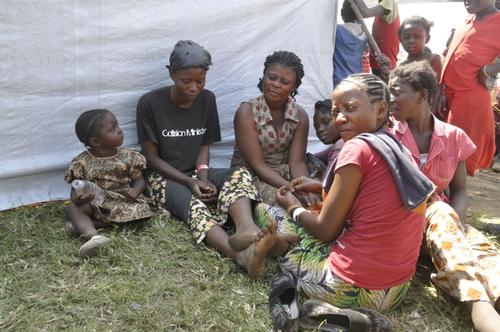
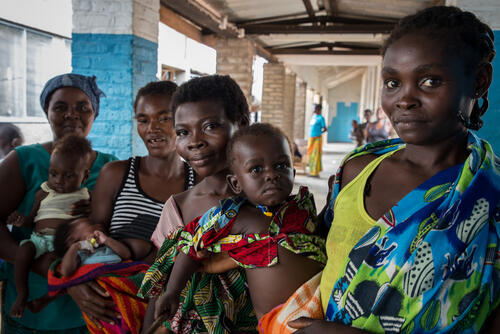
Four mothers posing in a corridor of the Hospital in Bili. All four of them are staying in the hospital with their child, that's suffering from a severe case of malaria. Since the beginning of the project in 2016, the pediatric ward already treated more than 4.000 cases of complicated/severe form of malaria.
Médecins Sans Frontières (MSF)

Independent medical humanitarian assistance

We provide medical assistance to people affected by conflict, epidemics, disasters, or exclusion from healthcare. Our teams are made up of tens of thousands of health professionals, logistic and administrative staff - most of them hired locally. Our actions are guided by medical ethics and the principles of independence and impartiality. We are a non-profit, self-governed, member-based organisation.

Learn more