


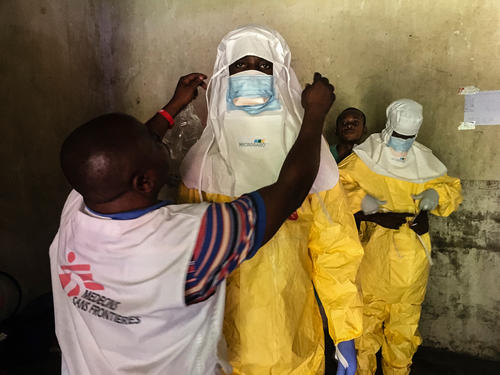

Ebola disease in DRC: find out how we're responding
Learn more
214 Results
 
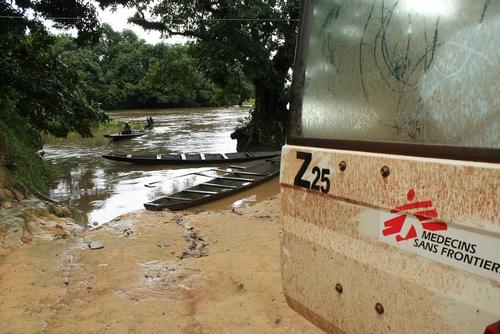
Driving with the equipment from the Liberian shore to Foya where MSF is running a Ebola care center.
Ebola and haemorrhagic fevers

Tackling the epidemic across country borders

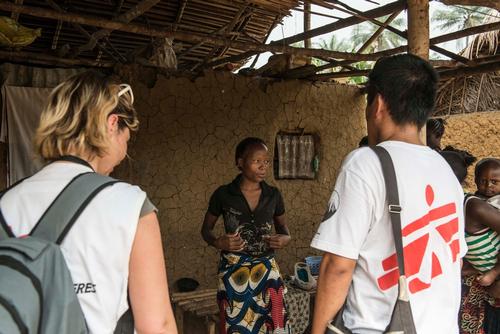
MSF is working along the porous border between Guinea and Sierra Leone to improve the cross-border cooperation in the region. Project Update - 16 Apr 2015
 
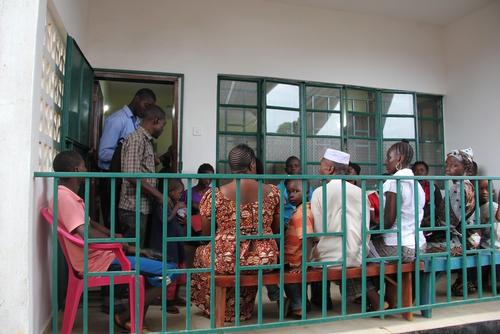
People wait for a consultation at MSF’s survivor clinic in Freetown
Ebola and haemorrhagic fevers

Surviving Survival - Life after recovery

Dr Maria Barstch spends her days in the small house that serves as MSF’s Ebola survivor clinic in Freetown, Sierra Leone. Project Update - 13 Apr 2015
 
Ebola is finally declining in Liberia, although gaps remain in infection control and prevention, surveillance, case investigation and contact tracing. Access to medical care for non-Ebola patients is still a major issue due to the collapse public health system.
Ebola and haemorrhagic fevers

“We need to make sure that no one slips through the cracks”

Numbers of Ebola patients may be going down, but epidemiologist Amanda Tiffany, who works for MSF’s Epicentre, explains why every last contact needs to be traced to help bring the epidemic to an end. Project Update - 9 Feb 2015
 
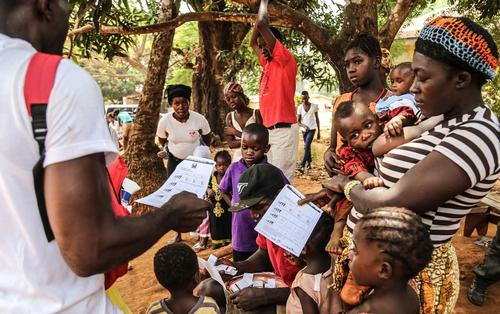
Along with the Ministry of Health, MSF is distributing 1.8 million antimalarial treatments in Sierra Leone. This is the largest distribution in an Ebola oubreak. The picture is taken in Tombo Town.
Sierra Leone

Malaria - the other epidemic

MSF distributes 1.8 million antimalarial treatments in midst of Ebola outbreak. Project Update - 23 Jan 2015
 
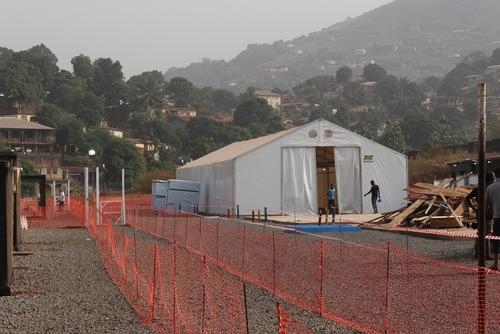
Opening of the MSF Ebola treatment centre in Kissy, Freetown.
Sierra Leone

MSF opens Ebola treatment centre and maternity in an Ebola hotspot

New centre to provide quality Ebola and obstetric care. Project Update - 8 Jan 2015
 
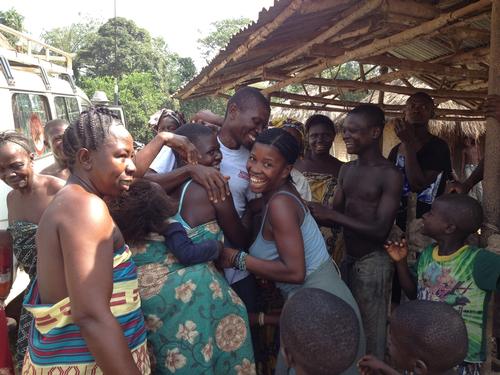
An Ebola survivor returns home. In the bag is a mosquito net, multivitamins, a bottle of water, condoms, sheets, soap, a toothbrush, toothpaste, a towel, a blanket, biscuits and ready-to-use therapeutic food to help build up their strength.
Ebola and haemorrhagic fevers

Survivors receive mixed homecoming welcome

Moses’ family has been hard hit by Ebola. Four of his family were infected with the virus. His father and brother died, but Moses and his sister both survived. Moses was recently discharged from MSF’s Ebola management centre in Bo, Sierra Leone and made the journey back to his home village, accompanied by MSF health promoter Esmee de Jong Project Update - 31 Dec 2014
 
msf-placeholder
Ebola and haemorrhagic fevers

Clinical trial for potential Ebola treatment started in MSF clinic in Guinea

The trial is taking place at MSF’s Ebola Treatment Centre in Guéckédou. Project Update - 26 Dec 2014
 
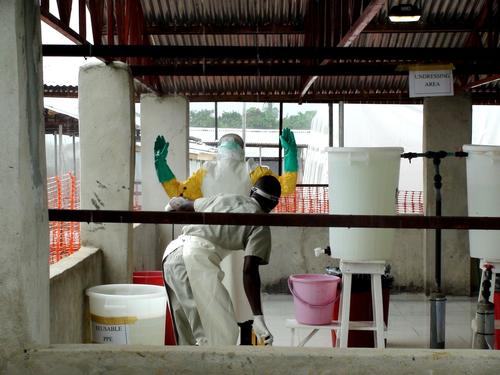
A member of the hygienist team in the MSF Ebola case management centre in Bo, Sierra Leone has left the High Risk Zone. In the undressing area he is sprayed with chlorine before undressing safely with the help of his colleague.
Ebola and haemorrhagic fevers

On the frontline against Ebola

What hygienists in an Ebola case management centre do, and why their job is so important. Project Update - 4 Dec 2014
 
msf-placeholder
Mali

MSF expands activities to fight Ebola outbreak

Swift and coordinated action is of paramount importance in the days immediately after new cases are reported, the medical organisation says Project Update - 20 Nov 2014
 
Staff getting dressed in full PPE in the ETC (Ebola Treatment Centre) in Bikoro.
Ebola and haemorrhagic fevers

Learn about our Ebola protective equipment

Project Update - 12 Nov 2014
Four mothers posing in a corridor of the Hospital in Bili. All four of them are staying in the hospital with their child, that's suffering from a severe case of malaria. Since the beginning of the project in 2016, the pediatric ward already treated more than 4.000 cases of complicated/severe form of malaria.
Médecins Sans Frontières (MSF)

Independent medical humanitarian assistance

We provide medical assistance to people affected by conflict, epidemics, disasters, or exclusion from healthcare. Our teams are made up of tens of thousands of health professionals, logistic and administrative staff - most of them hired locally. Our actions are guided by medical ethics and the principles of independence and impartiality. We are a non-profit, self-governed, member-based organisation.

Learn more