



Ebola disease in DRC: find out how we're responding
Learn more
1794 Results
 
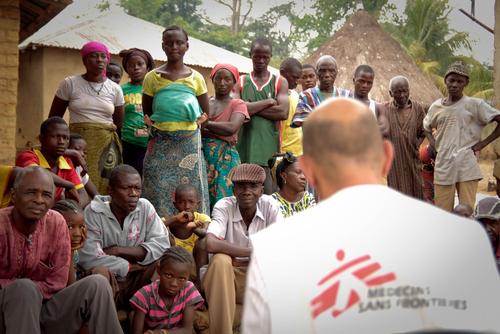
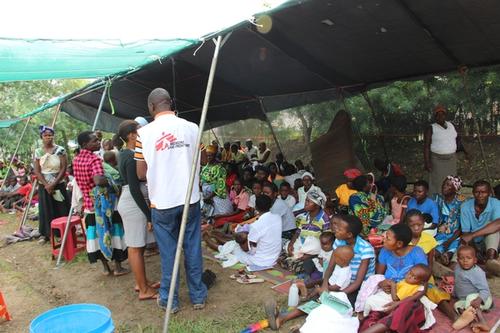
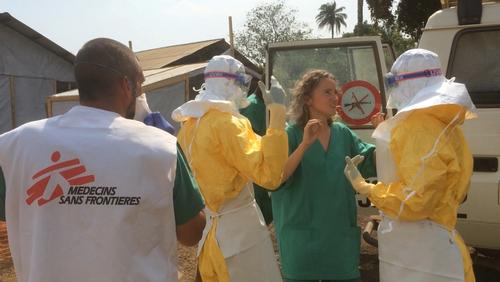
Epidemiologist Michel Van Herp explains to the population in Gbando what is Ebola and how to avoid transmission.

The Ebola epidemic confirmed by the Ministry of Health on March 22 is the first to affect Guinea. The priority of the teams on site is to identify patients with Ebola symptoms and isolate them, while providing high-quality care. In cooperation with the Ministry of Health, MSF created an isolation facility in Guéckédou and is setting up another in Macenta. Both towns are in the Forestière region of southern Guinea. Mobile teams are also evaluating the situation in Kissidougou and Nzérékoré and are monitoring bordering countries closely, particularly Sierra Leone and Liberia, where suspected cases have been reported.
Ebola and haemorrhagic fevers

MSF resumes activities in Ebola centre in southeast Guinea

MSF resumes activities in a treatment centre in southeast Guinea, after it was forced to suspend it’s work late last week following protests by a section of the local population. Press Release - 11 Apr 2014
 
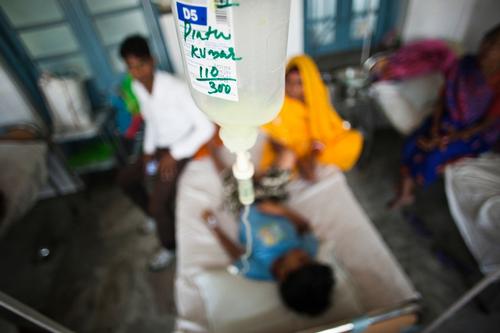
Kala Azar in Bihar, India. Sadar Hospital, Vaishali District.
In partnership with the State Health Society-Bihar, MSF has managed a Kala Azar diagnosis and treatment project in Vaishali District since 2007, and has treated more than 10,000 patients free-of-charge within government facilities. L-AmB (liposomal amphotericin B) has been used as a first line treatment. However, L-AmB is still very expensive and in order to investigate potential alternative treatments, MSF, in August 2012, partnered with the Bihar State Health Society and DNDi (Drugs for Neglected Diseases initiative) to further empirical research on safer and more effective treatments for Kala Azar in India. Kala azar is a disease endemic to Bihar.
India

Better detection, diagnosis and treatment needed for neglected complication of kala azar in Bihar

MSF is calling on the Bihar government and NVBDCP to recognise and treat Post Kala azar Dermal Leishmaniasis. Press Release - 10 Apr 2014
 
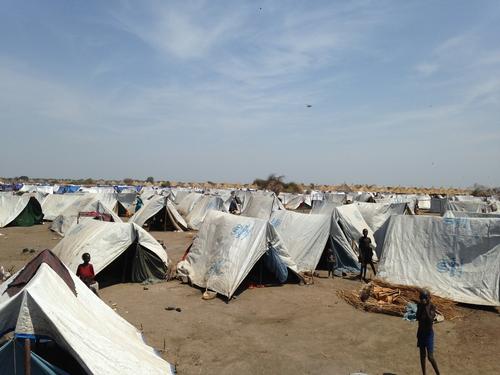
Luetchor refugee camp.<br> MSF has set up an outpatient and inpatient medical facility with a capacity of 75 bed in Luetchor refugee camp, serving a population of approximately 40 000 south Sudanese refugees as of April 1st 2014.  The refugees have fled violence, persecutions and food shortage in Jonglei, Upper Nile and Unity in neighboring   South Sudan
Ethiopia

Urgent assistance needed for South Sudanese refugees

Ethiopia: assistance needed for South Sudanese refugees Press Release - 10 Apr 2014
 
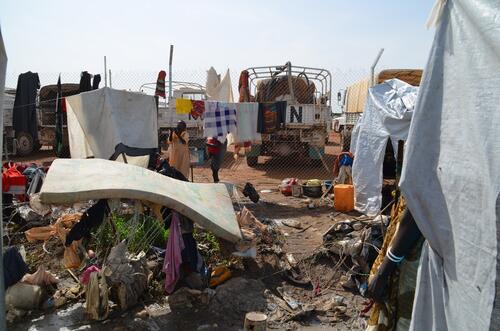
IDPs are living inside the Protection of Civilians area of the UNMISS compound.

MSF is providing medical care in two camps in Juba, South Sudan, where 40,000 people are seeking refuge from widespread fighting that erupted in mid-December. Over 27,000 people are living in deplorable conditions in Tomping camp. The first rains of the season have left a significant part of the camp flooded and further degraded the poor sanitation conditions.
Sudan

Shameful attitude to vulnerable displaced shown by leadership of United Nations Mission in South Sudan (UNMISS)

Senior UNMISS officials have refused to improve living conditions for 21,000 displaced people living in a flood-prone part of a UN compound. Press Release - 9 Apr 2014
 
MSF is the only medical organization working in the M'Poko camp (Bangui airport area), where around 100,000 IDPs - who fled early december's violences and clashes in the capital - live in extremely precarious conditions. Every day, our teams conduct around 500 consultations, a hundred dressings and 7 deliveries.
Hepatitis C

Global response to hepatitis C hangs on access to new oral drugs

Global response to hepatitis C hangs on access to new oral drugs Press Release - 8 Apr 2014
 
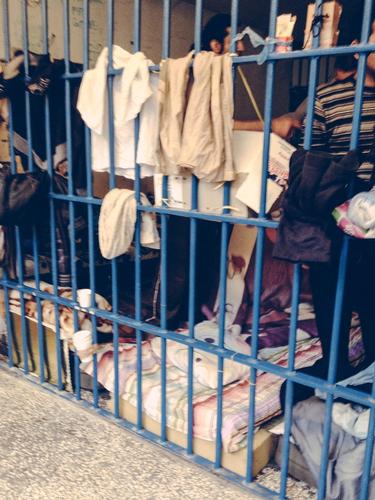
In Greece, MSF has been responding since 2008 to the urgent medical and humanitarian needs of newly arrived migrants, as well as to asylum seekers and migrants in administrative detention. During 2013 and 2014, MSF worked in six immigration detention facilities in the north of Greece, and made assessment visits to 27 regular and border police stations, coastguard facilities and pre-removal centers across Greece.
In April 2014, MSF published the report “Invisible Suffering”, which highlights the massive impact of detention on the physical and mental health of migrants. The report also points out the gaps in healthcare provision and the absence of medical assessments, which lead to detainees with serious medical conditions being neglected or even being forced to interrupt their treatment.
Greece

MSF denounces Greek authorities’ decision to detain migrants indefinitely

MSF denounces Greek authorities’ decision to detain migrants indefinitely. Press Release - 8 Apr 2014
 
Following an attack in Kamango village in DRC the 11th of July around 50000 people fled and crossed the border to take refuge in Uganda  along the border. Most of refugees stayed at bordering areas within the hosting community and in a transit camp called Bubukwanga, 18 km from the Congolese border (close to Bundibugyo town) where 17000 have been registered by the UNHCR. MSF team has started an emergency intervention in the Transit Centre of  Bubukwanga since 18th of July : OPD (300 consultations per day (malaria, Acute respiratory infection, water diarrheas, malnutrition), IDP (30 beds), measle vaccination etc + water supply and sanitation.
Democratic Republic of Congo

MSF urges military personnel conducting operations in the Beni region to take every precaution to protect hostages’ lives

MSF urges military personnel conducting operations in the Beni region to take every precaution to protect hostages’ lives Press Release - 8 Apr 2014
 
Vaccination  à Bitoye au Tchad.<br/>Vaccination campaign in Betoye, southern Chad. *** Local Caption *** An estimated 6,000 refugees who fled violence in CAR settled in Bitoye in southern Chad. MSF provides in refugees camp in Bitoye primary health care and conducted in February 2014 a vaccination campaign against measles, meningitis A and polio.
Chad

Despite mass vaccination, measles cases in N’djamena not decreasing

Efforts to contain an ongoing measles epidemic affecting N’djamena must be immediately stepped up. Press Release - 1 Apr 2014
 
In Greece, MSF has been responding since 2008 to the urgent medical and humanitarian needs of newly arrived migrants, as well as to asylum seekers and migrants in administrative detention. During 2013 and 2014, MSF worked in six immigration detention facilities in the north of Greece, and made assessment visits to 27 regular and border police stations, coastguard facilities and pre-removal centers across Greece.
In April 2014, MSF published the report “Invisible Suffering”, which highlights the massive impact of detention on the physical and mental health of migrants. The report also points out the gaps in healthcare provision and the absence of medical assessments, which lead to detainees with serious medical conditions being neglected or even being forced to interrupt their treatment.
Greece

Greece must end systematic and prolonged detention of migrants, says MSF

Prolonged detention of migrants and asylum seekers has devastating consequences, MSF warns. Press Release - 1 Apr 2014
 
The Ebola epidemic confirmed by the Ministry of Health on March 22 is the first to affect Guinea. The priority of the teams on site is to identify patients with Ebola symptoms and isolate them, while providing high-quality care. In cooperation with the Ministry of Health, MSF created an isolation facility in Guéckédou and is setting up another in Macenta. Both towns are in the Forestière region of southern Guinea. Mobile teams are also evaluating the situation in Kissidougou and Nzérékoré and are monitoring bordering countries closely, particularly Sierra Leone and Liberia, where suspected cases have been reported.
Guinea

Mobilisation against an unprecedented Ebola epidemic

Eight ebola cases have been confirmed in the capital Conakry, MSF now facing an unprecedented epidemic. Press Release - 31 Mar 2014
Four mothers posing in a corridor of the Hospital in Bili. All four of them are staying in the hospital with their child, that's suffering from a severe case of malaria. Since the beginning of the project in 2016, the pediatric ward already treated more than 4.000 cases of complicated/severe form of malaria.
Médecins Sans Frontières (MSF)

Independent medical humanitarian assistance

We provide medical assistance to people affected by conflict, epidemics, disasters, or exclusion from healthcare. Our teams are made up of tens of thousands of health professionals, logistic and administrative staff - most of them hired locally. Our actions are guided by medical ethics and the principles of independence and impartiality. We are a non-profit, self-governed, member-based organisation.

Learn more