



Ebola disease in DRC: find out how we're responding
Learn more
1794 Results
 
msf-placeholder
HIV/AIDS

Gilead licence expands access, but several countries left out

Excluded countries should be ready to issue compulsory licences to access needed drugs Press Release - 12 Jul 2011
 
msf-placeholder
Libya

Trapped in transit: the neglected victims of the war in Libya

As fighting continues to force civilians out of Libya, the international medical humanitarian organisation Médecins Sans Frontières (MSF) calls the countries engaged in this war for a stronger humanitarian response and more effective protection for the people who are fleeing the conflict. Press Release - 30 Jun 2011
 
msf-placeholder
Libya

MSF condemns any initiative that would send boat people back to Libya

MSF condemns the terms of the bilateral agreement signed on June 17 between Italy and the Libyan National Transition Councill intended to provide mutual aid and cooperation in the struggle against illegal immigration, specifically by repatriating illegal immigrants. Press Release - 23 Jun 2011
 
msf-placeholder
Greece

More than 60 percent of the medical problems faced by detained migrants in Evros, Greece, caused by inhumane living and hygiene conditions

MSF urges Greek authorities to ensure dignified living conditions in detention facilities, including appropriate accommodation, sufficient distribution of food, clothing and personal hygiene items, and adequate periods of time outdoors. Press Release - 15 Jun 2011
 
msf-placeholder
Haiti

MSF alarmed by resurgence of cholera

"Since May 29, in one week, MSF has treated almost 2,000 patients in the capital, and we have also been asked to intervene in other areas in the interior of the country, " said MSF head of mission Romain Gitenet. As of the end of May, cholera has killed nearly 5,000 people from among the 300,000 cases reported in the country. Three per cent of the country’s population have contracted the disease. Press Release - 3 Jun 2011
 
msf-placeholder
Child health

Child mortality observed to be 50% lower with better food

MSF Niger study reinforces that high-quality nutritious foods should be a pillar in Global Fight Against Childhood Mortality; G8 countries should ensure that appropriate foods reach vulnerable children Press Release - 24 May 2011
 
msf-placeholder
Refugees, IDPs and people on the move

Europe must accept the boat people fleeing Libya

An open letter by MSF addressed to the leaders of the states of the European Union involved in the war in Libya is being published today in 11 newspapers across Europe. In the letter, the organisation criticises contradictory European policies, which claim to be conducting a war to protect civilians, whilst closing its borders to the victims of that same war, on the pretext of preventing a massive influx of illegal immigrants. Press Release - 19 May 2011
 
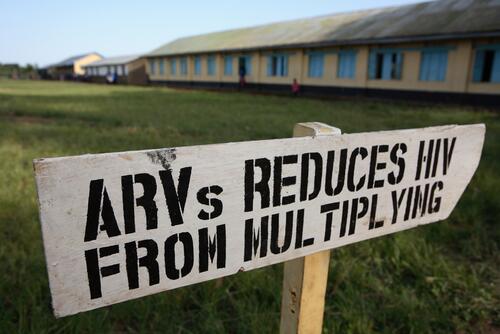
PATONGO, PADER DISTRICT, UGANDA, JUNE 22, 2006 :  Jane Adong is one of the rare ARV recipient in Patongo  and she shows the drug regimen she must take every day in Patongo IDPs camp in Pader District , Uganda on June 22, 2006. She works as a teacher and loves to give music lessons to the school choir. ARV drugs are not yet available in the area because of the ongoing civil war waged by the LRA (Lord's Resistance Army) in Northern Uganda. There are aproximatly 30 to 35,000 internally displaced people living in Patongo IDP camp and  over a million living in different camps because of the civil war waged by the LRA in Northern Uganda.   
After nearly two decades of conflict between the government and the Lord's Resistance Army (LRA), an estimated 90-95% of the population in northern Uganda now lives in overcrowded camps for displaced people, some within a kilometer of their homes. Many in the three most affected districts of Kitgum, Gulu, and Pader are almost entirely dependent on outside assistance for health care, water and sanitation services, and food. Starting in October 2004, in Kitgum district, MSF opened clinics in Orom, Agoro, Lokung, Mucwini, and most recently Potika, to help those most vulnerable to malaria: children under five and pregnant women. In Patongo, where the overcrowded camp houses 35-40,000 displaced people, MSF provides essential medical care and has drilled 10 wells with pumps that provide up to 600,000 liters of water each day.
HIV/AIDS

Fragile progress as several countries upgrade to better AIDS treatment

A report released today by the international medical humanitarian organisation Médecins Sans Frontières (MSF) revealed that several countries hardest hit by the AIDS epidemic are improving HIV treatment to reduce deaths and illness – but a lack of support from donors prevents many from making vital changes. Press Release - 11 May 2011
 
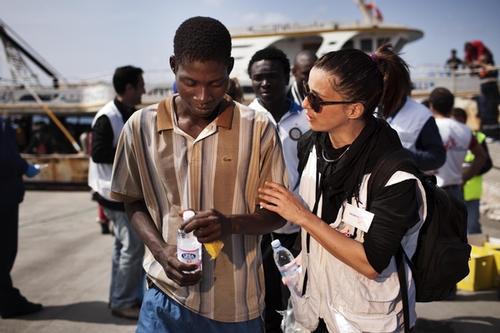
On April 19th 2011, 760 migrants have arrived from Libya after travelling for three days on an old fishing boat. Among the passengers, MSF counted seven children, 63 women; one of them pregnant. The majority of the migrants are originally from sub-Saharan Africa. This is the biggest boat landing ever occuring in Lampedusa. An MSF team consisting of a medical doctor, a nurse, two cultural mediators, a logistician and a field coordinator performs medical triage in the harbour and distributes non food items and water to the newly arrived migrants.
Italy

Italy must drastically improve conditions facing refugees, asylum seekers and migrants fleeing North Africa, including Libya

When 12 boats carrying 2,665 refugees, asylum seekers and migrants landed on Italian shores, a further 715 people were rescued from another off-shore boat. Once again, MSF calls on Italian authorities to drastically improve reception conditions for new arrivals, particularly for the most vulnerable - women, children, unaccompanied minors and victims of violence. Press Release - 3 May 2011
 
msf-placeholder
Malaria

Revolutionary advance in severe malaria treatment: Using artesunate instead of quinine could save 200,000 lives annually

In its new report Making the Switch, MSF calls on African governments to follow new World Health Organization (WHO) guidelines, and switch from the far less effective quinine to artesunate, which could avert nearly 200,000 deaths each year. MSF also calls on WHO and donors to support governments so this urgent treatment change can happen quickly. Press Release - 19 Apr 2011
Four mothers posing in a corridor of the Hospital in Bili. All four of them are staying in the hospital with their child, that's suffering from a severe case of malaria. Since the beginning of the project in 2016, the pediatric ward already treated more than 4.000 cases of complicated/severe form of malaria.
Médecins Sans Frontières (MSF)

Independent medical humanitarian assistance

We provide medical assistance to people affected by conflict, epidemics, disasters, or exclusion from healthcare. Our teams are made up of tens of thousands of health professionals, logistic and administrative staff - most of them hired locally. Our actions are guided by medical ethics and the principles of independence and impartiality. We are a non-profit, self-governed, member-based organisation.

Learn more