



Ebola disease in DRC: find out how we're responding
Learn more
1794 Results
 
msf-placeholder
South Sudan

Dire medical needs in under-prepared refugee camps

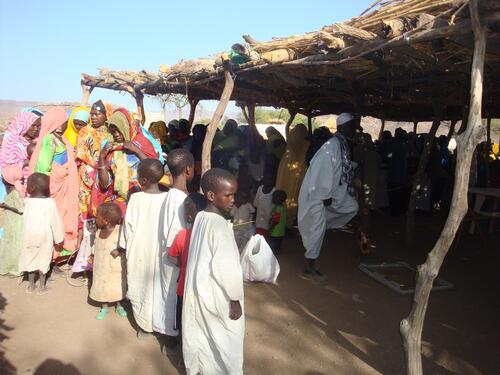
Tens of thousands of new refugees crossing from Sudan into South Sudan are finding refugee camps full and unable to provide basic life-sustaining essentials. The situation in Upper Nile and Unity states is rapidly developing into a full-blown crisis as water supplies start to run out and relief is wholly insufficient. For people arriving in an already weakened state, and when shelter, food and water are lacking, medical care is not enough. Press Release - 13 Jun 2012
 
msf-placeholder
Syria

Treating the wounded, a forgotten priority

MSF calls for the Syrian government and the international community to make treating the wounded a priority. Press Release - 12 Jun 2012
 
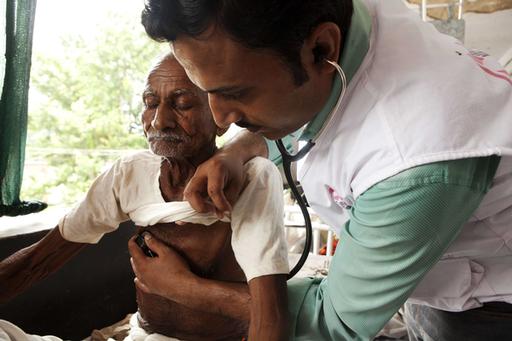
Since July 2007, MSF has been running a kala azar diagnostic and treatment project in Vaishali district, in the centre of the Indian state of Bihar. In the four years, about 8,000 patients have been treated at the Sadar Hospital, and in five MSF-supported health centres. The initial cure rate of kala azar cases is at 98 per cent. Kala azar is a disease endemic to Bihar. Transmitted by the sand fly, the disease mainly affects the spleen and, if left untreated, is fatal for virtually all patients.
Neglected diseases

New MSF report highlights how to break cycle of neglect

To break the vicious cycle that leaves tropical diseases neglected, existing programmes that diagnose and treat patients need to be expanded and medical research to develop simpler, more effective tools needs to be supported, according to a new report 'Fighting Neglect' released by MSF. Press Release - 11 Jun 2012
 
msf-placeholder
South Sudan

Nowhere to settle for 30,000 new refugees

MSF calls on the United Nations refugee agency (UNHCR) to identify a suitable place of refuge immediately for the 30,000 new refugees who have crossed the border from Sudan’s Blue Nile State into South Sudan’s Upper Nile State over the past two weeks. Around 2,000 people are crossing the border daily, in desperate need of humanitarian aid. Press Release - 4 Jun 2012
 
msf-placeholder
Guinea

MSF vaccinates 117,000 people against cholera

MSF has vaccinated 117,000 people against cholera in the region of Boffa, 150 km north of Conakry, the Guinean capital. This is the first time that people in Africa have been protected during a cholera outbreak by a two-dose oral vaccine. Press Release - 1 Jun 2012
 
MSF began providing medical assistance in the Jebel Si in 2005 through a
health post and in 2008 began running a rural hospital in Kaguro and five
health posts. These are the only health facilities in this area, and serve
a permanent population of approximately 100,000 people, as well as about
10,000 seasonal nomads all of whom are entirely dependent on MSF for
healthcare and emergency assistance.

As a result of the growing obstacles encountered over the last year due to
restrictions by the authorities, MSF has been forced to suspend most of its
medical activities in the region of Jebel Si, in North
Darfur State, Sudan. As MSF is the sole health provider in the region,
thousands of people are left without access to essential healthcare.
Sudan

100,000 people left without essential healthcare in Jebel Si, North Darfur

As a result of increasing restrictions imposed by Sudanese authorities, the medical humanitarian organisation Médecins Sans Frontières (MSF) has been forced to suspend most of its medical activities in the conflict area of Jebel Si, in Sudan’s North Darfur state. MSF is the sole health provider in the region. Press Release - 22 May 2012
 
msf-placeholder
Yemen

MSF treats victims of violence and fighting

The increase of violence and fighting in southern Yemen has led to a high number of victims and wounded among civilians. MSF teams already received and treated 8 severely injured patients at Aden hospital, transferred from Jaar Health Post, and 43 were received at Lawdar Hospital, both supported by MSF. Press Release - 18 May 2012
 
msf-placeholder
Vaccination

New global vaccine strategy glosses over basic immunisation gaps

A new, ten-year, multi-billion dollar action plan for global vaccination may fail to deliver if it does not directly address the weaknesses in routine immunisation programmes. Nineteen million children are being missed each year and this challenge must be explicitly addressed, the medical humanitarian organisation Médecins Sans Frontières (MSF) said today. Press Release - 15 May 2012
 
msf-placeholder
Syria

Safety of wounded and medical workers must be prioritised

Wounded people and medical workers are still being targeted and threatened in Syria. MSF insists that all parties to the conflict must fully respect the physical integrity of wounded people, doctors and healthcare facilities. MSF calls for increased political and diplomatic efforts to ensure the safety of patients and medical workers, without the use of force. Press Release - 14 May 2012
 
msf-placeholder
Nigeria

Promised funds must be released to resolve the Zamfara lead poisoning crisis

An international conference on the Zamfara lead poisoning crisis, of which Médecins Sans Frontières (MSF) was the lead organiser, concluded on Thursday. The conference delegates endorsed a clear action plan calling for Nigerian government commitment to resolve the crisis. Press Release - 11 May 2012
Four mothers posing in a corridor of the Hospital in Bili. All four of them are staying in the hospital with their child, that's suffering from a severe case of malaria. Since the beginning of the project in 2016, the pediatric ward already treated more than 4.000 cases of complicated/severe form of malaria.
Médecins Sans Frontières (MSF)

Independent medical humanitarian assistance

We provide medical assistance to people affected by conflict, epidemics, disasters, or exclusion from healthcare. Our teams are made up of tens of thousands of health professionals, logistic and administrative staff - most of them hired locally. Our actions are guided by medical ethics and the principles of independence and impartiality. We are a non-profit, self-governed, member-based organisation.

Learn more