




Ebola disease in DRC: find out how we're responding
Learn more
1794 Results
 
Dok, a 12 year old boy with kala azar, is in the MSF hospital for kala azar treatment. He is also co-infected with TB. He is bright and eager to help others in the hospital who do not have care givers according to nurse Josie Gilday.
Neglected diseases

Millions of patients still waiting for medical 'breakthroughs' against neglected diseases

Despite important progress in R&D for global health over the past decade, only a small fraction of new medicines developed between 2000 and 2011 were for the treatment of neglected diseases, highlighting the ‘fatal imbalance’ between global disease burden and drug development for some of the world's most devastating illnesses. Press Release - 13 Dec 2012
 
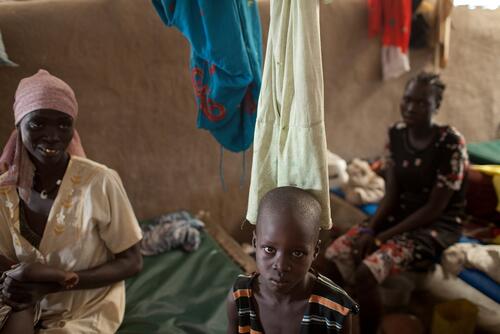
People have fled the shelling in the city of Deir Elzawr to other places in the Deir Elzawr governorate where they are living in very precarious conditions.
The area located in Eastern Syria is remote and pratically inacessible to external assistance.
Syria

Sick and wounded trapped in Deir Azzour

Tens of thousands of people, many of them wounded, are trapped in the city of Deir Azzour, eastern Syria, due to intense fighting and aerial bombardments. MSF calls for the sick and wounded to be evacuated to safer locations and for international medical teams to be given official authorisation to provide impartial assistance to all those who need it. Press Release - 12 Dec 2012
 
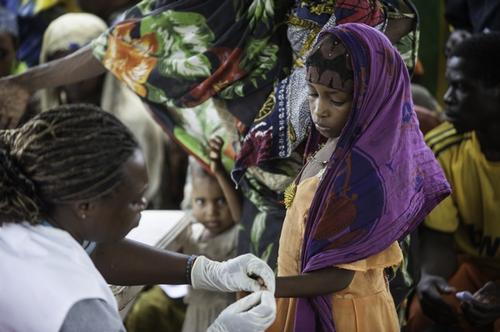
A local health worker takes a blood sample from a young girl in Mboki, in the south-east region of the Central African Republic.  A MSF team spent 13 days in the village and screened 4,548 people for sleeping sickness. Four people received treatment.
Sleeping sickness

National control activities crippled by lack of funding

Advances in the development of new diagnostic tests and treatment bode well for the fight against sleeping sickness. Two new rapid screening tests are expected next year, and one new oral treatment is in clinical trial. However, national control activities on the ground are crippled by a lack of sustainable funding, warns MSF. Press Release - 6 Dec 2012
 
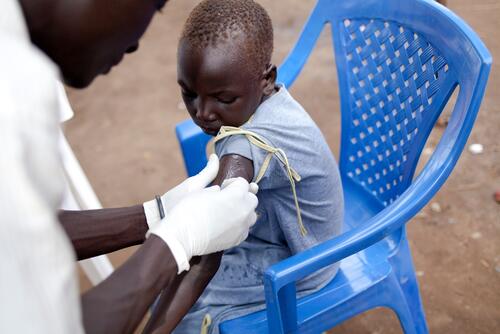
In Doro, South Sudan MSF vaccinating one of the last 10 children against Measles of a campaign reaching 22.014 children in 3 days. Measles vaccinations are a key part of MSF refugee response - measles is a real threat to anyone not vaccinated.
Vaccination

GAVI needs to offer lower vaccine prices to humanitarian actors

The GAVI Alliance should systematically extend the prices it obtains for vaccines to humanitarian actors that are often well placed to reach unvaccinated children, MSF said today at the GAVI Partners Forum meeting in Tanzania. Currently, humanitarian actors such as MSF are not able to access these prices, and are left to negotiate access to vaccines on a cumbersome case-by-case basis. Press Release - 5 Dec 2012
 
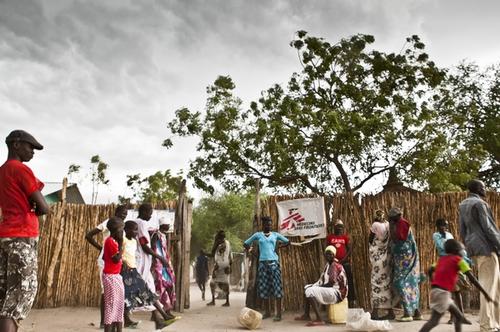
MSF hospital in Lankien South Sudan. Patients come and go from the main entrance of the hospital.
South Sudan

Violence a 'hidden crisis' in Jonglei

A report released today by MSF highlights the devastating impact of violence on the lives and health of civilians in South Sudan’s Jonglei state. Women and children as young as four months old are among the victims. Healthcare is threatened as medical facilities are targeted and destroyed. Press Release - 27 Nov 2012
 
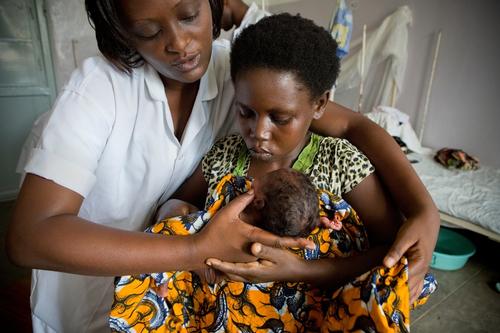
Jeannine Ntunzwenimana, 20, was seven months pregnant when her water broke. "This is my second child, my first is 3 years and 6 months old. My first pregnancy was by c-section at the MSF hospital. My water broke early, I was very affraid because it was too soon. I went to the nearest health center at Gitaza. It was one and a half hour walk away. An ambulance from MSF came to pick me up. The health center called them because they said they weren't able to help the baby. If MSF was not here, I could of died and my baby too. The way they welcome us is very different to other places." Jeannine named her daughter Fridatienne Itangakubuntu who weighed 1.3 kilos when she was born two weeks ago. MSF has worked in Burundi since 1992. In the town of Kabezi, Bujumbura rural province, MSF has been managing an emergency center for gynecological and obstetric care since 2006. The center offers neonatal services as well as an ambulance service transport system for women who are in need of emergency care. By introducing emergency obstetric care and a referral system, MSF has drastically reduced the level of maternal mortality in Burundi.
Women's health

Burundi and Sierra Leone: Access to emergency care significantly reduces maternal mortality

New research from MSF projects in Kabezi, Burundi, and Bo, Sierra Leone, indicates that up to 74 per cent of maternal deaths could be avoided by providing access to emergency obstetric care. MSF data for 2011 indicate that the introduction of an ambulance referral system together with the provision of emergency obstetric services can significantly reduce maternal mortality. Press Release - 19 Nov 2012
 
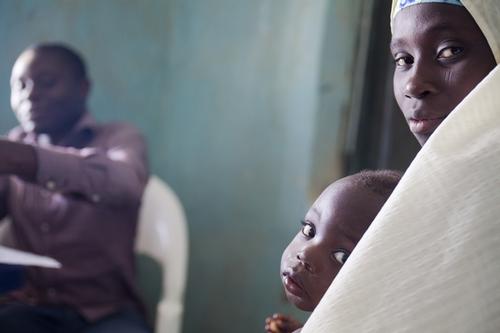
Housseni is 1 year and 5 months, he has a twin brother who is not at the clinic today. Both children are on chelation therapy. The mother has already lost one child and she didnâ??t know at the time it was because of lead poisoning. When Housseniâ??s twin brother, Hassan, started convulsing she was very scared so she took him to the clinic. Her husband slaughters animals for work. She used to grind rocks for gold processing before she found out about lead poisoning, she used to do this at home. When she found out her job harmed her children she stopped. She wishes that her sons will become Presidents. Duza clinic.
Nigeria

Time is running out for lead poisoning victims

Six months on from an International Lead Poisoning Conference, MSF warns that time is running out to solve the Zamfara crisis. In a progress report, MSF explains that very little action has been taken on any of the agreed action points from the conference and calls on the Nigerian government and president to immediately release earmarked funds to tackle the crisis. Press Release - 15 Nov 2012
 
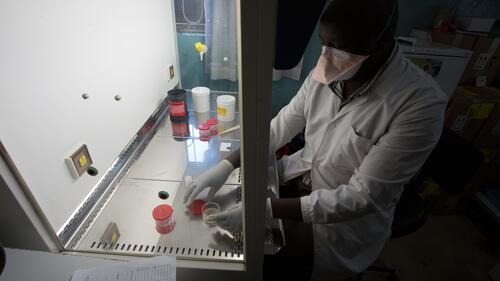
Xpert MTB/RIF laboratory test, used to diagnose tuberculosis (TB) and TB strains resistant against the primary TB drug rifampicin. Kibera South Health Center, Kenya.
Tuberculosis

Results from new TB test reveal urgent need to scale up treatment

Results from the largest multi-country implementation of the new rapid tuberculosis (TB) diagnostic test reveal an urgent need to address the growing global crisis of drug-resistant TB. The data was collected from 25 MSF projects in 14 countries over a nearly 18-month period. It shows an overall 50 per cent increase in the diagnosis of TB using Xpert MTB/RIF. Press Release - 13 Nov 2012
 
msf-placeholder
Myanmar

MSF prevented from reaching most communities affected by violence in Rakhine State

As MSF medical teams work to reach communities affected by the violence in Rakhine State they face ongoing antagonism generated by deep ethnic divisions. Press Release - 5 Nov 2012
 
In March 2012, MSF opened a 56 bed maternity hospital in eastern Khost province. This hospital will provide pregnant women in the region with much needed access to quality maternal healthcare, in one of the most volatile provinces in Afghanistan.
Afghanistan

MSF to resume medical activities in Khost

MSF will resume medical activities in its maternity hospital in Khost Province, Afghanistan. MSF suspended its activities following an explosion in the hospital in April, 2012. Press Release - 17 Oct 2012
Four mothers posing in a corridor of the Hospital in Bili. All four of them are staying in the hospital with their child, that's suffering from a severe case of malaria. Since the beginning of the project in 2016, the pediatric ward already treated more than 4.000 cases of complicated/severe form of malaria.
Médecins Sans Frontières (MSF)

Independent medical humanitarian assistance

We provide medical assistance to people affected by conflict, epidemics, disasters, or exclusion from healthcare. Our teams are made up of tens of thousands of health professionals, logistic and administrative staff - most of them hired locally. Our actions are guided by medical ethics and the principles of independence and impartiality. We are a non-profit, self-governed, member-based organisation.

Learn more