



Ebola disease in DRC: find out how we're responding
Learn more
1794 Results
 
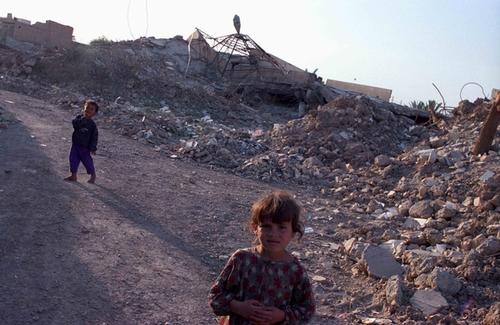
Children play in the ruins of the Baath Party headquarters in Nazariyah.
Iraq

Mental healthcare helps Iraqis rebuild their lives

Decades of conflict, political instability and social upheaval have left many Iraqis vulnerable to psychological stress, mental health disorders and in need of mental health care says MSF in a new report launched in Baghdad today. Press Release - 29 Apr 2013
 
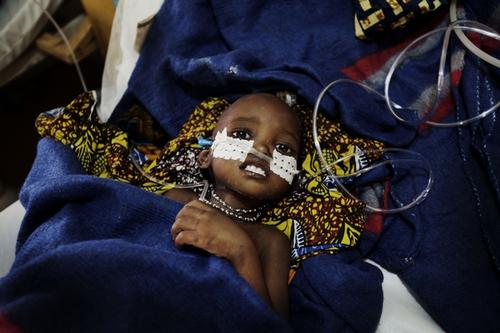
Malnutrition is endemic in Niger one of the world's poorest countries. Each year, hundreds of thousands of children suffer from severe acute malnutrition. This critical situation is aggravated during the hunger gap which usually goes from June to September. In Madaoua region, MSF runs a nutrition project to prevent and treat malnutrition. The organization supports the district hospital, focusing its activities in the pediatric ward and the inpatient stabilization center where malnourished children with complications are treated. In addition, MSF also supports several health centers in the rural area where malnourished children can be treated in ambulatory ways.
Niger

Impending threat of deadly malaria and malnutrition combination

Diseases must be tackled together in order to pre-empt another crisis. Press Release - 24 Apr 2013
 
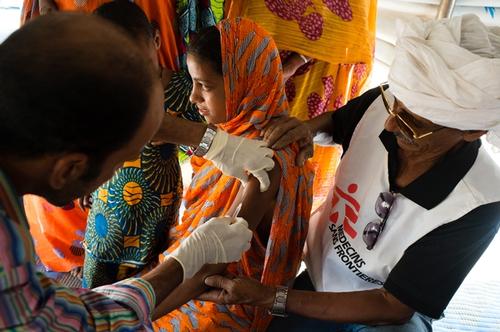
Ben-Dahi of Médecins Sans Frontières (MSF) assiting with the vaccination of recently arrived Malian refugee children at a transit camp in Fassala in southeastern Mauritania on 4 March 2013.

As of January 2012, the Malian crisis has resulted in population movements. Nearly 150,000 refugees now live in refugee camps in Burkina Faso, Mauritania and Niger, where MSF teams are providing maternal, primary and secondary health care. Since the beginning of 2013, MSF has recorded nearly 12,000 consultations and 5,000 vaccinations in these three countries. Mauritania is the country with the largest number of refugees.  Mbera camp nearly 70,000 refugees who have fled for fear of reprisals or lack of access to food since the beginning of the conflict. In February 2013, the border post of Fassala (Mauritania) recorded an average of 300 arrivals per day. They are mostly women and children from Timbuktu, Lere, Goundam Larnab and Nianfuke. These Malian refugees continue to live in precarious conditions with no future prospects.
Project Update

Global vaccines community must cut costs of new vaccines

MSF calls on GAVI and pharmaceutical companies to extend discounts so more children can be reached Press Release - 23 Apr 2013
 
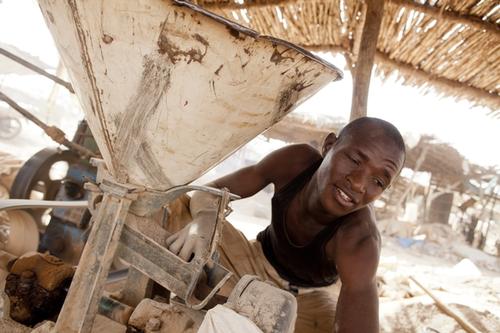
Bagega gold processing site. Hanafi Sami, 25 years old from Bagega village. Hanafi is newly married to his first wife. He has heard about lead poisoning and is always very careful to leave his tools in the compound where it is safer, he does not want any negative effects for any future children.  The stones containing the gold are being put through a grinder after they are crushed, what is left is sand. This man is sifting out any small stones that might still be there.
Nigeria

MSF starts treating lead poisoned children in Bagega

MSF has finally been able to start medical treatment for children suffering from lead poisoning in the village of Bagega. Press Release - 23 Apr 2013
 
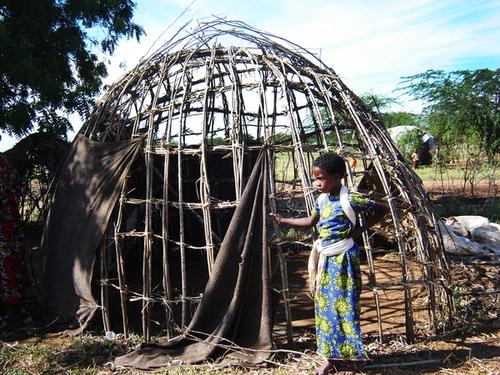
A child contemplating the future outside a makeshift shelter that her parents are trying to put up after being displaced from their home in Chewele location.
Kenya

Help needed for people displaced by flooding

MSF calls for more concerted efforts in assisting populations displaced by floods in Tana River Delta region, Kenya Press Release - 19 Apr 2013
 
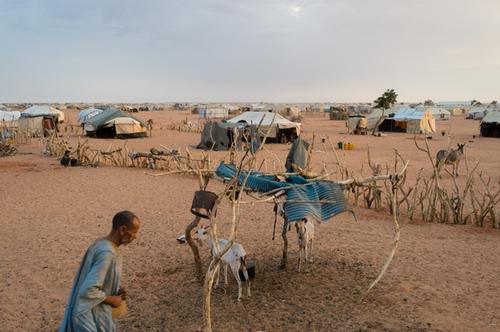
The Mbera refugee camp for Malian refugees on 2 March 2013.

As of January 2012, the Malian crisis has resulted in population movements. Nearly 150,000 refugees now live in refugee camps in Burkina Faso, Mauritania and Niger, where MSF teams are providing maternal, primary and secondary health care. Since the beginning of 2013, MSF has recorded nearly 12,000 consultations and 5,000 vaccinations in these three countries. Mauritania is the country with the largest number of refugees.  Mbera camp nearly 70,000 refugees who have fled for fear of reprisals or lack of access to food since the beginning of the conflict. In February 2013, the border post of Fassala (Mauritania) recorded an average of 300 arrivals per day. They are mostly women and children from Timbuktu, Lere, Goundam Larnab and Nianfuke. These Malian refugees continue to live in precarious conditions with no future prospects.
Mauritania

Refugees stranded in desert

Some 70,000 refugees from Mali are living in difficult conditions in the middle of the Mauritanian desert, with ethnic tensions in northern Mali quashing any hopes of a swift return home. A report released today by MSF entitled 'Stranded in the desert' calls on aid organisations to urgently renew efforts to meet the refugees’ basic needs. Press Release - 13 Apr 2013
 
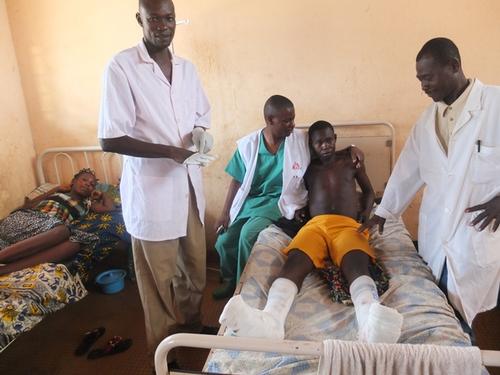
 *** Local Caption *** Bangui avril 2013, Intervention d'urgence de MSF dans l'Hopital Communautaire de Bangui, après le coup le coup d'Etat survenu le 24 mars en RCA<br> MSF emergency operation in the Hopital Communautaire in Bangui, after the March 24 coup.
Central African Republic

Lootings and armed theft against humanitarian response

MSF, targeted by armed groups, calls on the new government to take responsibility and restore order in the Central African Republic. Many people remain without medical care due to the evacuation of humanitarian teams. Press Release - 10 Apr 2013
 
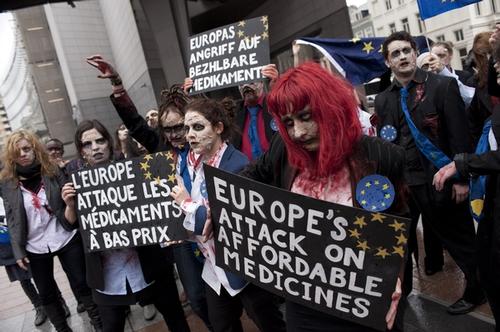
Activists from across Europe stage flashmob in front of the European Parliament calling on Europe to drop harmful provisions.
As European Commission (EC) pressure mounts on India to rush into signing a free trade agreement (FTA) by mid-April, activists from across Europe mobilised in Brussels today to demand the EC withdraw provisions that will harm people’s access to medicines in India and across the developing world. Civil society organisations have learnt through leaked texts that the EC, in closed-door negotiations, is aggressively pushing for stronger industry control at the expense of public health, threatening millions of lives.
Project Update

EU-India free trade deal puts millions of lives at risk

Activists from across Europe stage flashmob in front of the European Parliament calling on Europe to drop harmful provisions. Press Release - 9 Apr 2013
 
Novartis has been pursuing a legal case aimed at gutting India’s patent law of important public health safeguards since 2006. The law allows companies in India to produce affordable generic medicines on which MSF and other care providers in developing countries heavily rely to do our work.
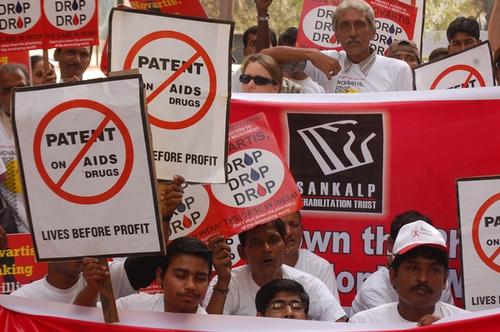
A protest was organised by Indian civil society on World AIDS Day, 1 December 2011, in front of Novartis' Mumbai Office.
India

Indian supreme court delivers verdict in Novartis case

The landmark decision by the Indian Supreme Court in Delhi to uphold India's Patents Act in the face of the seven-year challenge by Swiss pharmaceutical company Novartis is a major victory for patients' access to affordable medicines in developing countries. Press Release - 1 Apr 2013
 
As the opposition group Seleka took power in CAR in March 2013, MSF teams support surgery activities at the community hospital in Bangui where victims of violence receive medical treatment. OCP, OCA and OCBA and present in the country.
Central African Republic

Patients cut off from healthcare in Bangui

Press Release - 25 Mar 2013
Four mothers posing in a corridor of the Hospital in Bili. All four of them are staying in the hospital with their child, that's suffering from a severe case of malaria. Since the beginning of the project in 2016, the pediatric ward already treated more than 4.000 cases of complicated/severe form of malaria.
Médecins Sans Frontières (MSF)

Independent medical humanitarian assistance

We provide medical assistance to people affected by conflict, epidemics, disasters, or exclusion from healthcare. Our teams are made up of tens of thousands of health professionals, logistic and administrative staff - most of them hired locally. Our actions are guided by medical ethics and the principles of independence and impartiality. We are a non-profit, self-governed, member-based organisation.

Learn more