




Ebola disease in DRC: find out how we're responding
Learn more
1794 Results
 
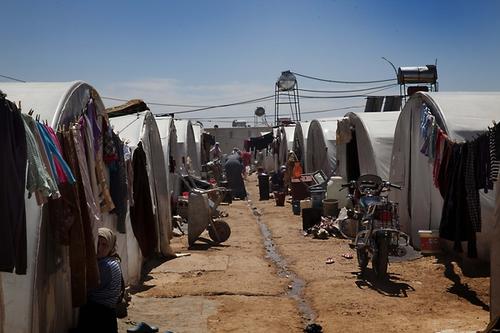
A transit camp in Aleppo province, next to the Turkish border. Around November 2012, 4,000 displaced people were staying in this temporary settlement – in April 2013, there were around 10,000.
Syria

Measles epidemic signals growing humanitarian needs

A measles epidemic is sweeping through districts of northern Syria, with up to 7,000 known cases, an indication that humanitarian needs are increasing and the country’s healthcare system is in a state of collapse after more than two years of civil war. Press Release - 18 Jun 2013
 
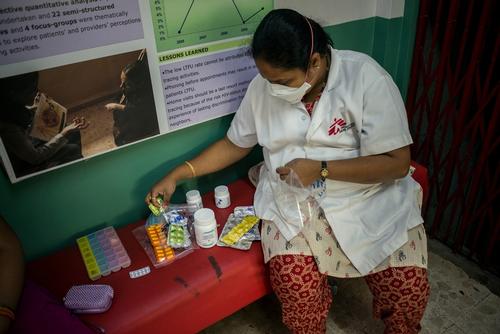
A MSF staff nurse seen sorting pills to be distributed to the MDRTB patients at the MSF Clinic in Mumbai.
India

Must address worrying stock out of tuberculosis drugs

Indian government drug tender process leads to deadly delay in drug supply Press Release - 17 Jun 2013
 
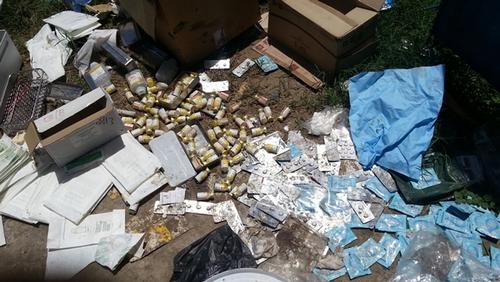
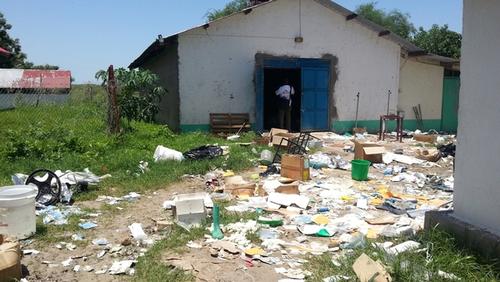
MSF hospital in Pibor, South Sudan, purposefully damaged to render it inoperable

The damage was purposefully conducted to render the hospital inoperable. This leaves around 100,000 people, who had fled into the bush seeking safety from the conflict deprived of healthcare. The MSF hospital is the only hospital facility for Pibor county, the nearest alternative being more than 150km away. 3,000 patients have been treated over the first three months of the year in this hospital. More than 100 patients, including SPLA soldiers, received surgery for war wounds.
South Sudan

120,000 people in Pibor county cut off from aid

Thousands at-risk of death as rainy and malaria season approaches Press Release - 14 Jun 2013
 
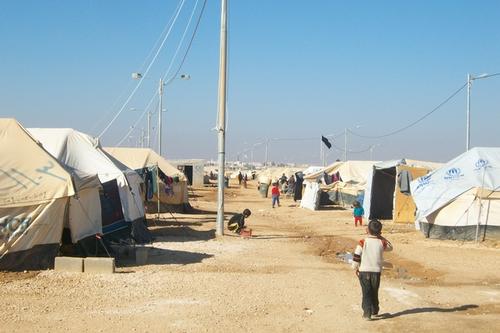
Zaatari Camp, close to the Syrian border, where over 100,000 Syria refugees reside.
Syria

Syrian refugees in Jordan: The limits of assistance

Nearly half a million Syrians are now refugees in Jordan, making up a third of the 1.5 million people who have fled the conflict in Syria to neighboring countries. More than 100,000 of them live in Zaatari camp, situated in the North of the country, less than 20 km from the Syrian border. Press Release - 30 May 2013
 
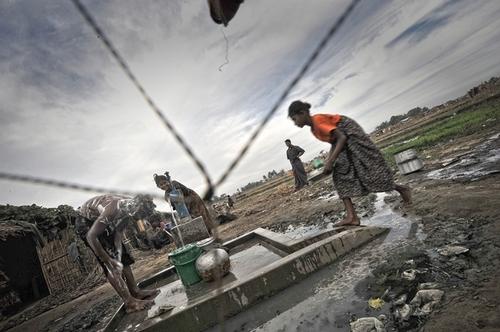
People take bath at the water pump in a refugee camp on the outskirts of Sittwe, February 2, 2013. photo by Kaung Htet

Government restrictions severely impact access to healthcare in Rakhine state

Nearly a year since deadly inter-ethnic clashes in Rakhine state first broke out, conditions in the displaced persons camps, combined with movement restrictions and ongoing segregation of Rakhine and Muslim communities, are severely impacting on healthcare. Press Release - 28 May 2013
 
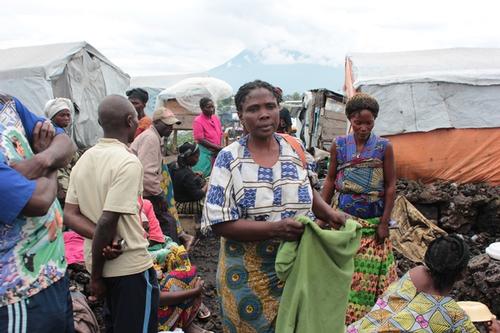
daily life in Mugunga III: Charline Amunazo is the president of the camp. *** Local Caption *** La situation humanitaire déjà précaire dans l'est de la République démocratique du Congo s'est encore détériorée en novembre 2012 après que la ville frontalière de Goma soit tombée aux mains des rebelles du M23 la semaine dernière, faisant des centaines de blessés et des milliers de personnes déplacées. Les équipes de Médecins Sans Frontières (MSF) ont rapidement mis en place des activités d'urgence pour intervenir auprès des victimes de la violence et des personnes nouvellement déplacées dans et autour de Goma.<br/>

An already fragile humanitarian situation in eastern Democratic Republic of Congo has deteriorated further in november 2012 after the border city of Goma fell to M23 rebels last week with hundreds of people injured and thousands displaced from their homes. Teams from Médecins Sans Frontières/Doctors Without Borders (MSF) have rapidly set up additional emergency response activities, treating victims of violence and providing assistance to newly displaced people in and around Goma.
Democratic Republic of Congo

Displaced people caught up in fighting west of Goma

Fighting with heavy weapons between the Congolese army (FARDC) and the rebel group M23 to the west of the provincial capital Goma resumed yesterday. Many people who were already displaced from their homes after earlier waves of violence are now caught between the shelling and gunfire. Press Release - 22 May 2013
 
MSF hospital in Pibor, South Sudan, purposefully damaged to render it inoperable

The damage was purposefully conducted to render the hospital inoperable. This leaves around 100,000 people, who had fled into the bush seeking safety from the conflict deprived of healthcare. The MSF hospital is the only hospital facility for Pibor county, the nearest alternative being more than 150km away. 3,000 patients have been treated over the first three months of the year in this hospital. More than 100 patients, including SPLA soldiers, received surgery for war wounds.
South Sudan

MSF hospital targeted and purposefully damaged to render it inoperative

MSF strongly condemns the destruction at its hospital in Pibor town, South Sudan, purposefully conducted to render the hospital inoperative. Press Release - 17 May 2013
 
msf-placeholder
Democratic Republic of Congo

Children treated after attack in east of country

MSF is treating survivors of an attack on Mpeti in the North Kivu province of the Democratic Republic of Congo. The village, which is home to around one thousand people, was attacked by men armed with bayonets, machetes and wooden clubs on Tuesday morning. Press Release - 16 May 2013
 
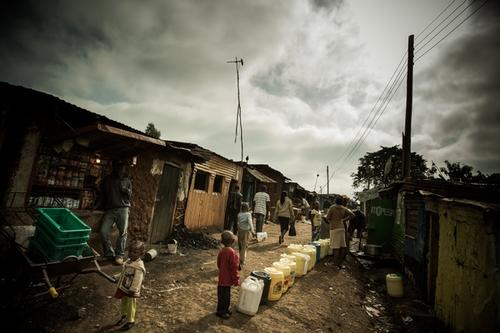
Walking to the Kibera South Health Center. Community of Kibera. Nairobi, Kenya.
Kenya

New clinic brings comprehensive care to most vulnerable

MSF inaugurates a new clinic in Kibera South. The centre offers comprehensive basic healthcare to the most vulnerable populations in Nairobi. Press Release - 16 May 2013
Four mothers posing in a corridor of the Hospital in Bili. All four of them are staying in the hospital with their child, that's suffering from a severe case of malaria. Since the beginning of the project in 2016, the pediatric ward already treated more than 4.000 cases of complicated/severe form of malaria.
Médecins Sans Frontières (MSF)

Independent medical humanitarian assistance

We provide medical assistance to people affected by conflict, epidemics, disasters, or exclusion from healthcare. Our teams are made up of tens of thousands of health professionals, logistic and administrative staff - most of them hired locally. Our actions are guided by medical ethics and the principles of independence and impartiality. We are a non-profit, self-governed, member-based organisation.

Learn more