Ebola disease in DRC: find out how we're responding
Learn more
1391 Results
 
Babucar Njie, 25, Gambia

I left Gambia due to the conditions at home. I went from Senegal to Mali, then to Burkina Faso, then Niger. 

From Niger some  smugglers brought us to  Algeria. There we were taken to a house and told we had to  pay 15,000 in Gambian money [approx 300 euros]. They made us call our family to send the money. Some of my Gambian brothers they knew a way to escape so I followed them and we made it to Tamanrasset [in Algeria]. There we were kidnapped again, and again we had the same problem; they wanted money. This time we had no way to escape so my family had to pay. 

They beat people if they don’t call their family. If your parents don’t pay they beat you and call them so they can hear the way you’re crying. After that, I was taken to Sabratah, in Libya: that place is more wicked than any other place. They didn’t even give us proper water to drink and the Libyans were  rude. Sometimes they would go and drink [alcohol] and come and start beating everybody.

I was living in a connection house with two or three hundreds people. It was horrible, there was no window and we slept on the floor. I had to work to receive food, then my parents sent the money for the boat.  One morning they said, “Your boat is ready.” When I saw it, it was a plastic boat and I thought, ‘I’m not getting in this,’ but there are guys with guns so you just go. There’s no way back. We were packed into it, the fuel was making everyone sick. The boat was going up and down some people were crying, at any minute we could have died. 

For us Europe is better than everything. There is hope there, but I have a younger brother and if he wants to come this way I will tell him no. If I had known all I had to pass through I would have stayed in Gambia.
Mediterranean migration

"The Crossing", night portraits on the rescue boat Prudence

"The Crossing" is a photographic project by Andrew McConnell/Panos Pictures based on night portraits and testimonies from people rescued by the search and rescue Prudence boat in international Mediterranean Sea waters in July 2017. Photo Story - 15 Nov 2017
 
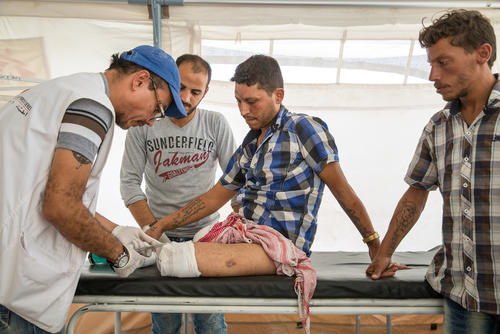
Ain Issa camp, Syria, September, 2017. Michaël Roriz, physiotherapist for MSF, looks after Ahmad.
Ahmad managed to escape from Raqqa, after three months of siege. He lost his wife and his two daughters in the bombardments of the coalition which destroyed his house. In his flight, he activated an explosive device hidden by the fighters of the group Islamic State and must be amputated by both legs.

Camp d'Ain Issa, Syrie, septembre 2017. Michaël Roriz, kinésithérapeute pour Médecins Sans Frontières, soigne Ahmad.
Ahmad a réussi à s'échapper de Raqqa, après trois mois de siège. Il a perdu sa femme et ses deux filles dans les bombardements de la coalition qui ont détruit sa maison. Dans sa fuite, il a déclenché un engin explosif dissimulé par les combattants du groupe Etat islamique et a dû être amputé des deux jambes.
Syria

Doing whatever it takes to escape

The Syrians Médecins Sans Frontières has talked to in Ain Issa camp have told us of the trauma they endured: the fighting, the atrocities perpetrated by Islamic State (IS) and the massive bombing raids carried out by the international coalition. Photo Story - 14 Nov 2017
 
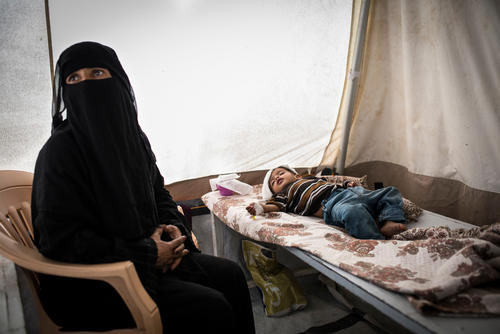
This is the second time within few weeks Reda brings her son Muhatasein to the MSF cholera treatment centre. Cholera, war, poverty, malnutrition: Reda’s life is a daily fight to feed her six children, especially since her husband left them seven months ago. To come to the CTC, Reda had to wait to collect enough money. « I didn’t have enough, I had to wait a couple of days to sell two chicken ». Qaeda hospital / Ibb Governorate.
Yemen

Saudi coalition urged to immediately allow humanitarian access during blockade

“Access for humanitarian personnel and cargo into Yemen is essential to deliver desperately-needed assistance to a population already severely affected by conflict.” Press Release - 8 Nov 2017
 
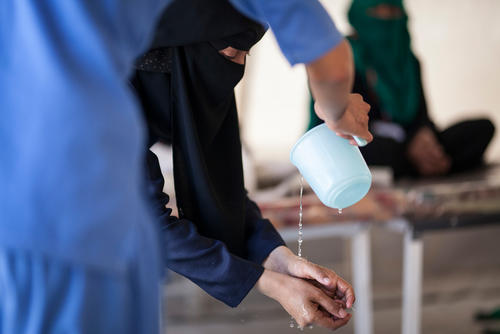
In the recovery tent of the cholera treatment centre at the Qaeda hospital, MSF health promotion team teaches former patients and caretakers some good practices to avoid cholera. Here, patients are taught the best way to wash their hands. Al Thawra hospital / Qaeda / Ibb Governorate.
Yemen

MSF reduces its cholera response as admissions drop

“The cholera outbreak is not over but it is no longer our medical priority in Yemen." Press Release - 30 Oct 2017
 
msf-placeholder
Syria

Thousands could die if Syrian-Iraq Kurdistan border closes to humanitarian aid

MSF calls on all parties to ensure continued access, without let or hindrance, for the delivery of humanitarian aid across borders. Statement - 28 Oct 2017
 
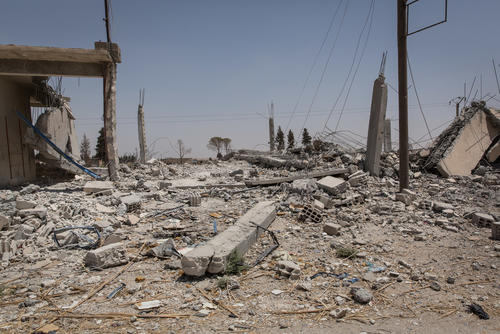
JulY 2017 - Syria - Raqqa - Eastern Quarter. The streets destroyed successively by Islamic State and by the heavy armed interventions of the Syrian Democratic Forces (SDF) and the international coalition.  

Jullet 2017 - Syrie - Raqqa - Quartier est - Les rues détruites successivement par L'Etat Islamique et par les interventions lourdement armées des Forces démocratiques syriennes (FDS) avec la coalition internationale.
Syria

Update on situation and humanitarian needs after Raqqa offensive

The battle for Raqqa ended on 17 October, and people left the city under frightening circumstances as the offensive drew closer. Project Update - 20 Oct 2017
 
msf-placeholder
Syria

Crisis update - October 2017

MSF supports more than 70 medical structures – from hospitals to small health posts – located across Syria. Crisis Update - 20 Oct 2017
 
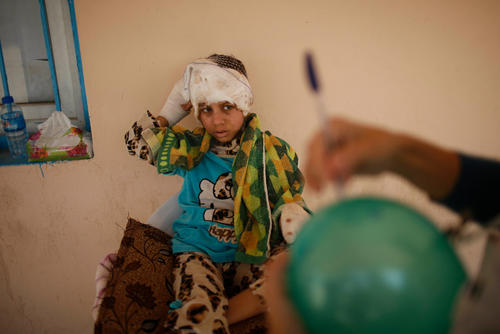
Wounded Iraqi girl Dua Nawaf, 8, who her family was killed in an airstrike in Mosul, sits at a hospital run by Medecins Sans Frontieres in Qayyara, Iraq April 6, 2017. Picture taken April 6, 2016.
Iraq

Returnees to Mosul face booby-trapped homes and destruction

“For many people, the long-anticipated return home is turning sour as they find themselves faced with daunting levels of destruction and seemingly endless misery.” Project Update - 17 Oct 2017
 
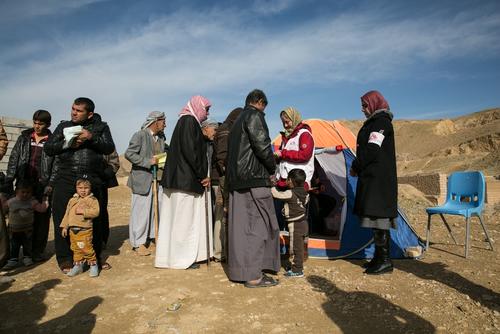
Once a week MSF mobile medical teams serve the small settlement south of the town of Tuz Kurmato in  Salaheddin governorate where 4000 displaced people have been living for the last year and a half after their village, a few miles away, became engulfed in violent fighting. Female and male medical staff provide general health care with special focus on chronic diseases, mother and child care as well as mental health support. The community is afraid to travel around in this highly militarized area, particularly men, and are reluctant to see medical care in close by urban settlement such as Tuz Kurmato or Kirkuk.
Iraq

Hawijah offensive pushes nearly 14,000 people to neighbouring districts

“Fleeing Hawijah was so dangerous that people call it the road of death.” Project Update - 12 Oct 2017
 
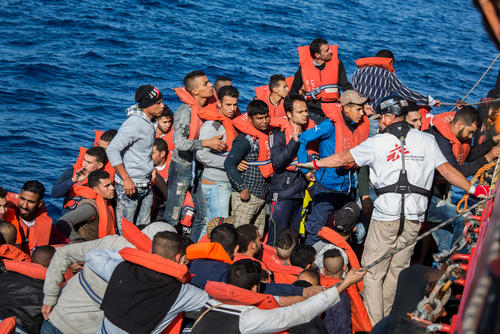
People in a wooden boat are rescued by Vos Prudence, in the Mediterranean Sea off the coast of Libya, on June 9, 2017. MSF vessel Vos Prudence rescued a total of 726 people from the Mediterranean Sea over 2 days on June 8th and 9th, including 52 children.
Mediterranean migration

MSF ends mission of search and rescue boat Prudence

We remain fully engaged to respond to the humanitarian needs of people fleeing violence and will continue to regularly reassess the situation in this volatile and uncertain context. Statement - 5 Oct 2017
Four mothers posing in a corridor of the Hospital in Bili. All four of them are staying in the hospital with their child, that's suffering from a severe case of malaria. Since the beginning of the project in 2016, the pediatric ward already treated more than 4.000 cases of complicated/severe form of malaria.
Médecins Sans Frontières (MSF)

Independent medical humanitarian assistance

We provide medical assistance to people affected by conflict, epidemics, disasters, or exclusion from healthcare. Our teams are made up of tens of thousands of health professionals, logistic and administrative staff - most of them hired locally. Our actions are guided by medical ethics and the principles of independence and impartiality. We are a non-profit, self-governed, member-based organisation.

Learn more