



Ebola disease in DRC: find out how we're responding
Learn more
1392 Results
 
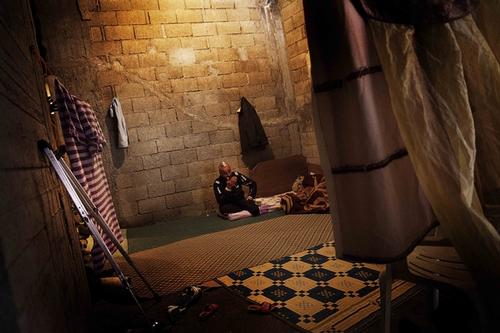
A family of Syrian refugees living in a garage in the southern Turkish city of Kilis. Photo for the Syrian Exodus project.
Syria

Syrian Exodus: Carrying the weight of the war

Syrian refugees in neighbouring Turkey may have evaded the guns and missiles, but there is no escape from the physical and emotional scars of the conflict Project Update - 26 Jul 2013
 
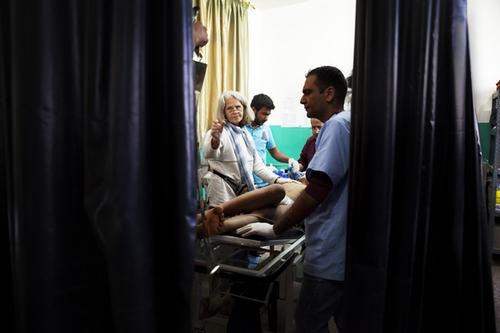
Emergency room of an MSF hospital in northern Syria (Aleppo province). The hospital has attended 601 deliveries and provided almost 15,000 consultations and 446 surgical operations up to April 2013. It is focused on obstetric care and surgery. Photo for the Syrian Exodus project.
Syria

Syrian Exodus: "The day my village was bombed"

Airstrikes and clashes dominate daily life in Syria Project Update - 25 Jul 2013
 
msf-placeholder
Syria

From birth to death - Testimony of an MSF surgeon

US Surgeon Steve Rubin describes his work in one of Médecins Sans Frontières (MSF) hospitals in northern Syria, where MSF treats common health problems as well as injuries inflicted by the war. Voices from the Field - 23 Jul 2013
 
msf-placeholder
Syria

Testimony of a Syrian doctor

A Syrian doctor working with MSF explains the medical needs now that Syria is at war. Voices from the Field - 23 Jul 2013
 
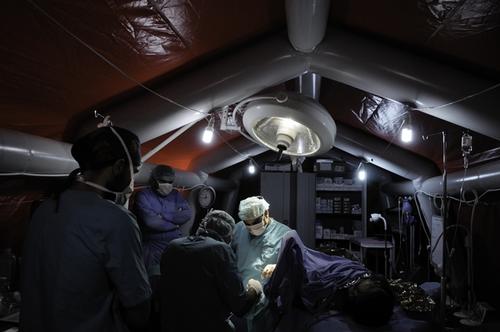
An inflatable operating theatre is erected inside this MSF makeshift hospital in Syria (a converted chicken farm) as it is an efficient way to maintain a sterile environment. Surgeon Steve Rubin operating.
Syria

Diabetes, shrapnel wounds and newborn twins

In Syria the number of people in need of urgent medical care keeps increasing. MSF runs six hospitals, four health centres and several mobile clinic programmes inside Syria. Project Update - 23 Jul 2013
 
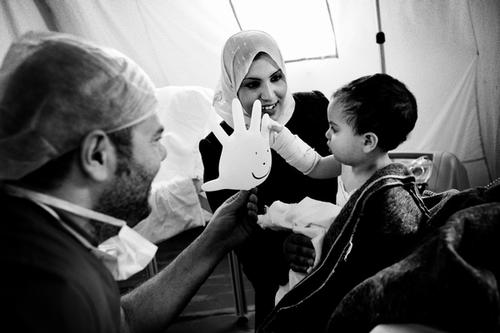
Gaza City. Gaza Strip. January 27 , 2009.
 A medical unit of Medecins Sans Frontieres (Doctors Without Borders). A doctor plays with Hala, 1 year old, burnt on her body, next to her mother.
  *** Local Caption *** <br/>Le 18 janvier 2009, soit 22 jours apres le debut de l¿offensive Israelienne, l¿arret des bombardements a permis a MSF de reprendre et renforcer ses activites medicales dans la bande de Gaza. Les trois cliniques (soins post-op à Gaza city, pediatrie à Beit Lahia, dans le nord, et soins post-op a Khan Younis, dans le sud) ont pu rouvrir ; 80% des 70 membres du staff ont repris le travail.
 
 Deux blocs operatoires et une unite de soins intensifs de dix lits ont ete installes sous deux tentes gonflables, a proximite de la clinique de soins post-operatoires de MSF dans la ville de Gaza. Des medicaments, des kits comprenant le materiel necessaire pour 300 operations chirurgicales et 100 hospitalisations ont ete receptionnes le 19 janvier, dans un fret de 21 tonnes de materiel au total. 
 
 Dix premiers patients ont ete  identifies pour etre operes par nos équipes. Il s¿agit de chirurgie de reprise, essentiellement orthopedique, activite identifiee par MSF comme ayant une reelle valeur ajoutee a cet instant. Le 26 janvier, notre equipe chirurgicale a opere les trois premiers patients.
Palestine

Intensive care training for doctors

Project Update - 27 Jun 2013
 
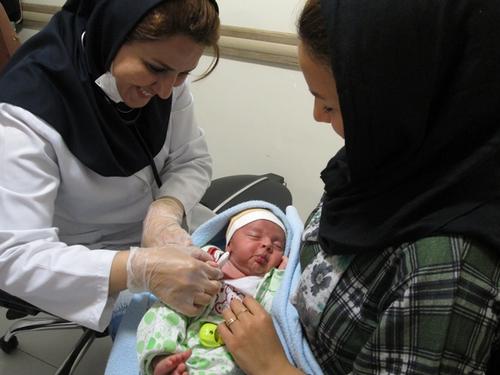
*** Local Caption ***Triage.<br/> Darvazeh Ghar district, south of the Grand Bazaar of Tehran, is one of the poorest in the Iranian capital. There coexist daily workers, traders, street children, sex workers and drug users. Marginalized, destitute and sometimes without identity papers, these people have very limited access to basic health care. In April 2012, Doctors without borders/Médecins  Sans Frontières (MSF) opened in this area a health facility dedicated to women and children under five years old with a specific attention to those most at risk of infectious diseases such as HIV/aids , tuberculosis or hepatitis. MSF teams receive on average sixty patients per day: antenatal and postnatal care, family planning counseling, and pediatric consultations. In one year, more than 12,000 consultations were carried out, including nearly 1,700 gynecology cases. A quarter of the patients are children under five years old.
Iran

Surviving in Tehran’s southern neighborhoods

Project Update - 21 Jun 2013
 
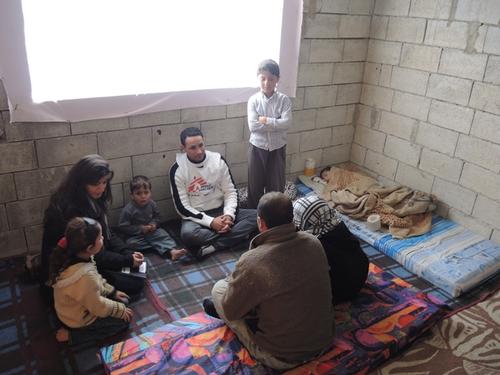
Syrian families have taken refuge in a building under construction in Al Marj. MSF social workers talk with the families, assessing their needs and referring them to MSF clinics if needed.
Lebanon

“We are not tourists – we are people fleeing a war”

For many refugees from Syria, getting a roof over their heads and keeping their families fed is a massive struggle. On World Refugee Day, MSF warns that dire living conditions are affecting people’s health. Project Update - 20 Jun 2013
 
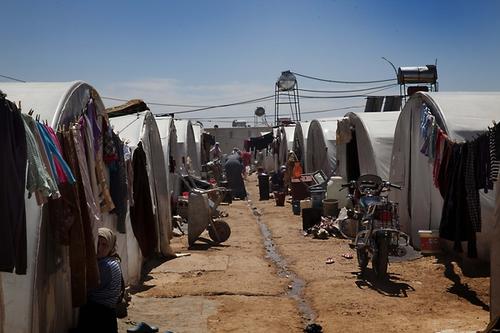
A transit camp in Aleppo province, next to the Turkish border. Around November 2012, 4,000 displaced people were staying in this temporary settlement – in April 2013, there were around 10,000.
Syria

Measles epidemic signals growing humanitarian needs

A measles epidemic is sweeping through districts of northern Syria, with up to 7,000 known cases, an indication that humanitarian needs are increasing and the country’s healthcare system is in a state of collapse after more than two years of civil war. Press Release - 18 Jun 2013
 
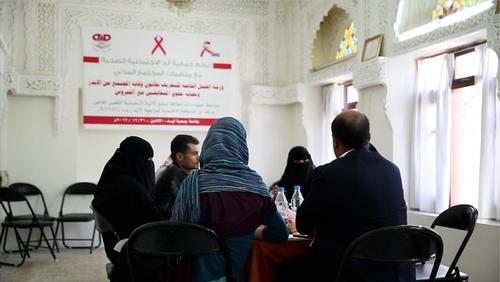
Since the beginning of the year, MSF is working in Sana’a, the capital of Yemen, to help reduce the stigma faced by people living with HIV and improve their access to quality healthcare.
Meeting at the AID Association, one of the organisations working in Yemen to support people living with HIV.
Yemen

HIV/AIDS in Yemen: Fighting discrimination

Crisis Update - 12 Jun 2013
Four mothers posing in a corridor of the Hospital in Bili. All four of them are staying in the hospital with their child, that's suffering from a severe case of malaria. Since the beginning of the project in 2016, the pediatric ward already treated more than 4.000 cases of complicated/severe form of malaria.
Médecins Sans Frontières (MSF)

Independent medical humanitarian assistance

We provide medical assistance to people affected by conflict, epidemics, disasters, or exclusion from healthcare. Our teams are made up of tens of thousands of health professionals, logistic and administrative staff - most of them hired locally. Our actions are guided by medical ethics and the principles of independence and impartiality. We are a non-profit, self-governed, member-based organisation.

Learn more