



Ebola disease in DRC: find out how we're responding
Learn more
1392 Results
 
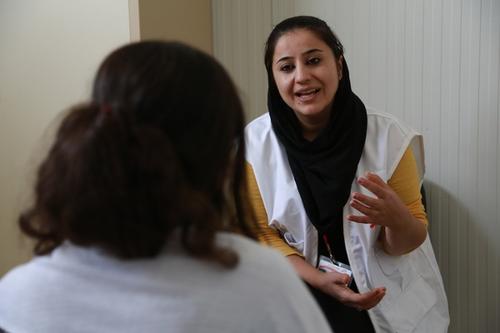
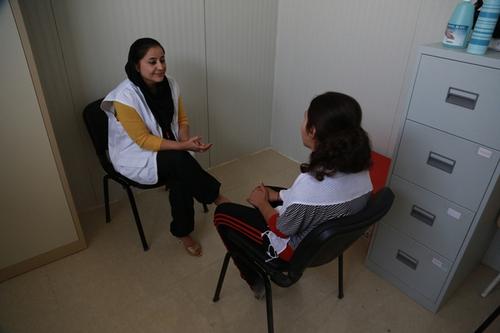
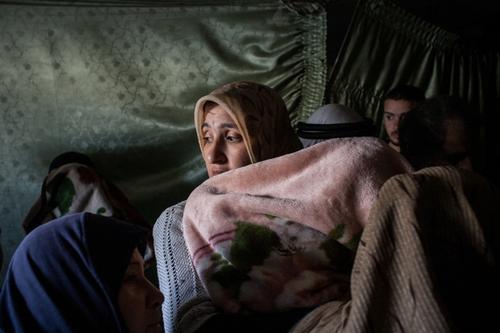
Alma is a 16 year old girl from Syria who is receiving counselling from MSF in Domeez refugee camp, northern Iraq. Her testimony is below. The war and its aftermath have had far reaching consequences for the mental health of children. As of October 2013 in Domeez, children and adolescents comprise 50 percent of all MSF’s new patients. Every week, between 15 and 20 children and adolescents aged 18 and under are admitted to the program. 

"We’ve been living in the camp for six months, after coming from Damascus to escape the war. There are six people in my family and we all live in one tent. At first we were happy to be here, and to be safe. Compared to Damascus, it is better. There we lived amidst war, at least here it is safe. 

But I am not happy here. After I arrived here, when I got upset or angry, I would faint. Last week, this happened twice. In the last month, it has happened six times. 

I don’t know why it happens. After I faint, and I have gained consciousness, I lie there for an hour or so then I get up. I have shortness in breath after it happens and it takes an hour to feel ok again. 

Most of the time there is no reason.

I don’t sleep very well and I am scared when I sleep. When I wake up, I am still scared. I am afraid of the tents. They remind me of the funeral procession when my cousin was killed in Syria. I remember people crying and I feel that I have dark things in front of my eyes. 

Every second night, I have nightmares. 

I also don’t eat very much. From yesterday until now, I did not eat. 

My biggest wish is to go back to Syria with my family. I want to study, but it’s not possible, either here or in Syria. It is difficult to have hope for the future when we don’t know what will happen."
Syria

An invisible crisis - alarming psychological needs among refugees in Iraq

MSF is seeing an alarming deterioration in the mental health situation of Syrian refugees in Domeez refugee camp in northern Iraq. This deterioration is linked not only to what they have witnessed in Syria, but also the ongoing life of uncertainty, inadequate conditions, and the lack of hope for the future they face living in the camp. Project Update - 8 Oct 2013
 
Alma is a 16 year old girl from Syria who is receiving counselling from MSF in Domeez refugee camp, northern Iraq. Her testimony is below. The war and its aftermath have had far reaching consequences for the mental health of children. As of October 2013 in Domeez, children and adolescents comprise 50 percent of all MSF’s new patients. Every week, between 15 and 20 children and adolescents aged 18 and under are admitted to the program. 

"We’ve been living in the camp for six months, after coming from Damascus to escape the war. There are six people in my family and we all live in one tent. At first we were happy to be here, and to be safe. Compared to Damascus, it is better. There we lived amidst war, at least here it is safe. 

But I am not happy here. After I arrived here, when I got upset or angry, I would faint. Last week, this happened twice. In the last month, it has happened six times. 

I don’t know why it happens. After I faint, and I have gained consciousness, I lie there for an hour or so then I get up. I have shortness in breath after it happens and it takes an hour to feel ok again. 

Most of the time there is no reason.

I don’t sleep very well and I am scared when I sleep. When I wake up, I am still scared. I am afraid of the tents. They remind me of the funeral procession when my cousin was killed in Syria. I remember people crying and I feel that I have dark things in front of my eyes. 

Every second night, I have nightmares. 

I also don’t eat very much. From yesterday until now, I did not eat. 

My biggest wish is to go back to Syria with my family. I want to study, but it’s not possible, either here or in Syria. It is difficult to have hope for the future when we don’t know what will happen."
Syria

It is difficult to have hope for the future when we don’t know what will happen

Testimony of Alma, a 16 year old girl from Syria who is receiving counselling from MSF in Domeez refugee camp, northern Iraq. Voices from the Field - 8 Oct 2013
 
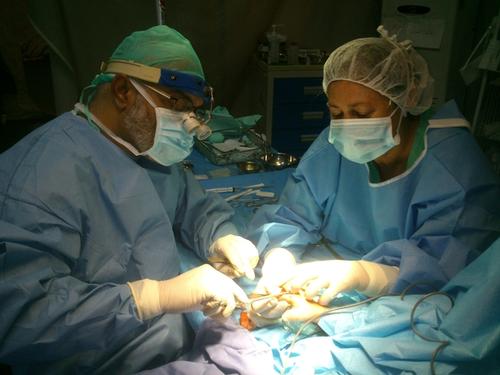
Al-Shifa hospital, Gaza.
Surgical procedure.
<br/>surgeon Masesh et Maria l'OT Nurse at Nasser hospital <br/>
In collaboration with the Ministry of Health, on October 1st MSF extended its reconstructive plastic surgery programme at Gaza’s Nasser hospital in Khan Younis to Al-Shifa hospital. *** Local Caption *** After assessing the situation and determining medical needs in Gaza, in July 2010 MSF decided in collaboration with the local health authorities to open a reconstructive plastic surgery and post-operative care programme at Nasser hospital. The programme provides treatment to victims of trauma, domestic accidents, burns and other injuries and aims to help patients regain optimum use of their limbs.
Palestine

MSF operating in second hospital in Gaza

MSF has, in collaboration with the local health authorities, opened a second reconstructive plastic surgery and post-operative care programme in Gaza. Project Update - 7 Oct 2013
 
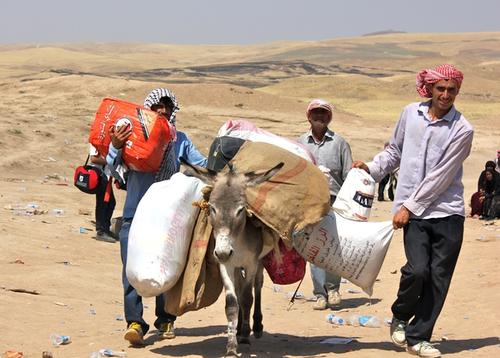
Syrian refugees transporting their goods and luggage's using a donkey for passing the borders between Syria and Iraq Kurdistan.
Syria

MSF provides emergency care to families fleeing to Iraq

Some 60,000 refugees from Syria have crossed the border into the Kurdish region of Iraq since it reopened on 15 August after being closed for three months. Project Update - 2 Oct 2013
 
A woman with her child waits in MSF's mobile clinic to register her name to see a doctor in t Northern Syria, on Tuesday, February 5, 2013. This is the fourth mobile clinic session MSF has conducted in the same village, according to Dr. Tharcis Zinet, as the need from its people for basic healthcare is widespread. The village experienced heavy fighting until five months ago.
Syria

Open letter to all States and non-State actors involved in the conflict

MSF calls on US and Russia to place at the top of their diplomatic agendas the substantial scale up of humanitarian aid to millions of war-affected Syrians. Open Letter - 27 Sep 2013
 
msf-placeholder
Syria

“It's practically impossible to get emergency obstetric care"

An MSF midwife, recently returned from Syria, talks about the lifesaving services MSF is providing in the country and the huge challenges pregnant women there face trying to access critical obstetric care. Voices from the Field - 24 Sep 2013
 
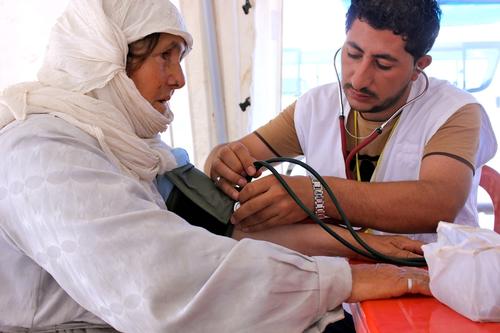
MSF doctor treating an elderly woman in the transitional area.
Syria

Lift the humanitarian blockade

Most diplomatic discussion on Syria has focused on the recent chemical weapons attack in al Ghouta, eastern Damascus. Meanwhile, the residents of this area continue to face daily bombings and a blockade that deprives them of the food and medicines that they need to survive. Statement - 17 Sep 2013
 
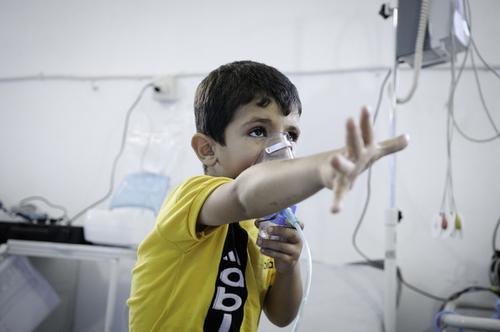
A boy with asthma receiving oxygen in the ER section of an MSF hospital in Syria. The dust had aggravated his asthma and he arrived at the MSF hospital unable to breathe. It was impossible for his parents to find an asthma inhaler in Syria.
Syria

Open letter: let us treat patients in Syria

In an open letter published on Monday 16 September 2013, a coalition of over 50 eminent doctors warns of a medical catastrophe in Syria and calls for medical and humanitarian access to those suffering. Open Letter - 16 Sep 2013
 
msf-placeholder
Syria

MSF surgeon killed in Syria

A Syrian surgeon working for MSF, Dr Muhammad Abyad, has been killed in northern Syria. His body was found on 3 September in Aleppo province. Press Release - 5 Sep 2013
 
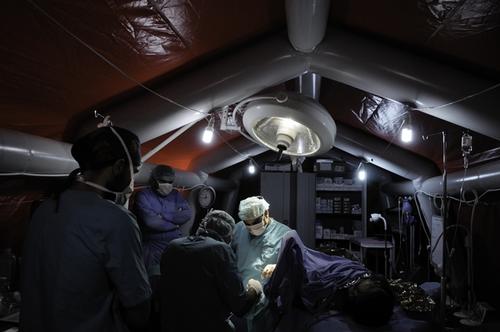
An inflatable operating theatre is erected inside this MSF makeshift hospital in Syria (a converted chicken farm) as it is an efficient way to maintain a sterile environment. Surgeon Steve Rubin operating.
Syria

Disclaimer on Syria

Statement - 2 Sep 2013
Four mothers posing in a corridor of the Hospital in Bili. All four of them are staying in the hospital with their child, that's suffering from a severe case of malaria. Since the beginning of the project in 2016, the pediatric ward already treated more than 4.000 cases of complicated/severe form of malaria.
Médecins Sans Frontières (MSF)

Independent medical humanitarian assistance

We provide medical assistance to people affected by conflict, epidemics, disasters, or exclusion from healthcare. Our teams are made up of tens of thousands of health professionals, logistic and administrative staff - most of them hired locally. Our actions are guided by medical ethics and the principles of independence and impartiality. We are a non-profit, self-governed, member-based organisation.

Learn more