



Ebola disease in DRC: find out how we're responding
Learn more
1392 Results
 
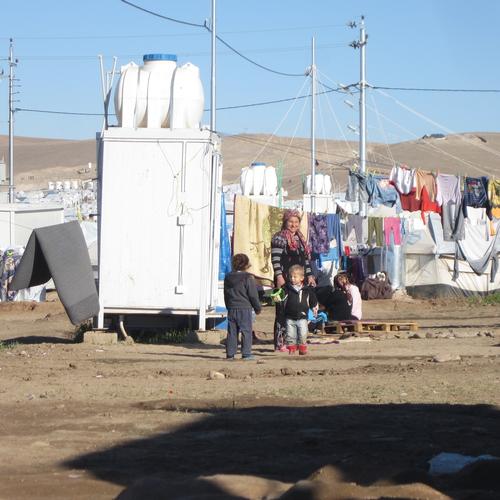
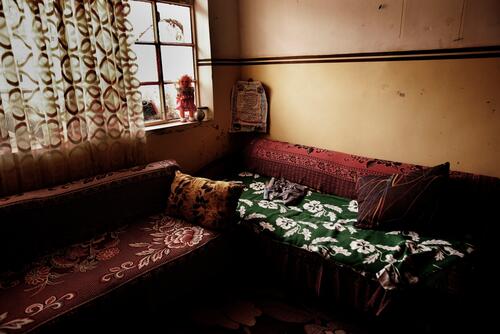
Kawargosk camp.
Kurdistan/Iraq - MSF is running a primary health centre in Kawargosk camp hosting Syrian refugees and mobile clinics in another refugees camp in Erbil area.
 *** Local Caption *** With the insecurity and the violence affecting the entire population in Syria, many Syrians have chosen to flee to Iraq. The internal Iraqi political dynamics have created the space for the Kurdish Region Government (KRG) to host the Kurdish population fleeing Syria. In Erbil governorate (Kurdish region of Iraq), MSF is running a primary health centre in Kawargosk refugees camp and mobile clinics in another other camp.
Iraq

“The smiles of patients” – Syrian refugees in Iraq

Clinical psychologist Charlotte Yence tells us about some of her mission in Iraqi Kurdistan Voices from the Field - 5 Jun 2014
 
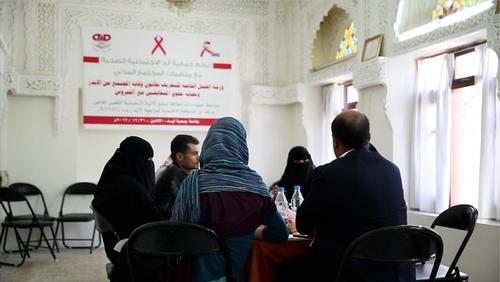
Since the beginning of the year, MSF is working in Sana’a, the capital of Yemen, to help reduce the stigma faced by people living with HIV and improve their access to quality healthcare.
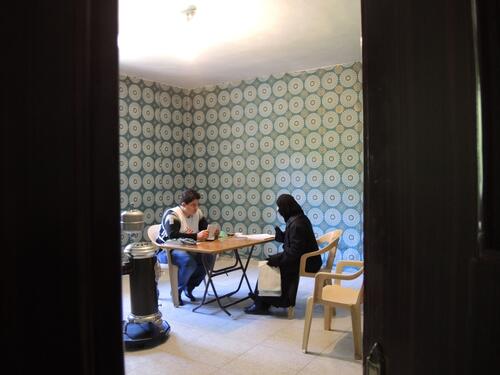
Meeting at the AID Association, one of the organisations working in Yemen to support people living with HIV.
Yemen

Driving ARVs through a city under siege

Abdulbaset Alzamar, a Yemeni nurse working with HIV positive patients with MSF, talks about his experience. Voices from the Field - 30 May 2014
 
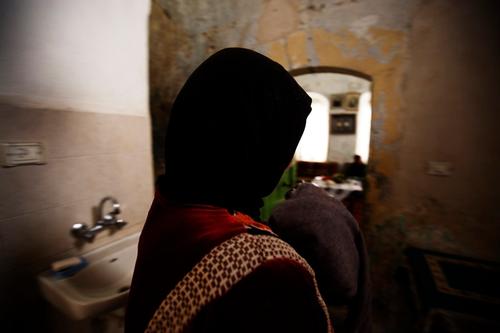
In Hebron and East Jerusalem, MSF is running a medical and psychosocial programme for people suffering from trauma because of the conflict. MSF teams focus on people with psychological distress (acute stress, anxiety disorders, post traumatic syndromes, depression) caused by violent incidents involving Israeli settlers and Israeli Army, but also due to the intra-Palestinian conflict. In Hebron, MSF staff carried out 1726 individual mental health consultations and 945 medical consultations in 2011.
In the beginning of 2011, MSF conducted a needs assessment in East Jerusalem and decided to start providing in this part of the city mental health care to the population who suffers trauma or psychological distress due to the consequences of violence caused by the conflict and who has no access to mental health services. MSF therapies started in July in the Shufat refugee camp and Silwan area and since then MSF staff carried out 223 individual mental health consultations.
Palestine

Occupied Minds - Mariam’s story

Palestine: Occupied Minds - Mariam’s story Voices from the Field - 22 May 2014
 
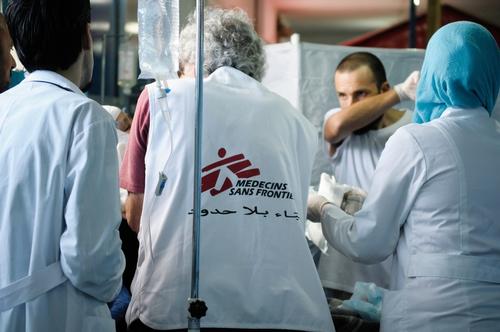
In the ER section of an MSF hospital in Syria.
Syria

Five MSF staff held in Syria Released

Abduction Forces Closure of Three of MSF’s Medical Facilities providing care to 150,000 Syrians Press Release - 15 May 2014
 
Occupied Minds - Occupied Palestinian Territory
Palestine

Occupied Minds - Climbing out of the hole

Palestine: Occupied Minds - Climbing out of the hole Voices from the Field - 5 May 2014
 
Violence in Anbar province, western Iraq, has caused some 380,000 people to flee their homes, with more than 18,000 people seeking refuge in Tikrit, the capital of neighbouring Salah al-Din province, over the past month. Despite a very volatile security situation in Tikrit, a MSF team is providing the displaced people with relief items and assessing their medical needs.
Iraq

MSF provides aid to people displaced by violence from Anbar province

MSF provides aid to people displaced by violence from Anbar province Project Update - 30 Apr 2014
 
Since the Amman Reconstructive Surgery Project was set up in 2006, over 3,000 patients from the region have arrived at project. The project has received patients from Iraq, Gaza, Yemen and Syria.
Jordan

MSF Reconstructive Surgery Project in Amman Continues to Support Victims of Violence from Iraq

Despite the complexity of the overall situation in Iraq, and particularly in Anbar province, MSF continues to offer reconstructive surgical care to victims of violence in Anbar and from all over Iraq. But the security situation is posing huge challenges. Project Update - 29 Apr 2014
 
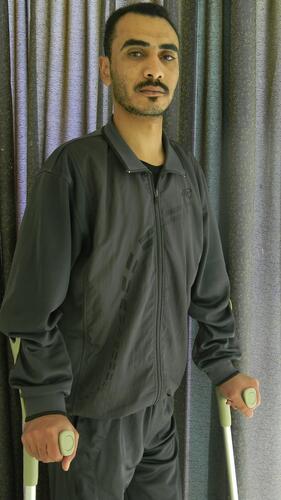
Diya, 29, is from Anbar province. He was injured in 2009 while returning 
from a family visit when a bomb exploded directly under the car he was driving. The explosion killed his mother, wife, brother and son. Diya was the only survivor.

Diya was admitted to the Amman Reconstructive Surgery Project in 2012 and has successfully completed his treatment. He was discharged in February 2014.
Iraq

Diya's story - A patient from Anbar

Diya was injured in 2009 returning from a family visit, a bomb exploded under the car he was driving Voices from the Field - 29 Apr 2014
 
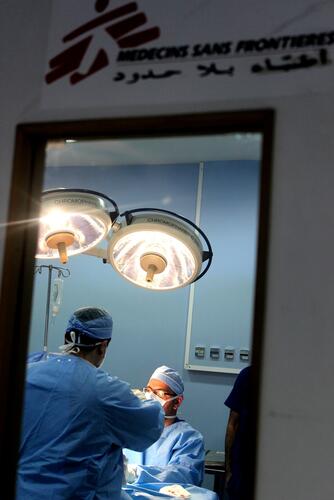
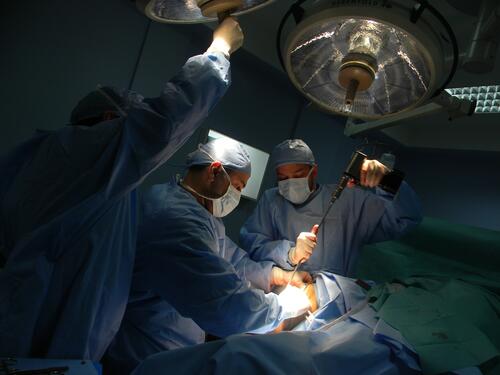
Iraqi surgeon, Dr. Ali Al-Ani operating on a patient at the Amman Reconstructive Surgery Project.

“Each new case is a challenge and each wounded patient is incomparable to another.” says Dr Al-Ani.
Jordan

Interview of Dr. Ali Al-Ani, Orthopedic Surgeon at Amman Reconstructive Surgery Project

Interview of Dr. Ali Al-Ani, Orthopedic Surgeon at Amman Reconstructive Surgery Project Voices from the Field - 29 Apr 2014
 
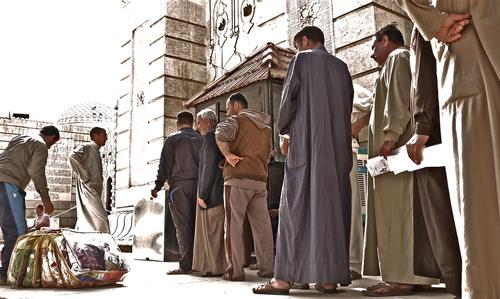
In Baalbeck, MSF has set up a primary health care clinic in a house, providing consultations and treatment to Syrian refugees. 

Dr. Ali Shukr, MSF: «Many patients suffer from chronic diseases, such as diabetes or hypertension, as well as acute diseases such as respiratory infections. We also see an increasing number of dermatological diseases due to the poor living conditions and lack of hygiene. For diabetics, one of the main problems is their diet: we provide the treatment but it’s not enough. They need to follow a strict diet. Yet, these patients usually don’t have the means to buy vegetables, fresh fruits, or do sports”.
Access to Healthcare

Stories from non-communicable chronic diseases patients in Lebanon

Stories from MSF's non-communicable chronic diseases patients in Lebanon Voices from the Field - 17 Apr 2014
Four mothers posing in a corridor of the Hospital in Bili. All four of them are staying in the hospital with their child, that's suffering from a severe case of malaria. Since the beginning of the project in 2016, the pediatric ward already treated more than 4.000 cases of complicated/severe form of malaria.
Médecins Sans Frontières (MSF)

Independent medical humanitarian assistance

We provide medical assistance to people affected by conflict, epidemics, disasters, or exclusion from healthcare. Our teams are made up of tens of thousands of health professionals, logistic and administrative staff - most of them hired locally. Our actions are guided by medical ethics and the principles of independence and impartiality. We are a non-profit, self-governed, member-based organisation.

Learn more