



Ebola disease in DRC: find out how we're responding
Learn more
1390 Results
 
msf-placeholder
Yemen

War Crimes and Severe Shortages

"We fear that the coalition-led offensives seeking to regain territory from the Houthis will ... inflict yet more violence on civilians caught between the warring parties and expose them to armed reprisals," says Dr Mégo Terzian, President of MSF France. "We also fear that those countries who support the coalition in its quest 'to liberate' Yemen ... will view such violence as acceptable collateral damage." Opinion - 29 Jul 2015
 
msf-placeholder
Palestine

Gaza activity update - July 2015 - One year report

Gaza is regularly subjected to outbursts of violence. Most recently, Israel’s ‘Operation Protective Edge’ targeted Gaza Strip for 50 days in July and August 2014 – the deadliest and most destructive of Israel’s three wars on Gaza since 2008. Crisis Update - 16 Jul 2015
 
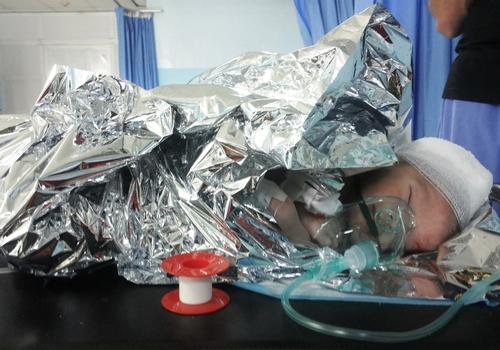
Majed, 27-day old new-born, arrived at MSF surgical project in Ramtha with a head injury due to an explosive barrel bomb
Jordan

Dramatic increase in Syrian patients wounded by barrel bombs at surgical project in northern Jordan

“More than 70% of wounded we receive suffer from blast injuries, and their multiple wounds tell their stories,” said Renate Sinke, Project Coordinator of MSF Ramtha Emergency Surgical Programme. Press Release - 9 Jul 2015
 
Testimonies + Photos from Gaza - between 30 March and 22 April 2015 - See the word document for captions
Palestine

Testimonies from MSF patients in Gaza

Testimonies from MSF patients from Gaza - between 30 March and 22 April 2015. Voices from the Field - 8 Jul 2015
 
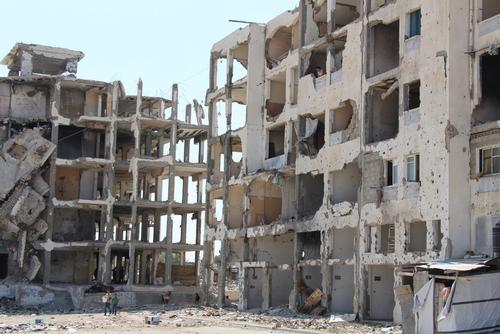
Beit Hanoun, Shuja’iya (according to the UN: Reconstruction of over 12,580 housing units totally destroyed has yet to start, prolonging the hardship of some 100,000 internally displaced people 100,000 people who lost their homes in the Gaza strip remain internally displaced and 120,000 people still have no access to public water.) Beit Hanoun, northeastern Gaza Strip, one of the hardest hit areas during the 2014 summer war, near Erez crossing, during the last war partly or fully destroyed houses, partly with makeshift extensions, giving refuge to families from there or the neighbourhood who lost their homes.
Palestine

Gaza, one year after, Palestinians still suffocated by Israeli occupation

“Eight-year-old children in Gaza have known nothing but the blockade and war since they were born,” says Erwan Grillon, MSF’s head of mission for Gaza and the West Bank. “And they’ve already lived through four offensives, two of which were absolutely devastating and indiscriminately killed a shocking number of civilians. The majority of our patients who still require war-related surgeries and physiotherapy are children under 18.” Press Release - 8 Jul 2015
 
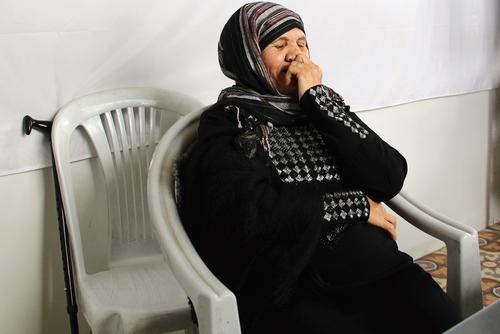
Hajja Hania lost 20 members of her family in one air strike during Protective Edge, in Gaza city MSF clinic waiting for physiotherapy session.
Palestine

Aiding & Abetting? The Limits of Humanitarian Aid in the Occupied Palestinian Territories

As has been the case for the past 15 years, our presence is our protest in the face of an occupation that has taken on a near-permanent character. While there is no shortage of suffering in Gaza and the West Bank, an international acceptance of the unacceptable is now the deadliest form of the occupation for Palestinians – with no end in sight. Voices from the Field - 7 Jul 2015
 
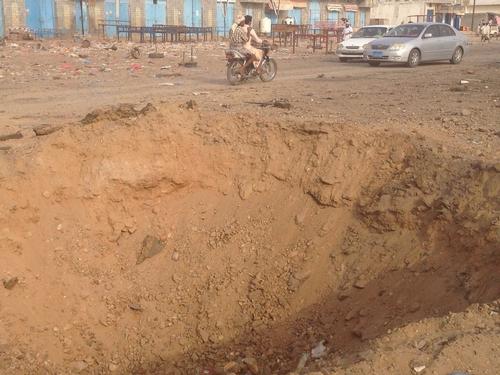
Ahem Market, Yemen.
Yemen

MSF treats dozens wounded after attacks on markets and residential areas

“It is unacceptable that airstrikes take place in highly concentrated civilian areas where people are gathering and going about their daily lives, especially at a time such as Ramadan”, said Colette Gadenne, MSF Head of Mission in Yemen. Press Release - 7 Jul 2015
 
msf-placeholder
Libya

The challenge of medical aid

“We had a lot of problems delivering all these drugs and medical supplies,” says Dr. Anne-Marie Pegg, MSF’s head of mission in Libya. “It was a challenge to find an airplane that transports freight to Libya. And then road transport is very dangerous because of the insecurity in both the east and the west.” Voices from the Field - 1 Jul 2015
 
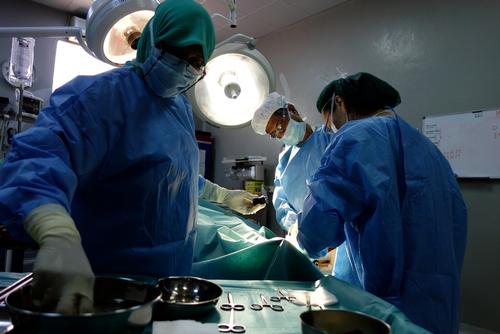
Operating theatre.
Yemen

The crisis in Yemen

First published in the International Activity Report 2015 Report - 1 Jul 2015
 
Second testimony: 
We believe that the violence will continue during Ramadan:  a ceasefire won’t be implemented unless the two warring parties respect it.
Jasmin Mohammed Ali (26) is a teacher in the primary school in Qatabah and her sisterAsia Mohammed Ali ( 25)  talk about their daily life in Qatabah since the conflict erupted. 

Because of the ongoing crisis, the school I work in is closed; it has been closed for 3 months. We only   finished the 1st term and had to stop during the 2nd term. I haven’t been paid for the last month.  Recently, the school (which was luckily empty at the time) was affected by the airstrikes as it is close to the central security office which was targeted; all the windows of the school were shattered into pieces. 
Since the new crisis in Yemen started things have become much harder. It is harder to get food and water. It is hard to get food as many shops have closed. On the other hand, some Yemeni families depend completely on the work in the khat (qat) market. If there is bombing or shelling close by, everyone runs away from the khat market and business is lost.  Our father and brother work in the khat market. If they cannot work in the khat market, they won’t have enough money to buy food for the family.  Prices of food, especially basic food, have increased dramatically. For an example, twenty liters of cooking oil used to be 5,000 Yemeni Rial (YER), now they have to pay 9,500 YER.  15 kg of sugar used to be 12,000 YER, now they have to pay 18,000 YER. 
Lack of water is our biggest challenge
Water represents everything and without water there is no life. There isn’t any running water anymore in Qataba as the main water facility for the town and the surrounding villages stopped working due to a fuel shortage. We have no water in our house and cannot fill up the tanks either. There is only one water well in Qataba town that has good water for drinking and is for free. If this well is not working we would walk to another well where there is the main water facility. This trip usually takes between three to four hours round trip by foot and if we go there, we cannot bring that many containers as we can only carry one container, it’s very heavy. Unfortunately, this borehole isn’t working for the moment due to the fuel issue as well.  
Meanwhile, the main well in Qataba is becoming very crowded and women in town fill their containers with a multitude of personal hoses. That would take a long time to fill up all the containers. 
We couldn’t go to the well, today, as it was too crowded. Water trucks are still available but it is only used by rich people, one water truck costs 30,000 YER for 6,000 liters and it only lasts for about 1-2 weeks depending on the size of the family. 
The impact of airstrikes 
 Airstrikes and shelling is making us terrified and we can’t sleep well. Last night, the kids were too afraid as the shelling and fighting was very close by. 
We have been thinking about fleeing Qataba, but the problem is that we are 26 family members living in one house. We don’t know where to go.
It might be better to stay in Qataba since we have a home here. We don’t own a house in any of the surrounding villages where it would be quieter. We have relatives in Damt district in Al-Dhale, which could be an option. If the situation deteriorates, half of the family might go to Damt with the other half staying in Qataba.  If the bombing and shelling continues and if the frontline moves closer, we might decide to leave. 
The holy month in Qatabah 
We never imagined that this could happen. Qataba was very peaceful and didn’t have any problems. People would come to Qataba from different districts of different governorates during the holy month of Ramadan but this year nobody will come. Qataba is perceived to be better than other districts for Ramadan because of its culture during Ramadan. The streets will be filled with markets and people.
Yemen

Testimonies from Al-Dhale

"We believe that the violence will continue during Ramadan: a ceasefire won’t be implemented unless the two warring parties respect it... We never imagined that this could happen." Voices from the Field - 29 Jun 2015
Four mothers posing in a corridor of the Hospital in Bili. All four of them are staying in the hospital with their child, that's suffering from a severe case of malaria. Since the beginning of the project in 2016, the pediatric ward already treated more than 4.000 cases of complicated/severe form of malaria.
Médecins Sans Frontières (MSF)

Independent medical humanitarian assistance

We provide medical assistance to people affected by conflict, epidemics, disasters, or exclusion from healthcare. Our teams are made up of tens of thousands of health professionals, logistic and administrative staff - most of them hired locally. Our actions are guided by medical ethics and the principles of independence and impartiality. We are a non-profit, self-governed, member-based organisation.

Learn more