



Ebola disease in DRC: find out how we're responding
Learn more
1390 Results
 
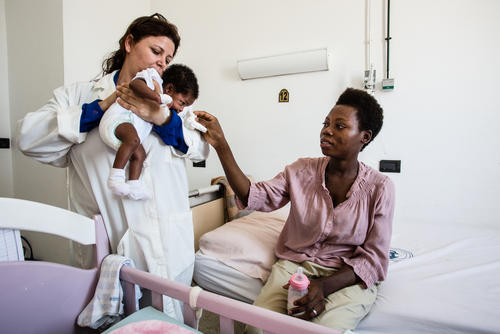
Marie Agama with her daughter Destiny. She was pregnant when he left Libya on a rubber boat, with 127 people onboard, that arrived to Zarzis last 27 may. The fuel was finished after a few hours of navigation. For two and a half days they drifted out into the open sea, without eating or drinking. A fisherman's boat saw them and alerted the Tunisian coastguards, who brought them to the Foyer of the Tunisian Red Cross in Médenine..

She delivered safely and in good conditions in Fatuma Bourguiba Hospital, where MSF transferred her a couple of days before.

Fatuma Bourguiba Hospital (Monastir, Tunisia), public hospital. MSF directs migrants towards the hospital services for chronic diseases.
Tunisia

Stories and testimonies of migrants fleeing violence

On May 27th 2017, a rubber boat with 127 people on board arrived to Zarzis (Tunisia) coming from Libya. The fuel finished after few hours of navigation and for two and a half days they drifted out into the open sea, without eating or drinking. A Tunisian fisherman's boat saw them and alerted the Tunisian Coast Guard who finally rescued them. Photo Story - 22 Aug 2017
 
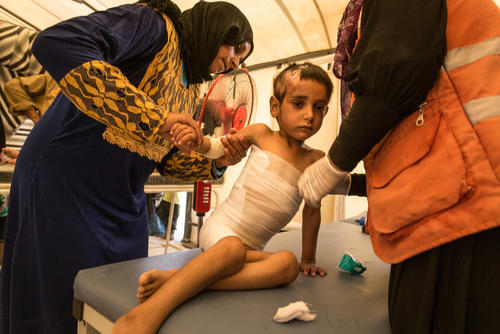
July 2017 - Syria - Kurdish province - Aïn Issa Displaced Camp. MSF Clinic. A young Syrian, displaced from Raqqa, was (according to his family) burned in a boiling oil accident when he was at home.

Juillet 2017 - Syrie - Province kurde - Camp de déplacés d'Aïn Issa. Clinique MSF. Un jeune Syrien, déplacé de Raqqa, brûlé (selon sa famille) avec de l'huile bouillante dans un accident domestique, alors qu'il était chez lui.
Syria

The silent war

“He was playing with a battery that he found in the garden. Unfortunately it turned out to be an explosive device and it exploded.” Voices from the Field - 8 Aug 2017
 
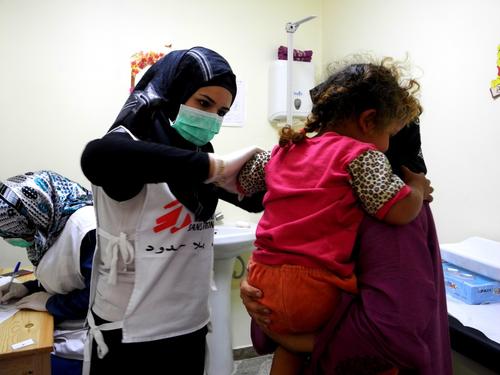
The nursing room of the paediatrics department in MSF’s primary healthcare clinic. The department provides  around 800 consultations a month, with children suffering from upper respiratory tract infections,  diarrhea, gastro intestinal diseases, and skin diseases.
Lebanon

Refugees and host community bound by suffering

Lebanese residents of the remote, high plateau area of Wadi Khaled are facing the same hardships as the Syrian refugees there. Project Update - 7 Aug 2017
 
A doctor checks a patient Iraqi girl at a hospital run by Medecins Sans Frontieres in Qayyara, Iraq April 6, 2017. Picture taken April 6, 2017. REUTERS/Suhaib Salem - RTX352CQ
Iraq

Crisis update – July 2017

The battle for Mosul has taken a staggering toll on the population. Crisis Update - 4 Aug 2017
 
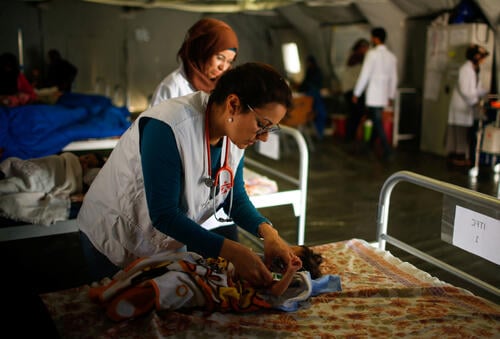
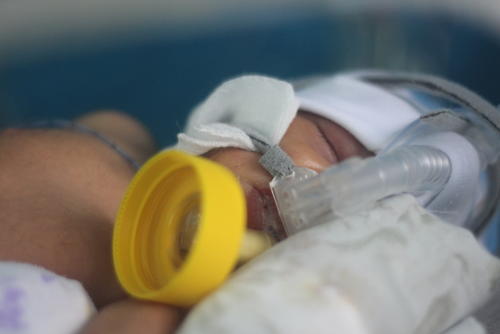
A new born Syrian baby in the Neo-Natal care unit of the MSF Mother and Child Hospital in Irbid, Jordan.
Jordan

10,000 babies born as refugees

A maternity hospital run by MSF in Jordan’s Irbid governorate has witnessed the births of 10,000 babies – most of them Syrian – in just four years. Project Update - 4 Aug 2017
 
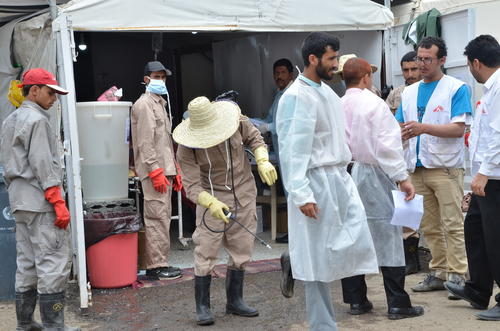
MSF cleaner while spreading chlorination at the shoes of one of the nurses as he was getting out of the cholera treatment center. This is one of the precautions taken to prevent the spread of the cholera outside the center.
Yemen

Crisis update – July 2017

The conflict in Yemen, which escalated in March 2015, has led to a full-blown humanitarian emergency. Project Update - 3 Aug 2017
 
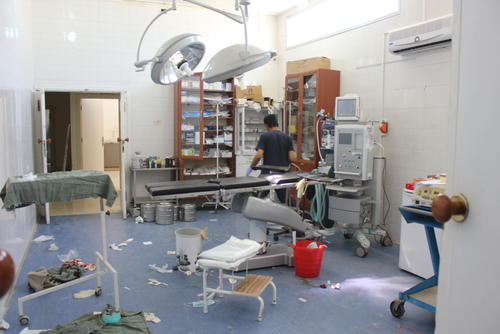
The operational theatre after a surgery conducted in Tal Abyad general hospital, which MSF is working in partnership with the health authorities to support the hospital, Northern Syrian.
Syria

Raqqa’s besieged residents deprived of urgent medical care

“Patients tell us large numbers of sick and wounded people are trapped inside Raqqa city with little or no access to medical care and scant chance of escaping the city” Project Update - 31 Jul 2017
 
 “In Abs hospital, the wards are bursting at the seams, as our medical teams do everything they can to meet people’s urgent health needs. What’s happening in Abs sums up the current state of Yemen. More than two years after the conflict escalated, the country has been torn apart. Many health facilities are not functioning, or are short of staff and medical supplies, and the health system has collapsed.” Roger Gutiérrez, MSF field coordinator in Abs, Yemen
Yemen

“Some families have to choose between taking a child to hospital or feeding the others”

In Abs hospital, the wards are bursting at the seams, as our medical teams do everything they can to meet people’s urgent health needs. Voices from the Field - 10 Jul 2017
 
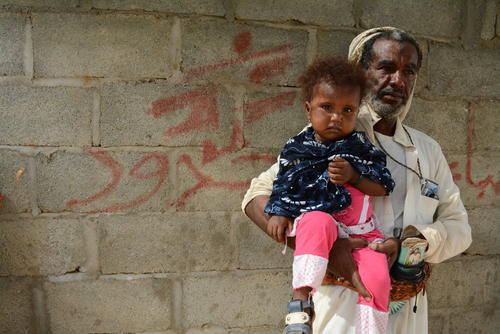
Saleh Mohammed, aged 57, from Sa’ada, is living in a displaced setting near Abs, Hajjah governorate. He is in Al Khamees health centre holding his two-year-old daughter, who has been exposed to war for most of her life: she was born in January 2015. Most of her siblings are dead.
Yemen

Urgent need for improved water and sanitation to curb cholera

“In Abs district, our teams are seeing an extremely poor sanitation situation and insufficient access to clean drinking water” Press Release - 10 Jul 2017
 
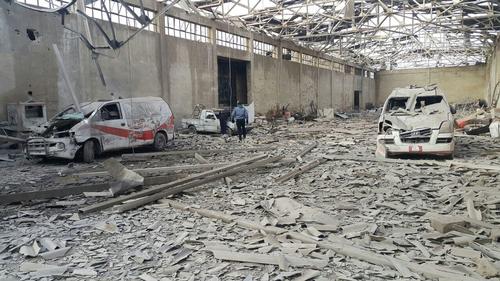
The last two functional ambulances in Al-Marj neighbourhood (in the East Ghouta besieged area near Damascus) were destroyed beyond repair in an aerial bomb attack on Monday 05 December 2016. They were parked in the hospital’s warehouse/garage, very near to the makeshift hospital’s location. Two hospital cars, used to transporting supplies and medical personnel, were also destroyed in the blast. The lack of ambulances will have an impact on the ability to quickly treat wounded when there is bombing or shelling in the area, but above all it will affect the capacity to refer the most sick patients to larger secondary referral hospitals. The makeshift hospital in Al-Marj is not equipped for complex or long-term in-patient hospital care, and this could have a big impact on the ability to refer patients for appropriate secondary care.
Global health

MSF urges G20 to take action on health issues

“The G20 leaders need to improve people’s access to medical care and turn their words into action.”
Press Release - 6 Jul 2017
Four mothers posing in a corridor of the Hospital in Bili. All four of them are staying in the hospital with their child, that's suffering from a severe case of malaria. Since the beginning of the project in 2016, the pediatric ward already treated more than 4.000 cases of complicated/severe form of malaria.
Médecins Sans Frontières (MSF)

Independent medical humanitarian assistance

We provide medical assistance to people affected by conflict, epidemics, disasters, or exclusion from healthcare. Our teams are made up of tens of thousands of health professionals, logistic and administrative staff - most of them hired locally. Our actions are guided by medical ethics and the principles of independence and impartiality. We are a non-profit, self-governed, member-based organisation.

Learn more