



Ebola disease in DRC: find out how we're responding
Learn more
1390 Results
 
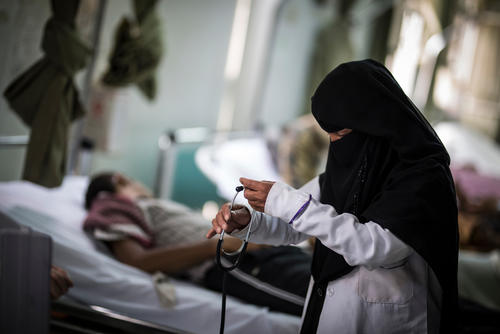
Kawkab Al Sarafi works as a nurse in the Emergency Room of the Al Koweit university hospital in Sana’a since 1 year. Since she started her job, she hasn’t been paid a cent. Kokab explains that she lives far away and has to walk to go to the hospital as most of the time she can’t pay for the transportation. When she doesn’t work at the hospital, she goes to the khat market to try to buy large quantities to resell it. « We are really poor, i live with my sister and sometimes we haven’t money to buy food », she added. Kokab is one out of thousands health workers who haven’t been paid since a year, when the government stopped paying the salaries of the civil servants.
Yemen

Government health staff are saving lives without salaries

“People don’t understand that we don’t always have drugs; we need to use our own money to buy the medication. People shout at us ‘Why are you here?!’” Report - 28 Sep 2017
 
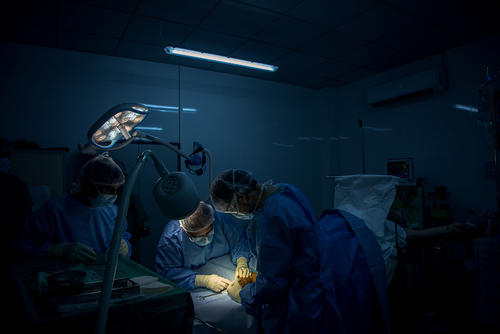
A woman receives surgery to remove a piece of shrapnel from her heel in an injury she sustained weeks earlier. She fled Mosul with her injury.
Iraq

Crisis update – September 2017

The battle for Mosul has taken a staggering toll on the people of Iraq’s second largest city. Health needs are shifting from war injuries to medical cases and long-term rehabilitation care. Crisis Update - 21 Sep 2017
 
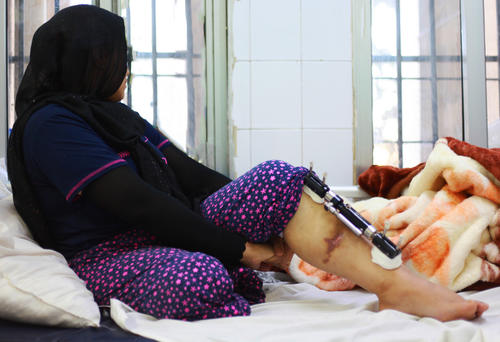
"When an airstrike hit my house in the middle of the night I suffered shrapnel wounds and my legs were so badly damaged that one had to be amputated. I only found out about the amputation when I regained consciousness in a field hospital in Dara’a, Syria. Just two hours after waking up, I was discharged from hospital. As my home had been destroyed, I was taken to my relative’s house, where my children were staying. They had been there during the night of the bombing too, so they were safe.

Seeing my children again was the hardest part. I felt weak, disabled. The kids were frightened of me without my leg. My little boy was afraid of me. He’s just one and a half years old – I used to hug him and feed him, but the last time I saw him, he was scared and went to his aunt instead.

After the amputation in Syria, I was taken across the border, to Ramtha, where I’ve had more surgery. I’m also currently undergoing physiotherapy for a prosthesis.

I have three children, aged nine, eight and one and a half. Their father died, and now I’m in Ramtha, Jordan being treated, while my children are still in Syria. I can’t stop thinking about getting back to them, I don’t know how they are doing or if anything will happen to them. 

I am improving with physiotherapy and getting stronger everyday, but I will only return home when I am strong enough to walk and take care of my children. People ask me where I find my strength, but my body is more than just my leg. I must be strong for my children. I must not give in to despair – this injury will not destroy me.

I promised my children I’d come home, and I will."

(This patient’s name has been changed)
Syria

Syrian war wounded look forward to returning home

Here are three testimonies highlighting the resilience and ongoing needs of patients. Voices from the Field - 7 Sep 2017
 
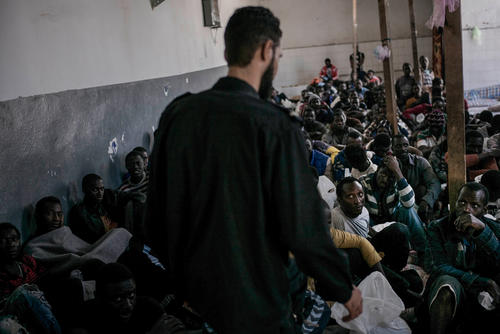
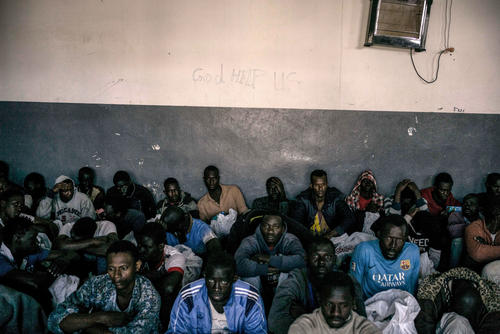
Men detaineed in Abu Salim detention centre. Detainees spend days and months in Libyan detention centres, without knowing when they will be released.
Libya

5 Reasons not to block migrants & refugees in Libya

5 Reasons not to block migrants & refugees in Libya Project Update - 7 Sep 2017
 
Men detaineed in Abu Salim detention centre. Detainees spend days and months in Libyan detention centres, without knowing when they will be released.
Libya

European governments are feeding the business of suffering

"The detention of migrants and refugees in Libya is rotten to the core. It must be named for what it is: a thriving enterprise of kidnapping, torture and extortion." Open Letter - 6 Sep 2017
 
Men detaineed in Abu Salim detention centre. Detainees spend days and months in Libyan detention centres, without knowing when they will be released.
Libya

MSF International President to speak on Libya detention centres

Dr Joanne Liu, International President of MSF, will describe horrific conditions inside Libyan detention centres and challenge the complicity of European States Project Update - 5 Sep 2017
 
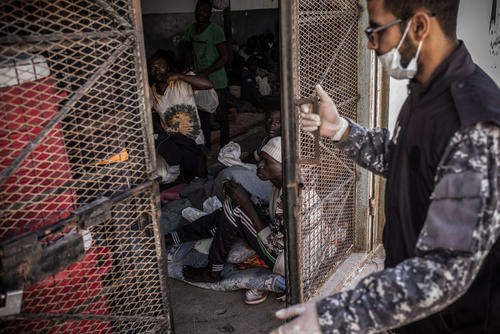
A guard is closing the door of a cell in Abu Salim detention center, in Tripoli, Libya.
Libya

Human Suffering: Inside Libya's migrant detention centres

For more than a year, Médecins Sans Frontières (MSF) has been providing medical care to refugees, asylum-seekers and migrants held inside Tripoli detention centres in conditions that are neither humane nor dignified. Photo Story - 1 Sep 2017
 
Men detained in Abu Salim detention centre. Detainees spend days and months in Libyan detention centres, without knowing when they will be released.
Libya

Arbitrary detention of refugees, asylum-seekers and migrants must stop

“Detainees are stripped of any human dignity, suffer ill treatment, and lack access to medical care.” Press Release - 1 Sep 2017
 
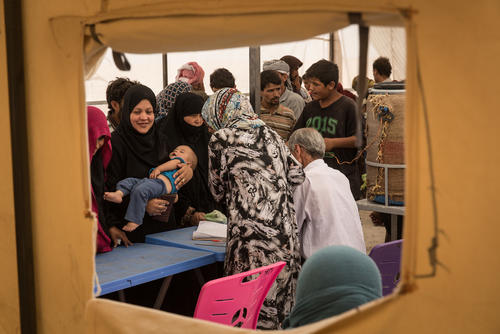
July 2017 - Syria - Kurdish province - Aïn Issa displaced camp. MSF Clinic. Patients registration. 

Juillet 2017 - Syrie - Province kurde - Camp de déplacés d'Aïn Issa. Clinique MSF. Enregistrement des patients.
Syria

Conflict brings new arrivals every day to Ain Issa camp

“We are worried because we don’t have any information about what’s going on inside Raqqa. The main issue for us is the welfare of the wounded.” Press Release - 31 Aug 2017
 
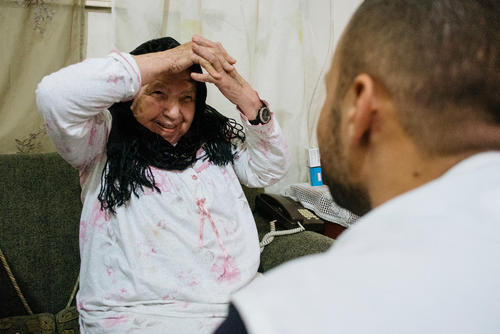
“When we visit a patient and she welcomes us with a smile on her face, and a twinkle in her eyes, this is success for me. It is very important that the patient feels happiness, security and trust with us.” Rached, 32, is a MSF nurse. He has been helping Amina.
Lebanon

Home-based care for refugees in Burj el-Barajneh

“When they visit me I feel better. They visit me two or three times a week. I tell them that I’m out of my medication and they get it for me.” Photo Story - 30 Aug 2017
Four mothers posing in a corridor of the Hospital in Bili. All four of them are staying in the hospital with their child, that's suffering from a severe case of malaria. Since the beginning of the project in 2016, the pediatric ward already treated more than 4.000 cases of complicated/severe form of malaria.
Médecins Sans Frontières (MSF)

Independent medical humanitarian assistance

We provide medical assistance to people affected by conflict, epidemics, disasters, or exclusion from healthcare. Our teams are made up of tens of thousands of health professionals, logistic and administrative staff - most of them hired locally. Our actions are guided by medical ethics and the principles of independence and impartiality. We are a non-profit, self-governed, member-based organisation.

Learn more