Ebola disease in DRC: find out how we're responding
Learn more
1390 Results
 
msf-placeholder
Syria

The situation in the northwest is quickly going from very bad to worse

"This is another step towards disaster in this troubled zone."  Voices from the Field - 9 Feb 2018
 
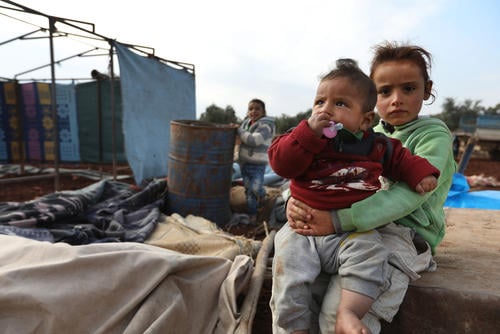
These Syrian children have just arrived at their new home, a makeshift tent that is not yet completed but will house their family indefinitely. Fleeing renewed fighting in northwest Syria, the children are wearing the only clothes they have. They have no access to clean water, drinking from a rusted barrel.

وصل هؤلاء الأطفال السوريون للتو إلى منزلهم الجديد، وهو عبارة عن خيمة مؤقتة لم تكتمل بعد، ولكنها ستؤوي عائلتهم إلى أجل غير مسمى. ومنذ نزوح عائلاتهم نتيجة تجدد القتال في شمال غرب سوريا ولا يزال هؤلاء الأطفال يرتدون قطع الملابس الوحيدة التي يمتلكونها. كما أنّهم لا يستطيعون الوصول إلى مصدر مياه نظيفة، ولذلك يشربون الماء من برميل صدئ.
Syria

Idlib’s population suffers the consequences of heavy fighting and airstrikes

Bit by bit, these families have lost everything; some only have their tears left. Voices from the Field - 5 Feb 2018
 
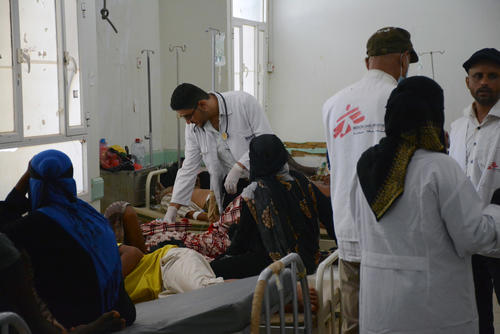
An MSF medical team is working together with MoH staff in the cholera treatment center in Al-Sadaqa hospital in Aden.
Besides the medical support, MSF logistic team has repaired the center as the building had been abandoned for two years after the war. MSF proceeded to emergency rehabilitation as it required heavy cleaning work, electricity, water system repairs as well as installing air conditions. Considering the hot and humid weather during the summer, heat becomes an issue in any health structure in the coast, most especially when it comes to hospitalise severely dehydrated patients.
Yemen

“On an average day in Taiz, we hear around five explosions per minute”

Arunn Jegan is an Australian project coordinator who has worked with Médecins Sans Frontières since 2016. He was with MSF in Cox’s Bazar, Bangladesh, and recently started his mission in Taiz, Yemen. Voices from the Field - 1 Feb 2018
 
msf-placeholder
Syria

MSF-supported hospital in Idlib closed after damage from airstrikes

This latest incident demonstrates the brutality with which healthcare is coming under attack in Syria. Statement - 29 Jan 2018
 
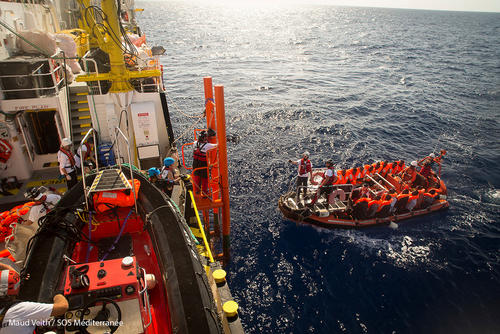
More than 500 people are now safely onboard Aquarius, a search and rescue vessel run by Médecins Sans Frontières (MSF) and SOS MEDITERRANEE, but an unknown number of people are missing presumed drowned after a gruelling day of rescues in the Mediterranean. Teams rendered assistance to three rubber boats in distress that were overloaded with men, women and children, 1 November 2017.
Mediterranean migration

Medical care for refugees and migrants along Central Mediterranean route

Unclear future for refugees amid challenging rescue environment for Aquarius. Voices from the Field - 29 Jan 2018
 
In a nightmarish day on the Mediterranean yesterday, 99 survivors from a sinking rubber boat were rescued by the Aquarius, a search and rescue vessel run by Médecins Sans Frontières (MSF) and SOS MEDITERRANEE, but an unknown number of men, women and children are missing, presumed drowned. Two women are confirmed dead.

“The scene was devastating, with many urgent medical cases in quick succession. They just kept coming, one after another, unconscious and not breathing,” said MSF nurse Aoife Ni Mhurchu. 

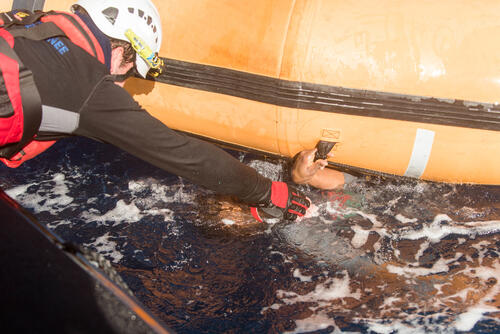
Dozens of people were already in the sea when the Aquarius arrived at the scene around 9.30am, and the rubber boat was already deflating. All floating devices were deployed from Aquarius, rafts were launched and the rescue team started pulling people from the sea. 

The MSF medical team on board the Aquarius resuscitated six young children, and one woman. Despite their best efforts they were unable to resuscitate two other women who had drowned. 

“It is absolutely heartbreaking. These women were mothers. We’re now trying to care for their very young children who remain onboard Aquarius” said Ni Mhurchu.

All medical emergencies together with their caretakers were evacuated from Aquarius by an Italian Navy Helicopter to Sfax, Tunisia – a total of sixteen people. This included all six resuscitated children and several women with water on their lungs. The MSF medical team also treated many severe fuel burns, as well as over a dozen mild to moderate hypothermia cases. Many survivors were disorientated and confused as a result of inhaling fuel which had leaked into the rubber boat.
Mediterranean migration

99 survivors rescued from sinking dinghy but many presumed drowned

99 survivors from a sinking rubber boat were rescued by the Aquarius, a search and rescue vessel run by MSF and SOS MEDITERRANEE, but an unknown number of men, women and children are missing, presumed drowned. Press Release - 28 Jan 2018
 
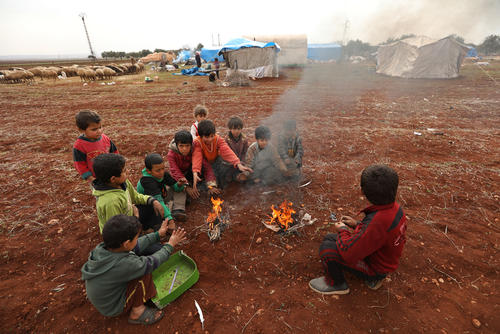
More than 212,000 Syrians have fled their homes due to an intensification of airstikes in northwest Syria. Most have very little or nothing to sustain themselves as winter sets in. Here, a group of Syrian children huddle near a fire to find warmth.

نزح أكثر من 212 ألف شخص سوري من منازلهم بسبب تصاعد الغارات الجوية في شمال غرب سوريا. لا يملك أغلبهم سوى القليل – وبعضهم لا يمتلك شيئاً– ليعيلوا أنفسهم في الشتاء. هنا يجتمع بعض الأطفال السوريين قرب نارٍ ليجدوا بعض الدفء.
Syria

Tens of thousands struggle for survival in the winter cold

Tens of thousands of families have fled north towards the Turkish border, where they are living in overcrowded tents or makeshift shelters. Project Update - 24 Jan 2018
 
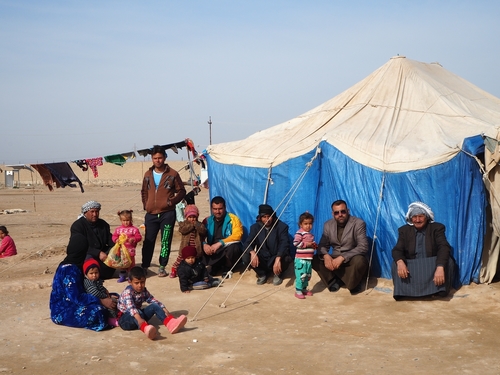
Providing care to displaced communities, Tikrit district, Iraq.
Iraq

Crisis update – December 2017

MSF has seen an increasing number of families leaving the camps and returning home but more than 2.9 million remain displaced. Crisis Update - 18 Jan 2018
 
Nine-day-old Mohammad was born at the Doctors Without Borders/ Médecins Sans Frontières (MSF) maternity unit in Domiz Refugee Camp, northern Iraq. His parents left Syria when the incessant bombing became too much. 

“I have three daughters and one son,” Mohammad’s mother Seva says. “Mohammad was born here at the maternity centre, as well as one of my daughters. The maternity unit [in Domiz camp] is much better than the other places where I gave birth.”

“The staff were really good [when I gave birth to Mohammad]. I feel relaxed when I know there are people from my community providing the services. It feels better than going outside.” 

MSF launched the sexual reproductive health and maternity project in Domiz Refugee Camp in 2013. We initially provided check-ups for women before and after birth and family planning services. In 2014, the project was expanded to a full maternity unit with a 24-hour delivery room, triage and gynaecological consultations. Over the past four years, MSF medical staff have delivered more than 3,400 babies and provided more than 27,400 gynaecological consultations.

MSF completed the project in Domiz Refugee Camp in November 2017 and has handed over the maternity unit to the Dohuk Directorate of Health. We currently have projects across Iraq in the governorates of Erbil, Diyala, Ninawa, Kirkuk, Salaheddin, Anbar and Baghdad and will continue to set up new projects where the needs are greatest.
Iraq

Giving Syrian refugees a safe place to give birth

The services here are really good and they take care of us. Voices from the Field - 18 Jan 2018
 
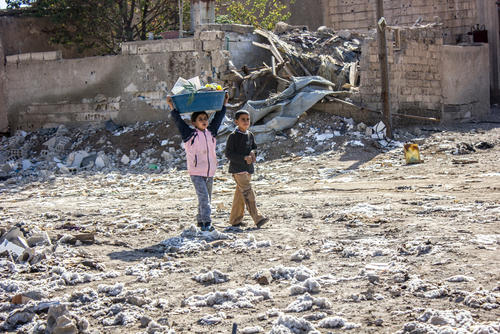
Two kids helping their parents cleaning their house from rubbles. Al Mishlab, east of Raqqa city.
Syria

33 blast victims treated by MSF in Raqqa in the first week of 2018

Demining activities need to be scaled up to protect Raqqa returnees from catastrophic but avoidable deaths and injuries. Statement - 15 Jan 2018
Four mothers posing in a corridor of the Hospital in Bili. All four of them are staying in the hospital with their child, that's suffering from a severe case of malaria. Since the beginning of the project in 2016, the pediatric ward already treated more than 4.000 cases of complicated/severe form of malaria.
Médecins Sans Frontières (MSF)

Independent medical humanitarian assistance

We provide medical assistance to people affected by conflict, epidemics, disasters, or exclusion from healthcare. Our teams are made up of tens of thousands of health professionals, logistic and administrative staff - most of them hired locally. Our actions are guided by medical ethics and the principles of independence and impartiality. We are a non-profit, self-governed, member-based organisation.

Learn more