



Ebola disease in DRC: find out how we're responding
Learn more
1390 Results
 
The 31th of march we receive the order to not rescue people on a rubber boat. The boat was closed from us and we had the obligation to wait for the LCG.
Mediterranean migration

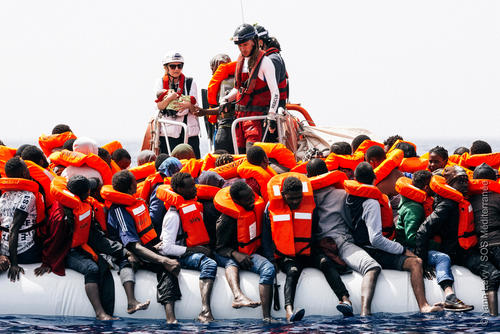
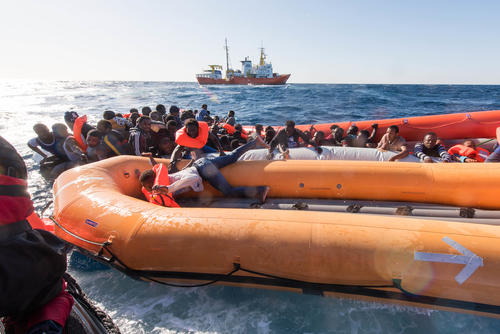
MSF Evacuates 39 Vulnerable People From Packed Rubber Boat

Yesterday at 10.32am the search and rescue ship Aquarius along with the Libyan coast guard, were alerted by the Italian Rescue Maritime Coordination Centre (IMRCC) to a rubber boat in distress with an estimated 120 people, in international waters 23-24 nautical miles from the Libyan coast. Statement - 1 Apr 2018
 
msf-placeholder
Syria

Letter to the doctors of East Ghouta

"At this very moment, our ability to assist in providing healthcare in East Ghouta is almost non-existent." Voices from the Field - 28 Mar 2018
 
msf-placeholder
Syria

Two airstrikes cause a mass-casualty influx in a MSF supported hospital

"It is painful to live in days when children are killed and wounded by the bombing of a busy public market. Our only relief is to keep supporting the Syrian medics to save as many lives, limbs and futures as possible." Press Release - 23 Mar 2018
 
In a nightmarish day on the Mediterranean yesterday, 99 survivors from a sinking rubber boat were rescued by the Aquarius, a search and rescue vessel run by Médecins Sans Frontières (MSF) and SOS MEDITERRANEE, but an unknown number of men, women and children are missing, presumed drowned. Two women are confirmed dead.

“The scene was devastating, with many urgent medical cases in quick succession. They just kept coming, one after another, unconscious and not breathing,” said MSF nurse Aoife Ni Mhurchu. 

Dozens of people were already in the sea when the Aquarius arrived at the scene around 9.30am, and the rubber boat was already deflating. All floating devices were deployed from Aquarius, rafts were launched and the rescue team started pulling people from the sea. 

The MSF medical team on board the Aquarius resuscitated six young children, and one woman. Despite their best efforts they were unable to resuscitate two other women who had drowned. 

“It is absolutely heartbreaking. These women were mothers. We’re now trying to care for their very young children who remain onboard Aquarius” said Ni Mhurchu.

All medical emergencies together with their caretakers were evacuated from Aquarius by an Italian Navy Helicopter to Sfax, Tunisia – a total of sixteen people. This included all six resuscitated children and several women with water on their lungs. The MSF medical team also treated many severe fuel burns, as well as over a dozen mild to moderate hypothermia cases. Many survivors were disorientated and confused as a result of inhaling fuel which had leaked into the rubber boat.
Mediterranean migration

European governments are obstructing lifesaving rescues and returning people to unsafe Libya

MSF calls out Italian and other European governments, condemning all actions which prevent lifesaving rescue operations in the Central Mediterranean and that return people to Libya. Statement - 21 Mar 2018
 
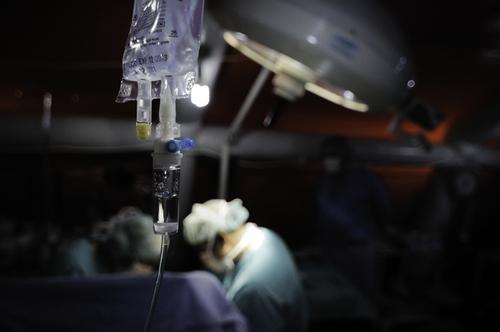
An inflatable operating theatre is erected inside this MSF makeshift hospital in Syria (a converted chicken farm) as it is an efficient way to maintain a sterile environment. Surgeon Steve Rubin operating.
Syria

The voice from the hospital basement in East Ghouta

‘This has to end, we cannot continue to watch children die.’ Statement - 15 Mar 2018
 
In the ER section of a makeshift hospital in Syria that MSF has converted from a farm.
Syria

An outrageous, relentless mass casualty disaster in East Ghouta

At least 344 wounded and 71 dead every day, seven days a week for two weeks – non-stop Statement - 8 Mar 2018
 
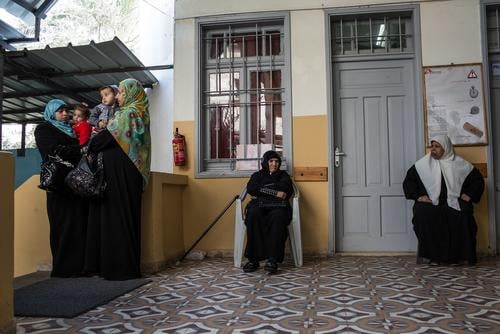
Dans le patiot de la clinique MSF de Gaza City, les femmes attendent leur tour.
Palestine

Gazans’ wounds bear witness to their living conditions

“Everything you earn here, you end up losing.” Project Update - 26 Feb 2018
 
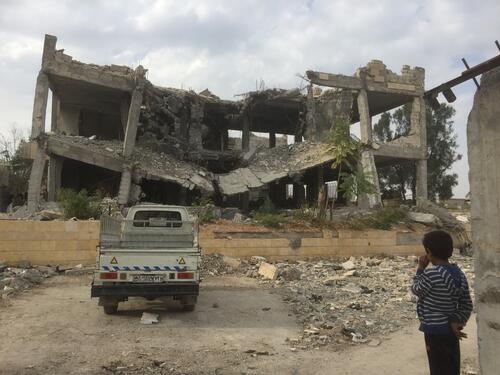
Bombed former ISIS magistrates court.
Syria

"We need your help to stop the bombing"

Medics in Syria that MSF supports tell us of what they're seeing during the conflict. Voices from the Field - 24 Feb 2018
 
msf-placeholder
Syria

Doctors and nurses collapsing as medical response in East Ghouta reaches its limits

MSF calls for an immediate ceasefire to enable the basic human act of helping the sick and wounded. Press Release - 24 Feb 2018
 
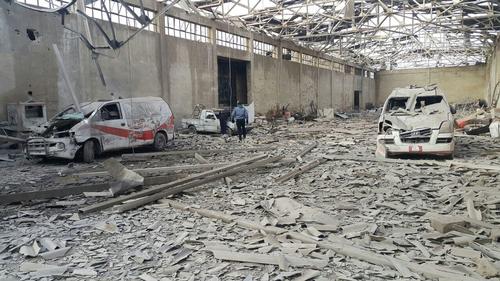
The last two functional ambulances in Al-Marj neighbourhood (in the East Ghouta besieged area near Damascus) were destroyed beyond repair in an aerial bomb attack on Monday 05 December 2016. They were parked in the hospital’s warehouse/garage, very near to the makeshift hospital’s location. Two hospital cars, used to transporting supplies and medical personnel, were also destroyed in the blast. The lack of ambulances will have an impact on the ability to quickly treat wounded when there is bombing or shelling in the area, but above all it will affect the capacity to refer the most sick patients to larger secondary referral hospitals. The makeshift hospital in Al-Marj is not equipped for complex or long-term in-patient hospital care, and this could have a big impact on the ability to refer patients for appropriate secondary care.
Syria

Extraordinary mass-casualty influxes in East Ghouta as hospitals run short of life-saving medicines

“We make a plea to those in and around East Ghouta with medical supplies to urgently grant access to those stocks to the medics in East Ghouta – lives depend on it.” Press Release - 21 Feb 2018
Four mothers posing in a corridor of the Hospital in Bili. All four of them are staying in the hospital with their child, that's suffering from a severe case of malaria. Since the beginning of the project in 2016, the pediatric ward already treated more than 4.000 cases of complicated/severe form of malaria.
Médecins Sans Frontières (MSF)

Independent medical humanitarian assistance

We provide medical assistance to people affected by conflict, epidemics, disasters, or exclusion from healthcare. Our teams are made up of tens of thousands of health professionals, logistic and administrative staff - most of them hired locally. Our actions are guided by medical ethics and the principles of independence and impartiality. We are a non-profit, self-governed, member-based organisation.

Learn more