Ebola disease in DRC: find out how we're responding
Learn more
1390 Results
 
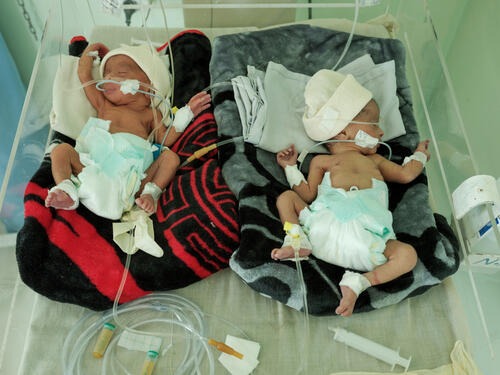
Two premature twins closely monitored at the neonates department of the MSF run “Mother and Child”. Public hospitals in the area is not fully functioning and the few private health facilities that are still running are inaccessible or unaffordable to many people. Taiz Houban. Yemen
Yemen

Complicated delivery: The Yemeni mothers and children dying without medical care

After four years of war in Yemen, MSF finds that access to medical care in the country is limited and the lack of timely access can be deadly, particularly for pregnant women and children. Report - 24 Apr 2019
 
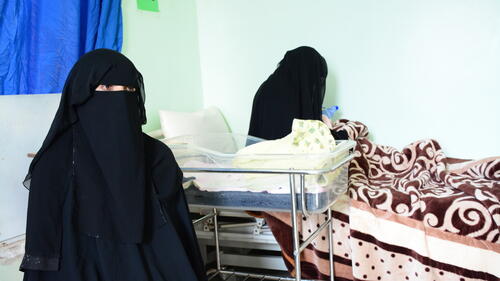
Caretaker with a patient coming from Taiz city to the mother and child hospital in Taiz houban.
Yemen

Mothers and children left to die in Yemen without access to medical care

A new MSF report describes how pregnant women and children are particularly vulnerable to high rates of mortality due to a lack of easy access to hospitals in Yemen's war-torn healthcare system. Press Release - 24 Apr 2019
 
المهاجرون محتجزون في طرابلس
Libya

Detained refugees trapped, Libyan families flee, as fighting worsens in Tripoli

The worsening fighting in Tripoli continues, forcing thousands of Libyans to flee and trapping refugees and migrants in detention centres. MSF teams are on the ground, providing healthcare and emergency food and water. Project Update - 17 Apr 2019
 
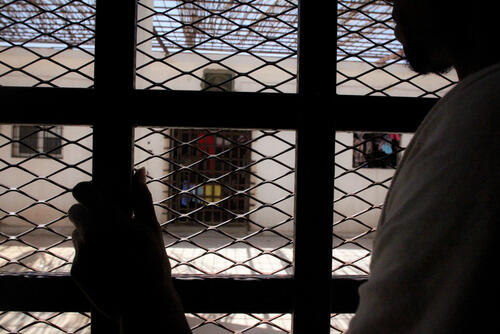
A shipwreck survivor in detention centre.
His testimony : “The sun was really strong and the boat started to deflate. All the babies died. How can we stay so many hours in the water without being rescued? People started to drink salty water. Why they left us die at sea?”
Libya

Trapped refugees must be released and granted safety from Tripoli fighting

Fighting that has broken out in Tripoli, Libya, over the last week, has trapped and further endangered the lives of refugees and migrants who are being held in detention centres. We call for their immediate release to a place of safety. Project Update - 11 Apr 2019
 
Saif is nine years old. He injured his leg at school. He is being treated at MSF’s post-operative care facility, in East Mosul. This is his testimony: 
“A year and a half ago, my family and I left my village because it had become too dangerous to live there. With my three brothers and my mother, we went to live in a camp for displaced people. Life in the camp was not easy, but I was still happy because I got to go to school. Then one day, another boy at school through a big rock at me and it broke my leg. First, my mum took me to a hospital in Qayyarah. The doctors there operated on me twice. Then they sent me here, to this hospital in Mosul [the MSF post-operative hospital]. That was almost a month ago. I have had two more operations since I arrived here. My leg is getting better, but very slowly. The doctors tell me it is taking longer because I have bacteria in my body. And these bacteria make it harder for my leg to become normal again. The bacteria can hurt other people too, so the doctors put me in this isolation room and I have to wear a green gown when I go outside. But I like this hospital. I spend a lot of time with the nurses. We draw together and they are teaching me the alphabet; I already know how to write all the letters. It helps make the time pass by faster. When I am bored, I call my brothers on my mum’s phone and show them all the games I get to play here. But still, I am impatient to go back to school. I don’t know how long I’ll stay here; it depends on when my leg is healed.”
Iraq

A year of post-operative care in Mosul

In the aftermath of the battle of Mosul, Iraq, war-wounded people, including children, needed reliable post-operative care. In response, MSF established a post-operative care facility in the city a year ago. These are the patient stories and the challenges we face. Project Update - 10 Apr 2019
 
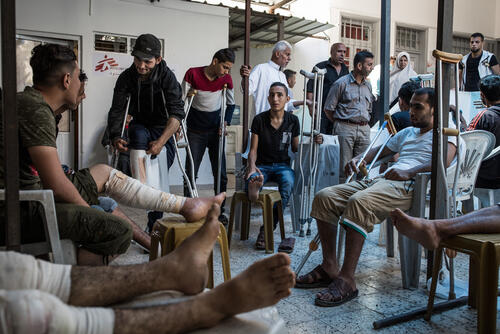
Gaza le 16 mai 2018, centre post opératoire de MSF. Chaque jour des blessés par balle de la grande marche du retour, viennent se faire changer les pansements.  Plus de 3600 blessés par balles sont à déplorer depuis le début de la grande marche du retour. Salle d'attente.

Gaza on May 16th, 2018, post-operating centers of MSF. Every day the wounded persons by bullet of the big walking of return, come to be made change bandages. More than 3600 wounded persons by bullets are to be regretted since the beginning of the big walking of return. Waiting room.
Palestine

Gaza’s numbing routine of injury and death

MSF’s field communications manager in Jerusalem, Jacob Burns, reflects on what it means when such a devastating toll of injuries comes to be considered a “good” day in Gaza. Voices from the Field - 4 Apr 2019
 
Yemen, Aden, 16 December 2018 – Entrance of OT and ICU of MSF trauma hospital in Aden. The hospital opened in 2012.
Yemen

Medical admissions in Aden suspended after patient kidnapped and killed

MSF has suspended admissions to our hospital in Aden, Yemen, following deteriorating security in the city, including the kidnapping and killing of a patient. Press Release - 4 Apr 2019
 
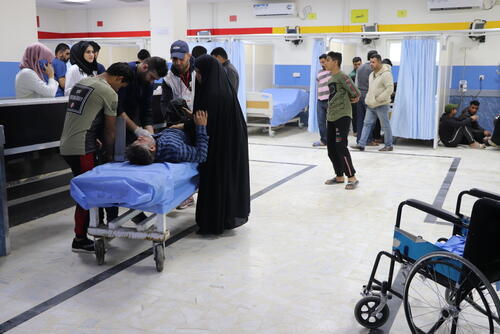
A new patient just arrived with his relatives to the ER of Imam Ali hospital, in Sadr City (Baghdad, Iraq). He is assisted by Iraqi doctors who are supported by MSF.
Iraq

Triaging patients in one of Baghdad's busiest emergency departments

South African doctor Sian Geraty describes the six months she spent in a busy hospital in Iraq's Sadr City, training local doctors and staff in implementing a triage system for an emergency room that sees 20,000 visits a month. Voices from the Field - 2 Apr 2019
 
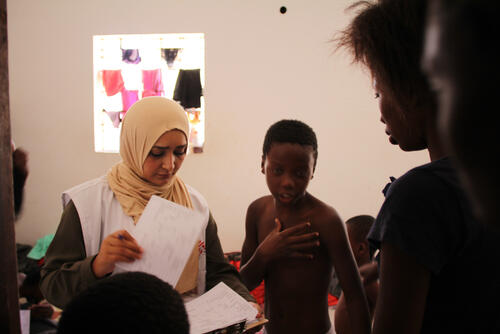
Women cells in the detention centre. MSF nurse is doing triage in order to identify patients who require a medical follow-up.

On September 2nd, 276 people were brought by the Libyan coast guard to Khoms (120 km east of Tripoli). They were then transferred to detention center where MSF works. Reportedly, they were in two rubber coats, one stopped due to engine failure, while the other boat continued to navigate for several hours before deflating and sinking. Survivors told MSF teams that over a hundred people died in the shipwreck.
Libya

Migrants in Libya: “We were able to make their time in that horrible place slightly better.”

Australian nurse Jai Defranciscis, describes the scenes in detention centres in Libya, where MSF provides care for migrants, refugees and asylum seekers facing arbitrary detention and extreme suffering. Voices from the Field - 2 Apr 2019
 
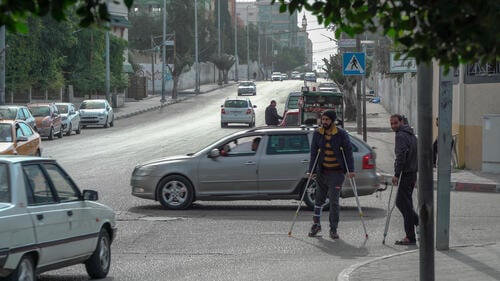
Our teams work with other health providers in Gaza to treat thousands of people shot by the Israeli army during protests at the fence that separates Israel from the blockaded enclave.

The injuries are complex and severe, with half resulting in open fractures. They require long periods of care and different types of treatment, to get better.

The Ministry of Health provides emergency care in their hospitals before patients come to MSF’s clinics and hospitals.

Today, however, there is still insufficient capacity to do reconstructive surgery and treat the infections, with hundreds of patients in need.
Palestine

March of Return protestors abandoned after year of suffering

A year after the start of the series of March of Return protests in which Israeli forces shot at people in Gaza, resulting in horrific injuries, the needs to provide injured people with care mount as the local healthcare system is unable to cope. Project Update - 28 Mar 2019
Four mothers posing in a corridor of the Hospital in Bili. All four of them are staying in the hospital with their child, that's suffering from a severe case of malaria. Since the beginning of the project in 2016, the pediatric ward already treated more than 4.000 cases of complicated/severe form of malaria.
Médecins Sans Frontières (MSF)

Independent medical humanitarian assistance

We provide medical assistance to people affected by conflict, epidemics, disasters, or exclusion from healthcare. Our teams are made up of tens of thousands of health professionals, logistic and administrative staff - most of them hired locally. Our actions are guided by medical ethics and the principles of independence and impartiality. We are a non-profit, self-governed, member-based organisation.

Learn more