



Ebola disease in DRC: find out how we're responding
Learn more
1390 Results
 
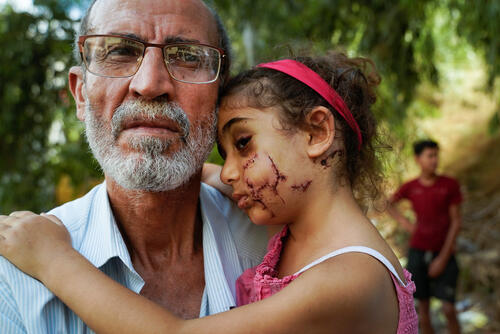
Samar is 3 years old. She is in the arms of her uncle as her father is receiving wound care.  Samar and her father came to the MSF medical point to receive wound care. They both were going out of their building on the day of the explosion and the steal gate caused her facial injuries and burns. She already had reconstructive plastic surgery. MSF has established a fixed point in the Mar Mikhael and Karantina neighborhoods in Beirut, two of the areas most impacted by the blast, to provide medical support to the people affected by the explosion. The team provides wound care (dressings), rapid consultations for people with non-communicable diseases, as well as psychological first aid.
Lebanon

MSF provides medical and mental health support to Beirut's most affected communities

A week after the blast in Beirut, Lebanon, MSF’s emergency response focuses on three main areas of intervention to help the most affected communities. Project Update - 12 Aug 2020
 
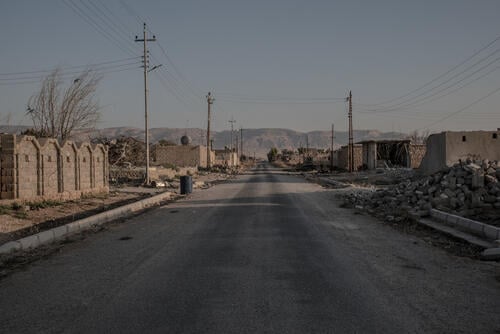
General view of Sinjar region. September 1st, 2019.
©Emilienne Malfatto
Iraq

Yazidi community suffers one crisis after another

Restrictive measures due to the COVID-19 pandemic are profoundly impacting the already vulnerable Yazidi community in Sinjar, northwest Iraq. Project Update - 9 Aug 2020
 
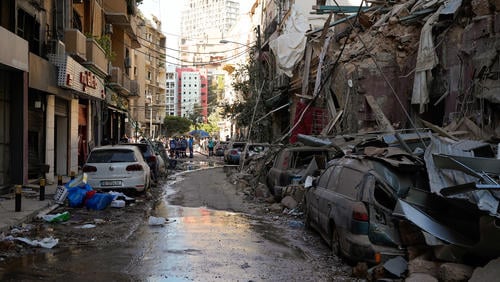
Severely damaged building in the historic neighborhood of Gemmaye in Beirut. Thousands of apartments and shops in Beirut were damaged due to the explosion which caused shattering to the glass windows and wooden doors. Beirut's streets were covered by debris and broken glass.
Lebanon

MSF supporting Beirut’s health services in wake of massive blast

Teams from MSF are supporting the health system in Lebanon in the wake of a massive blast in Beirut, which has left many dead and injured, and much of the city damaged. Project Update - 6 Aug 2020
 
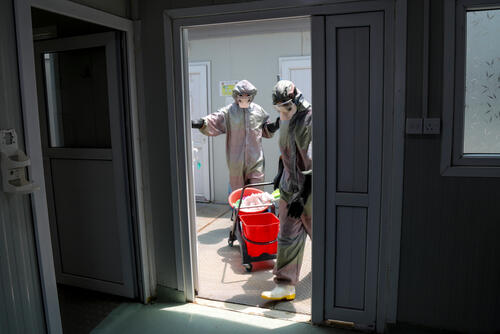
Infection prevention and control in MSF COVID-19 facility. MSF enhanced its infection control and medical protocols to face the COVID-19 pandemic in Mosul. MSF has responded quickly to the pandemic by temporarily repurposing its center for post operative care into a 62 bed facility for isolation and treatment of COVID-19 patients. So far the facility has received over 700 patients. On the other hand, MSF is maintaining most of its regular healthcare in the city including emergency, maternity and paediatrics.
Iraq

Mosul: MSF works on dual front of COVID-19 and lifesaving medical care

MSF teams in Mosul, Iraq are supporting a healthcare system severely impacted by years of conflict that now faces the COVID-19 coronavirus. Project Update - 5 Aug 2020
 
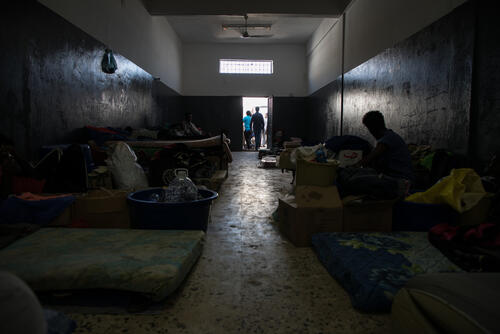
The Souq al Khamis detention centre, located by the sea in the city of Khoms, illustrates the violence and blurred lines between official authorities, militias and criminal networks that pollutes some detention centres.
Our teams have been working there since 2017. In 2019, Khoms became the main landing point for people intercepted at sea and brought back by the Libyan coastguard. It is also the starting point for many crossing attempts, including the one on 25 July 2019 which tragically ended with the deaths of at least 110 people. Our team assisted 135 survivors brought back to Khoms. They were in a state of shock after spending several hours in the water and seeing so many people, including family members, drown before their eyes. 
 At first, it seems as though refugees and migrants detained in Souq Al Khamis have better conditions and more access with the outside world than in other detention centres. Here, some go to work outside, they can buy food in the city, speak to family on the phone, and, following recent IOM renovation work, hygiene conditions are no longer as dire as before. There are showers and access to safe drinking water. However, below the surface, lie stories of violence, sexual assault and human trafficking.
Libya

Libya: “They were shot and killed as they fled arbitrary detention”

Three people were killed and two others injured as they were shot at trying to flee arbitrary detention in Khoms, Libya, where they had been returned after trying to leave the country. Project Update - 31 Jul 2020
 
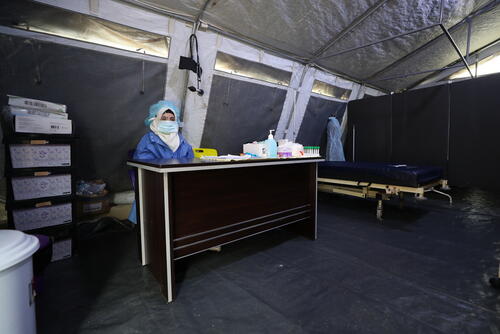
A medic waits for patients in a dedicated space set-up to identify potential COVID-19 symptomatic patients, to place them in observation if needed and call an ambulance for them to be tested, at a hospital supported by MSF in Northwest Syria.
Syria

COVID-19 provokes fears over further health system decline in northwestern Syria

With the first people diagnosed with the new coronavirus in northwestern Syria in early July, MSF is concerned over the impact the COVID-19 pandemic will have on the already-depleted healthcare system in the region. Project Update - 21 Jul 2020
 
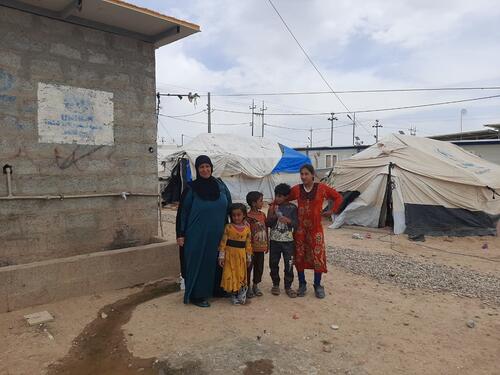
The family of Ibrahim, 60-years-old, who live in Laylan camp.

"My name is Ibrahim. I am 60 years old and am living with a disability. I’m from the town of Abbasi in Hawija but have been displaced since ISIS attacked in 2017. First I moved to Haj Ali camp and then later to Laylan Camp. I got injured in the Iraq-Iran war.  

"I’ve been living in Laylan camp for about a year. I have several children, some of them are married. We live as five in each tent. Each four tents use a joint bathroom. 

"My first wife died because of the grief she felt for her son who died. I’m suffering from high blood pressure and my current wife has kidney disease. Last year our family lost a 5-month-old baby because of the cold. After that there was blanket distribution and kerosene for heating. 
Two of my sons work so we can eat. They work outside of the camp as daily workers.  One of these sons is married and has children of his own.  

"With the curfew (imposed after corona), my sons are not able to find work. But we manage, we get some onions and tomatoes from here and there. 

"Cleanliness in the camp depends on each family cleaning habits. A month ago, we were given us bars of soap but that’s not for cleaning toilets. For that we get no cleaning liquids.  Also, the amount of soap is not enough for my big family. Now I cannot bathe."
Iraq

Displaced people are extremely vulnerable to COVID-19 in Iraq

Over 1.3 million people are displaced in Iraq, with more than 300,000 living in camps across the country. The unhygienic living conditions in camps can exacerbate the spread of COVID-19.
Press Release - 14 Jul 2020
 
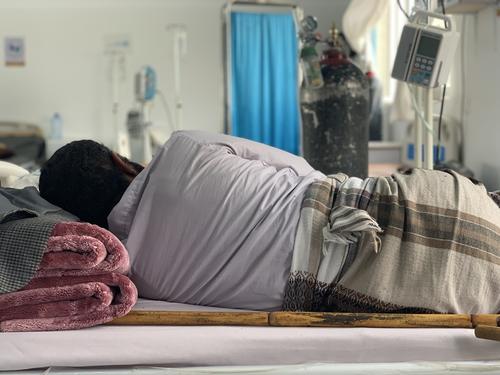
A patient receiving treatment lying in the male IPD room of the MSF-supported Sheikh Zayed COVID-19 center in Sana’a.
Coronavirus COVID-19 pandemic

As COVID-19 spreads, fear drives people away from hospitals in Yemen

As COVID-19 spreads through Yemen, widespread fear of the coronavirus is preventing people from seeking medical care. MSF is supporting a new COVID-19 treatment centre in Sheikh Zayed hospital in the capital Sana’a. Press Release - 9 Jul 2020
 
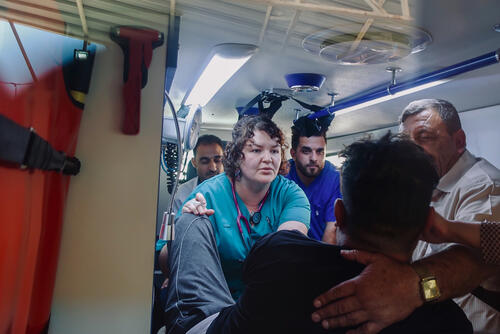
Dr Kate Goulding and colleagues assist a patient from an ambulance outside the Sinuni General Hospital in Sinjar Province, north western Iraq.
Iraq

2019 MSF Iraq annual report

The 2019 MSF Iraq annual report provides an overview on all MSF activities in Iraq during the year. Report - 6 Jul 2020
 
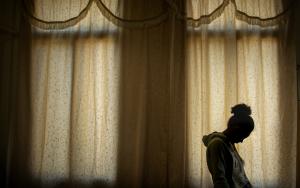
woman in silhouette
Lebanon

COVID-19 and economic downfall reveal migrant workers’ mental health crisis in Lebanon

In the midst of the COVID-19 lockdown and the economic crisis in Lebanon, the mental health and well-being of migrant workers has severely deteriorated. Report - 3 Jul 2020
Four mothers posing in a corridor of the Hospital in Bili. All four of them are staying in the hospital with their child, that's suffering from a severe case of malaria. Since the beginning of the project in 2016, the pediatric ward already treated more than 4.000 cases of complicated/severe form of malaria.
Médecins Sans Frontières (MSF)

Independent medical humanitarian assistance

We provide medical assistance to people affected by conflict, epidemics, disasters, or exclusion from healthcare. Our teams are made up of tens of thousands of health professionals, logistic and administrative staff - most of them hired locally. Our actions are guided by medical ethics and the principles of independence and impartiality. We are a non-profit, self-governed, member-based organisation.

Learn more