



Ebola disease in DRC: find out how we're responding
Learn more
1390 Results
 
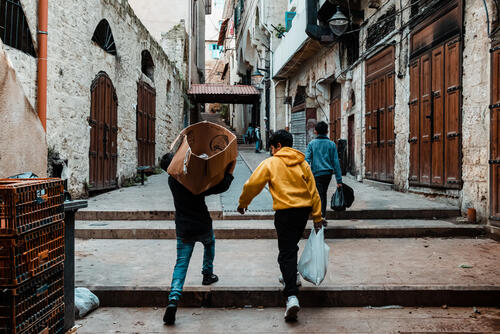
Children are carrying goods in the street of the old souk in Tripoli. The street is usually extremely busy but a lockdown was declared from 14th November to 30th November 2020 to slow down the spread of COVID-19. The lockdowns measures, although necessary, have contributed to exacerbating people’s financial difficulties, reducing the economic activities in the country.
Lebanon

Overlapping crises in Lebanon increase needs and worsen access to care

In the last year, Lebanon has faced political turmoil, social unrest, economic crisis, COVID-19 and the Beirut port blast. For many, Lebanese and refugees alike, the struggle to access healthcare has become even harder. Project Update - 8 Jan 2021
 
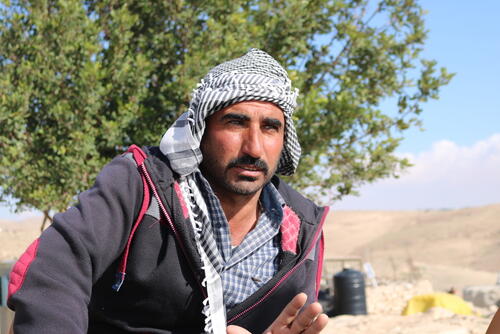
Mohamad Ayoub Hamad Abu Sabha is a community leader of Khirbet Al Fakhit (Hebron, Palestine), where MSF performs mobile clinics for the population in the área. “For one year, no one came here. Especially for pregnant women, this was a very difficult situation” (Note: he was wearing ,ask during consultation and talk, but he removed for the picture)
Palestine

“For one year no one came here” to provide medical care in the West Bank

Some communities under strict Israeli control in Hebron, West Bank, Palestine, face challenges accessing basic healthcare due to administrative restrictions and a lack of transportation. Women are particularly affected. Project Update - 5 Jan 2021
 
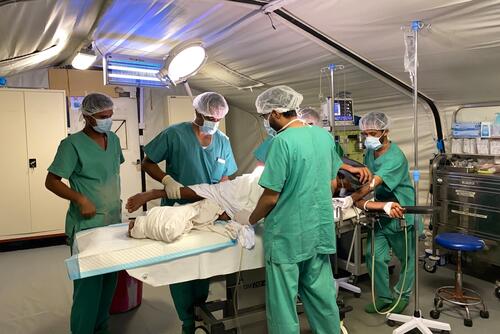
The Operating theatre at MSF’s trauma centre in Mocha, in the Red Sea Coast region of Yemen. The surgeons provide life and limb saving surgery for war wounded, traffic accident victims, and pregnant women needing emergency surgical delivery. Since late November 2020, the overwhelming majority of patients have been war-wounded civilians.
Yemen

Civilians wounded and killed in indiscriminate frontline hostilities

Renewed conflict to the south of Hudaydah Port in Yemen has led to rising numbers of civilians needing war-trauma surgery. Most are women and children. Press Release - 14 Dec 2020
 
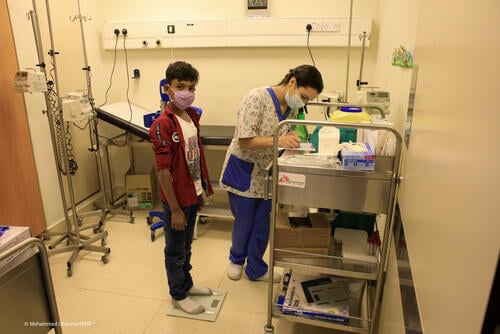
MSF staff prepare to begin a blood transfusion for a child patient with thalassemia.
Lebanon

Saving the lives of children with thalassaemia in Lebanon

Thalassemia is a blood disorder that requires regular blood transfusions and drugs to treat. In Lebanon, the cost is often prohibitive for refugees and vulnerable people. Project Update - 3 Dec 2020
 
“This is my third child, Taha. He’s only 48 days old," says Balqees. "I gave birth to him in a health centre in the village. They told me that my son needed medical attention. In our area there are no hospitals, only clinics, so we drove for around two hours to get to this hospital. 
When we first arrived, Taha was taken for phototherapy because he had jaundice. We stayed a week in the hospital and then returned to the village. When his health deteriorated, I had to come back to the hospital.
I have been here for four days now. Even a simple walk tires me. I am still recovering from the trip – it was exhausting, especially being pregnant and with those difficult road conditions. 

My husband has not come to visit me in the hospital – our financial situation does not allow it, so he stays in the village. Even when I fall ill, I don’t seek healthcare, because we don’t have the money. I could never have afforded a private hospital."
Yemen

Behind the conflict in Yemen

storymaps - 30 Nov 2020
 
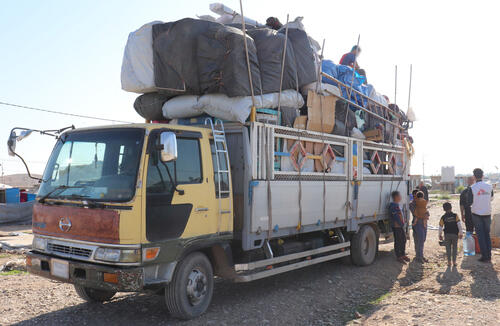
Laylan camp: IDPs are asked to load their belongings on trucks provided by the authorities as part of the camp closure.
Iraq

Displaced people in Iraq’s Laylan camp express fears as camp closes

Rushed camp closures and returns of internally displaced people in Iraq to their areas of origin will have serious humanitarian consequences, says MSF. Press Release - 24 Nov 2020
 
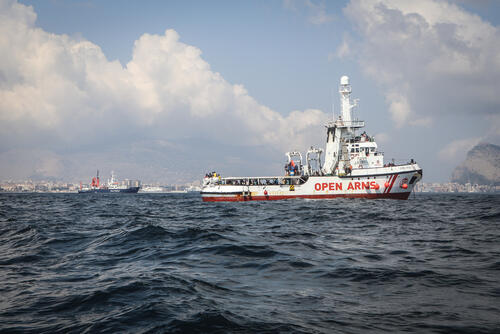
On the morning of September 17th, as Open Arms awaited instructions from authorities regarding the disembarkation of the 275 survivors rescued in the Mediterranean sea, more than 70 people jumped into the water in desperation. The Sea-Watch 4 was close by, at anchor outside the port of Palermo, and immediately responded by launching three RHIBs to provide assistance. MSF and Sea-Watch crews remained on scene until the situation stabilised.
Mediterranean migration

Carnage in the Mediterranean is the direct result of European state policies

Four separate shipwrecks in the central Mediterranean in less than 72 hours has cost the lives of more than 100 people - the result of EU migration policies. Press Release - 13 Nov 2020
 
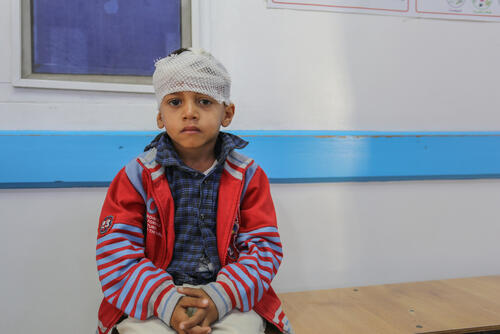
Abdullah Ali, 6 years old, fell from the top of the tree, suffered bruises in the head, and received treatment at Naser hospital supported by MSF in Ibb city.
Yemen

Humanitarian response in Yemen: time to go back to the drawing board

MSF Director of Operations in Geneva, Christine Jamet, explains why a reset is needed on the humanitarian response in Yemen. Op-Ed - 11 Nov 2020
 
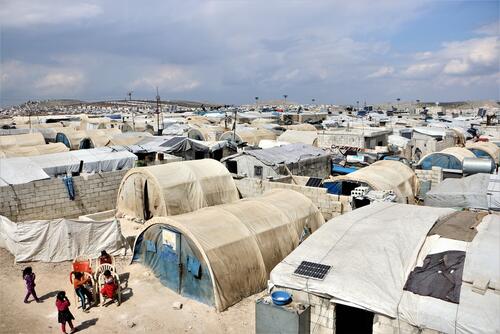
Abou Obaida area in Deir Hassan.
Syria

Taking risks to survive as COVID-19 spreads in the northwest

Three displaced people in northwest Syria recount their struggles, frustrations and fears as COVID-19 cases rise against the backdrop of an economic crisis. Project Update - 11 Nov 2020
 
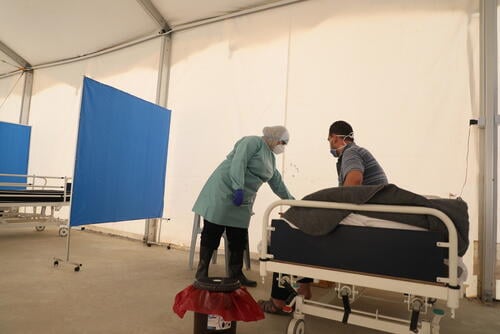
Majd Osama, 23 years old from Syria, married and has a daughter. Majd is receiving medical care in COVID-19 treatment centre in Zaatari camp for Syrian refugees. “One day I woke up feeling feverish and I was referred to MSF COVID-19 hospital, I have been in the MSF hospital for two days, I don’t cough and I do not have a runny nose and the fever is gone. God will help me, I’m not worried.”
Coronavirus COVID-19 pandemic

MSF responds as COVID-19 arrives in Jordan’s largest refugee camp

Given the often rapid spread of diseases inside refugee camps, MSF is providing medical care for coronavirus COVID-19 to refugees in Zaatari camp, Jordan. Project Update - 28 Oct 2020
Four mothers posing in a corridor of the Hospital in Bili. All four of them are staying in the hospital with their child, that's suffering from a severe case of malaria. Since the beginning of the project in 2016, the pediatric ward already treated more than 4.000 cases of complicated/severe form of malaria.
Médecins Sans Frontières (MSF)

Independent medical humanitarian assistance

We provide medical assistance to people affected by conflict, epidemics, disasters, or exclusion from healthcare. Our teams are made up of tens of thousands of health professionals, logistic and administrative staff - most of them hired locally. Our actions are guided by medical ethics and the principles of independence and impartiality. We are a non-profit, self-governed, member-based organisation.

Learn more