



Ebola disease in DRC: find out how we're responding
Learn more
1390 Results
 
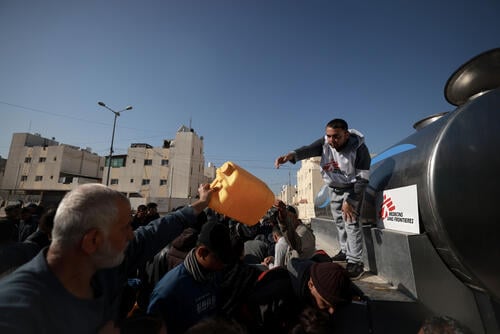
Youssef Al-Khishawi, an MSF water and sanitation agent, oversees a water distribution for displaced people in the southern Gaza town of Rafah’s Saudi neighborhood.
 He says: “In a normal situation, one person needs two to three liters of drinking water per day. Now, with the current shortage, the average for one family of six is one gallon of water (3.8 litres).” 

“The main challenge we face in distributing water is the lack of fuel to pump and transport it,” says Al-Khishawi. “The second is the lack of proper roads for our trucks to drive on, because there are tents even on the asphalt. The third is that there are no water distribution points – even they have been bombed. Water pipes, streets and infrastructures are destroyed.”
Gaza-Israel war

Lack of clean water brings disease and suffering in Gaza

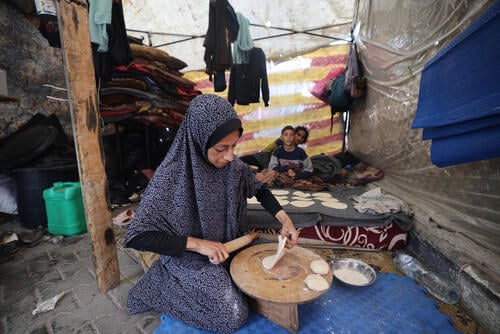
Palestinians in southern Gaza are struggling to find clean water. The flow of humanitarian aid into Gaza must be restored to ensure people have access to essential items such as food, water and healthcare. Project Update - 8 Feb 2024
 
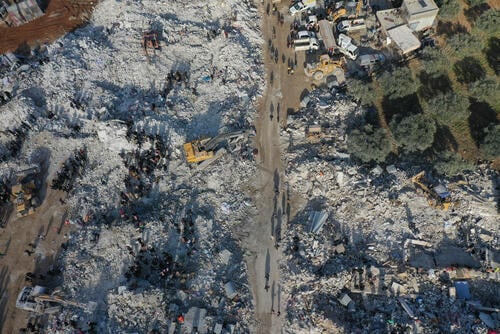
Contextual images of the impact of the earthquake taken on 7 February 2023. Idlib province, Northwestern Syria. 
MSF does not necessarily operate in the locations depicted here.
Türkiye and Syria earthquake response

One year after earthquake, mental scars are still raw in Syria

People in northwest Syria continue to struggle with the mental health impacts of more than a decade of war, compounded by the devastating earthquakes that struck the region on 6 February 2023. Project Update - 6 Feb 2024
 
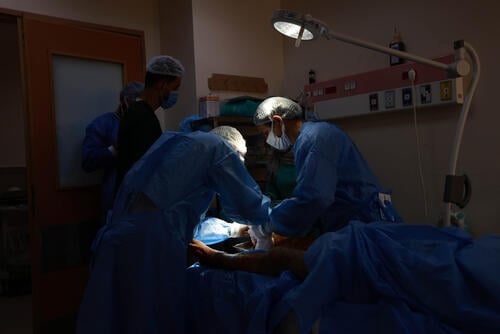
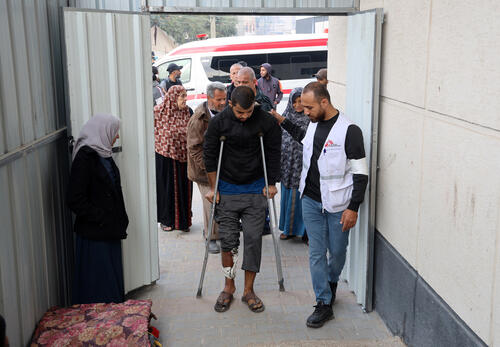
Amir Jibril Abu Al Ata is undergoing a foot surgery. Al Aqsa hospital. 29 November 2023, Middle Area, Gaza.
Gaza-Israel war

The last medics providing healthcare amidst death and destruction in Gaza

Our emergency coordinator, Marie-Aure Perreaut Revial, recently returned from Gaza and describes the unbearable reality on the ground that she witnessed. Voices from the Field - 2 Feb 2024
 
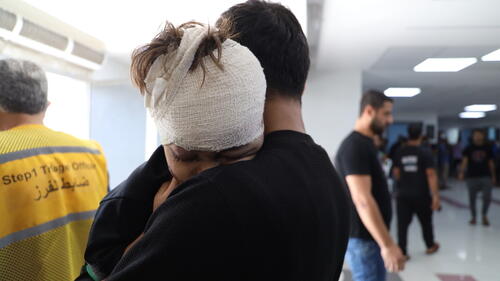
Patients at Al Shifa hospital
Gaza-Israel war

Staff at Al-Shifa struggle to care for patients as needs remain huge

Our head of medical activities in Gaza, Aurélie Godard, provides an overview of what she saw during a recent visit to Al-Shifa hospital in northern Gaza. Voices from the Field - 31 Jan 2024
 
"I guess the war has been going on for so long now, and people have been displaced for so long now, that any sort of coping mechanism that they had at the beginning of the war, any money saved up, are probably now exhausted."
Gaza-Israel war

UNRWA funding suspensions jeopardise lifeline for millions in Palestine

We are deeply alarmed by the decision of some countries to suspend their funding to UNRWA, the UN agency for relief of Palestinians. Press Release - 29 Jan 2024
 
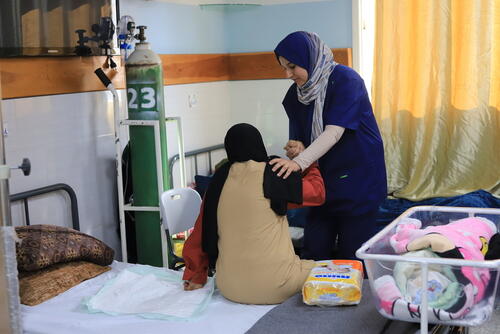
MSF nurse is assisting patient in the Emirati maternity hospital, Rafah. MSF is supporting the hospital with postnatal care to increase the monitoring period of post-delivery. Due to the lack of medical supplies and the overwhelming needs the Emirati hospital is forced to discharge patients only a few hours post-delivery or caesarian sections.
“Without enough supplies and too many patients, the healthcare system is overstretched, and mothers are forced to be discharged just hours after giving birth”, explains MSF midwife activity manager Rita Botelho da Costa. “The first 24 hours of postpartum are the riskiest for complications, and with people living in dire conditions, it´s important to keep the patient in the hospital as long as possible.”  
The war in Gaza has completely disrupted access to maternity care, exposing both mothers and their children to serious and even life-threatening health risks. In the south of Gaza in the Rafah area, the Emirati hospital stands as the main remaining facility catering to the maternal health needs of over 1.5 million displaced people.
Gaza-Israel war

Displaced pregnant women at high risk amid dire conditions in Rafah

As pregnant women face severe health risks in Gaza, we stress the urgency to restore the flow of humanitarian aid into Gaza upon which the survival of mothers and children critically depends. Project Update - 29 Jan 2024
 
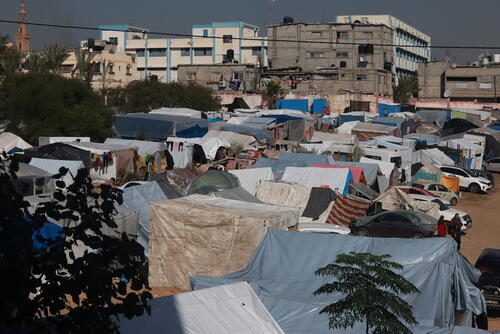
Hundreds of people camp in temporary shelters in the south of Gaza. The general conditions for most of these people are appalling: they live in temporary structures made of a few pieces of wood banged together and covered in plastic sheeting. Gaza, 24 November 2023.
Gaza-Israel war

With Nasser hospital out of commission, people in southern Gaza run out of healthcare options

Amid ongoing heavy fighting and bombing in Khan Younis, south Gaza, vital medical services have collapsed at Nasser hospital, currently the largest functioning health facility in the enclave.
Press Release - 26 Jan 2024
 
A view of Al-Hol camp from MSF’s facility at the camp in northeast Syria, 13/12/2023.
Syria

Unveiling the mental health crisis at Al-Hol Camp in northeast Syria

The dire conditions faced by people detained at Al-Hol camp, northeast Syria, only exacerbate the traumatic events they have experienced, such as violence and displacement, says MSF. Project Update - 19 Jan 2024
 
In south Gaza, MSF set up a clinic inside the Rafah Indonesian Field Hospital in December 2023. With its outpatient department and 30 beds, it provides post-operative care to patients displaced from all parts of the enclave to free up beds in emergency rooms in other hospitals.
Gaza-Israel war

Evacuation orders and bombing around Gaza hospitals leaves people with few healthcare options

Three months of intense bombardment and evacuation orders of hospitals and their surrounding areas in Gaza, Palestine, have left people with few options to seek medical care and for MSF to provide it. Press Release - 12 Jan 2024
 
MSF medical mobile team providing medical care to internally displaced people in Nabatiyeh, South Lebanon amid escalation in military activity on the Lebanese southern borders.
Lebanon

Providing healthcare to people displaced by military escalation along Lebanon's southern border

Escalating military activity along Lebanon’s southern border has forced thousands of people to flee border towns. Our mobile team helps provide displaced people with healthcare. Project Update - 10 Jan 2024
Four mothers posing in a corridor of the Hospital in Bili. All four of them are staying in the hospital with their child, that's suffering from a severe case of malaria. Since the beginning of the project in 2016, the pediatric ward already treated more than 4.000 cases of complicated/severe form of malaria.
Médecins Sans Frontières (MSF)

Independent medical humanitarian assistance

We provide medical assistance to people affected by conflict, epidemics, disasters, or exclusion from healthcare. Our teams are made up of tens of thousands of health professionals, logistic and administrative staff - most of them hired locally. Our actions are guided by medical ethics and the principles of independence and impartiality. We are a non-profit, self-governed, member-based organisation.

Learn more