




Ebola disease in DRC: find out how we're responding
Learn more
1390 Results
 
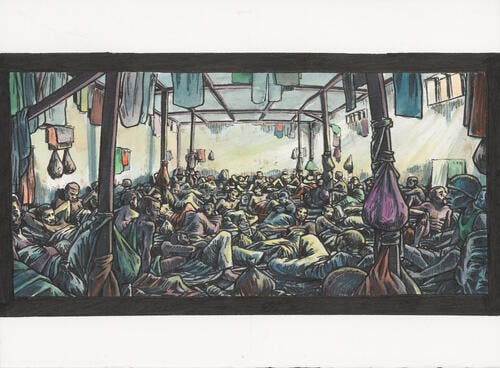
In 2024, approximately 725,000 migrants were present on Libyan soil, according to the International Organization for Migration (IOM). While some come seeking work, others attempt to reach Europe by crossing the Mediterranean. In Libya, migrants and refugees live in precarious conditions and are subjected to various forms of violence and abuse, both inside and outside the country's detention centers. Kidnapped, subjected to extortion and trafficking, assaulted or sexually abused, their access to healthcare is severely hindered despite their desperate need for it.
Libya

Migrants face extreme violence and exclusion from healthcare in Libya

MSF teams assist migrants who have been subjected to a range of violence and abuse in Libya. Project Update - 12 Feb 2025
 
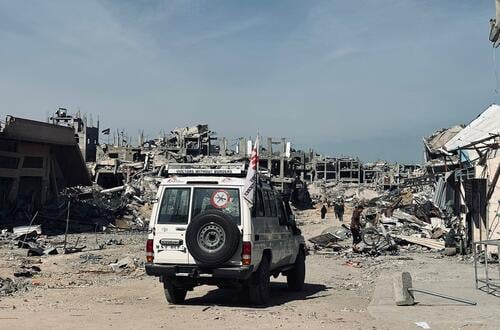
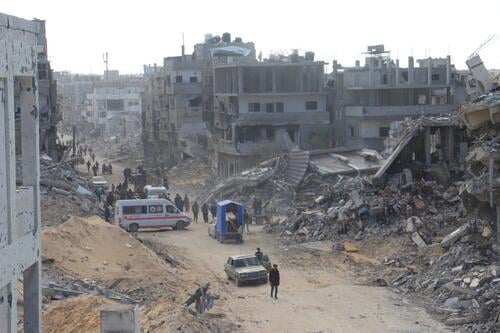
An MSF vehicle passes in front of ruined buildings in Jabalia.
Gaza-Israel war

Four questions about the situation in north Gaza

Caroline Seguin shares photos and answers about what it's like in north Gaza, Palestine. Interview - 12 Feb 2025
 
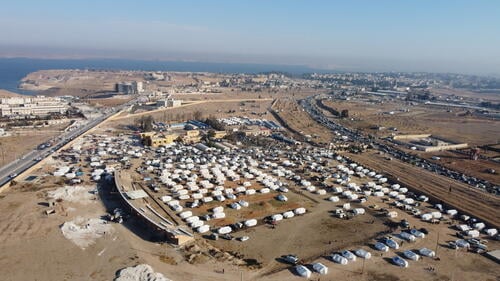
An aerial view of the temporary tents of displaced people who fled the fighting in northern Aleppo governorate to the city of Tabqa, in northeastern Syria, with the Tabqa Dam showing in the background.
Syria

Syrians share stories of violence and displacement from temporary shelters in the northeast

Hear from Syrians who have been displaced by violence and are staying in temporary shelters. Project Update - 11 Feb 2025
 
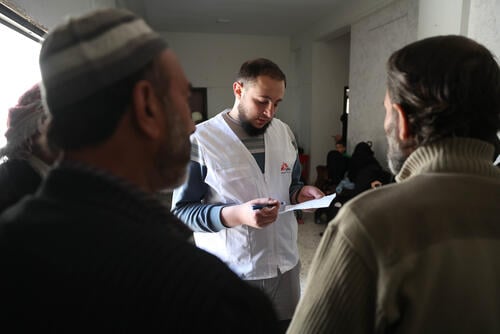
MSF health promotion officer Abdullatif Bokay provides patients at the waiting area of the mobile clinic in East Ghouta, Syria, with essential information on non-communicable diseases (NCDs). This awareness helps patients better manage their conditions, promotes early detection, and improves overall health outcomes.
Syria

MSF mobile clinics bring care to Syria’s neglected region of east Ghouta

For the first time in over a decade, MSF teams have returned to east Ghouta, Syria. Project Update - 6 Feb 2025
 
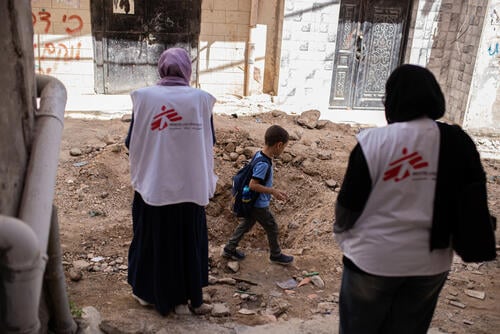
After the 9-day incursion that took place in Jenin from 28 August to 6 September, MSF teams resumed their psychological first-aid activities in the refugee camp.  


Salwa and Rahma visit the camp weekly to meet the residents and make assessments on their mental health and evolution.  


“The level of destruction keeps becoming bigger, and the psychological impact is huge” explains Rahma, “residents believe that what is happening in Gaza will happen as well in the camp. Many people, and especially women and children, suffer from symptoms of psychological trauma, and develop eating and sleeping problems like recurrent nightmares and anxiety due to the fear of incursions which often happen at night”  


People cannot feel safe given the brutality of the incursions and the impossibility to foresee when the next one will come. In this context, psychological treatment is challenging as the trauma is ongoing.
Gaza-Israel war

“Inflicting harm and denying care” in the West Bank: MSF report on escalation of attacks and obstructions of healthcare

A new report by MSF details how Israeli forces and settlers are obstructing healthcare in Palestine's West Bank. Press Release - 6 Feb 2025
 
After the 9-day incursion that took place in Jenin from 28 August to 6 September, MSF teams resumed their psychological first-aid activities in the refugee camp.  


Salwa and Rahma visit the camp weekly to meet the residents and make assessments on their mental health and evolution.  


“The level of destruction keeps becoming bigger, and the psychological impact is huge” explains Rahma, “residents believe that what is happening in Gaza will happen as well in the camp. Many people, and especially women and children, suffer from symptoms of psychological trauma, and develop eating and sleeping problems like recurrent nightmares and anxiety due to the fear of incursions which often happen at night”  


People cannot feel safe given the brutality of the incursions and the impossibility to foresee when the next one will come. In this context, psychological treatment is challenging as the trauma is ongoing.
Gaza-Israel war

“Inflicting harm and denying care” in the West Bank

A new MSF report details how Israeli forces and settlers are obstructing healthcare in Palestine's West Bank. Report - 6 Feb 2025
 
After 15 months Israel‘s war on Gaza, Palestine, and the implementation of the ceasefire on 19 January 2025, displaced Palestinians are attempting to return home to the southern city of Rafah. While people try to rebuild the ruins, Rafah is totally destroyed, with homes, shops, streets and healthcare facilities in ruins and electricity and water systems damaged – and unsafe due to scattered unexploded ordnance in the ruins of buildings. 

In May 2024, Rafah had the largest concentration of displaced Palestinians in the Strip with an estimated 1.5 million Palestinian living in tents and makeshift shelters. People were living in inhumane conditions, facing disease outbreaks, malnutrition, and the psychological impact of being forcibly displaced multiple times. Médecins Sans Frontières / Doctors Without Borders teams working in Rafah were providing primary health care, mental health support in the Shabboura clinic and supporting pediatric and maternity care in the Ministry of Health Emirati hospital in Rafah.   

Eventually, MSF teams were forced to close activities and evacuate the area after continuous bombings and evacuations orders by Israeli forces, as the looming threat of a ground invasion by Israeli forces, which began on May 6, 2024. The military operations by Israeli forces led to the emptying of Rafah, mass destruction of the city, and to the closure of the Rafah crossing, severely hindering the delivery of humanitarian aid into the Strip. Rafah was also the home to many of MSF colleagues, many who had fled other parts of the Gaza Strip.
Gaza-Israel war

Destruction of life and homes leaves people unable to return safely to Rafah

Nearly 70 per cent of all structures in Gaza have been destroyed or damaged. Now, people are attempting to return home in the southern city, Rafah. Project Update - 27 Jan 2025
 
black background
Gaza-Israel war

MSF mourns the killing of our ninth colleague in Gaza

Bilal Okal was killed by an Israeli airstrike, along with members of his family, in December 2024. Statement - 24 Jan 2025
 
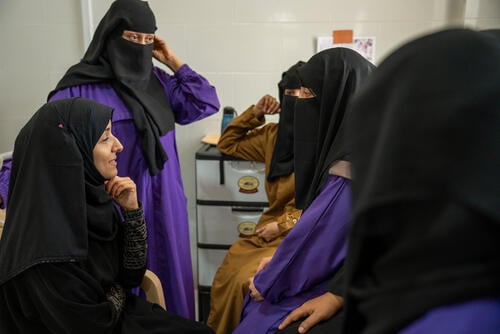
Doctor Azhar, gynaecologist talks with Altaf al Wahidi and Noria al Wahidi, midwives and sisters, about the patients they have cared for today.
Yemen

A lifeline for mothers-to-be on Yemen’s west coast

Around 250 women give birth every month at our maternity ward in Mocha General hospital. Project Update - 21 Jan 2025
 
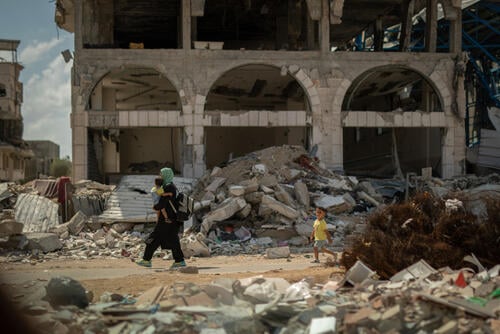
In the Shujaeyya neighborhood on Baghdad Street in Gaza City, a woman is carrying her child back home through the rubble.
Gaza-Israel war

North Gaza’s destruction is a “sight that cannot be described”

While a ceasefire in Gaza has been announced, north Gaza remains devastated and destroyed by Israeli forces' relentless bombardments. Project Update - 20 Jan 2025
Four mothers posing in a corridor of the Hospital in Bili. All four of them are staying in the hospital with their child, that's suffering from a severe case of malaria. Since the beginning of the project in 2016, the pediatric ward already treated more than 4.000 cases of complicated/severe form of malaria.
Médecins Sans Frontières (MSF)

Independent medical humanitarian assistance

We provide medical assistance to people affected by conflict, epidemics, disasters, or exclusion from healthcare. Our teams are made up of tens of thousands of health professionals, logistic and administrative staff - most of them hired locally. Our actions are guided by medical ethics and the principles of independence and impartiality. We are a non-profit, self-governed, member-based organisation.

Learn more