


Ebola disease in DRC: find out how we're responding
Learn more
1390 Results
 
msf-placeholder
Bahrain

Medical ethics conference cancelled

Press Release - 24 Mar 2013
 
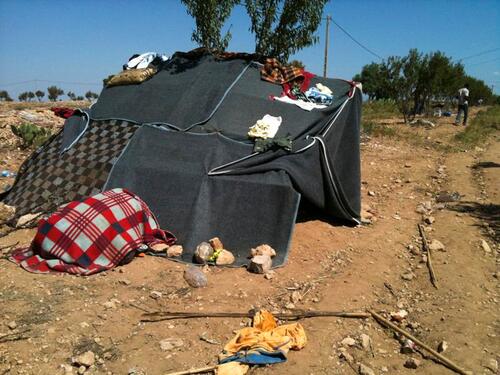
Between August 19 and September 10 2010, Police incursions took place in many different cities in Morocco (Oujda, Al-Hoceima, Nador, Tanger, Rabat, Casablanca, Fez). In many of these raids police forces have used bulldozers and ,in Oujda even helicopters, destroying migrantsÕ tents and houses. 
<br/>
It is estimated that during these raids between 600-700 migrants were arrested and taken to the border between Morocco and Algeria. There, migrants were left alone to fend for themselves, without food or water. Many of them were women with children, pregnant women and migrants with injuries, directly or indirectly related to police raids, and medical problems. 
<br/>
During these last weeks, MSF teams have seen an alarming increase in patients with medical problems related to incidents of violence. Out of the 186 patients that have received medical care from MSF, 103 had lesions and injuries directly or indirectly linked to the violence during the arrests.
Refugees, IDPs and people on the move

Violence, Vulnerability and Migration: Trapped at the Gates of Europe

A report on the situation of sub-Saharan migrants in an irregular situation in Morocco. Report - 13 Mar 2013
 
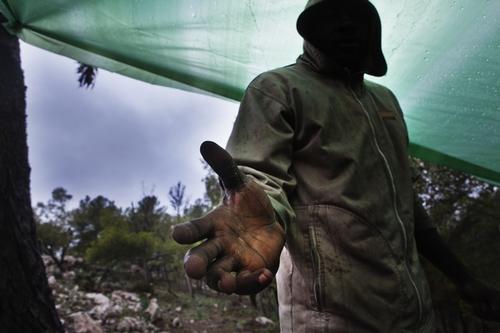
Mussa acaba de participar en su segundo intento de saltar la valla de Melilla.
Dice que lo seguirá intentando, aunque tratará de evitar pasar por mar. Dos de sus
compañeros han muerto ahogados.

Mussa has just participated in its second attempt to jump the fence into Melilla.
He says he is going to keep on trying, although he’ll stay away from the sea. Two of its
colleagues drowned in an attempt to cross the Strait of Gibraltar.

Mussa vient d’essayer de passer le grillage de Melilla. C’est sa seconde tentative. Il
dit qu’il continuera à essayer mais qu’il essayera d’éviter de passer par la mer. Deux de
ses compagnons se sont noyés.
Morocco

Migrants face persistent violence

A new report by MSF outlines the impact of precarious living conditions and widespread criminal and institutional violence on the health of undocumented sub-Saharan migrants trapped in Morocco on their way to Europe. According to the report, Morocco’s transformation, as a result of increasingly stringent border controls, from a country of transit to a forced destination for migrants heightens their vulnerability. Press Release - 13 Mar 2013
 
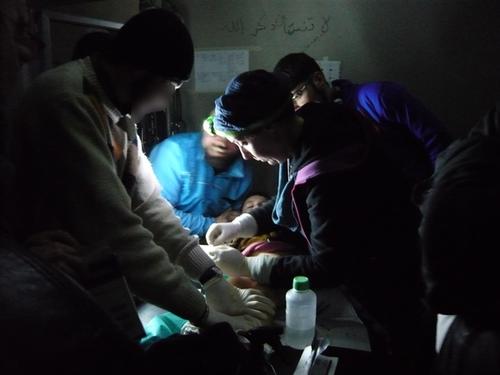
An MSF doctor is doing a dressing on a severely burnt boy in an advanced medical post.*** Local Caption *** MSF is supporting advanced medical posts with training and donations of drugs and medical material
Syria

Syria two years on: the failure of international aid so far

After two years of extremely violent conflict, the humanitarian situation in Syria is now catastrophic and the aid provided falls drastically short of what is needed. MSF calls on the parties involved in the conflict to negotiate an agreement on humanitarian aid, to facilitate its supply around the country via neighbouring countries or across front lines. Report - 7 Mar 2013
 
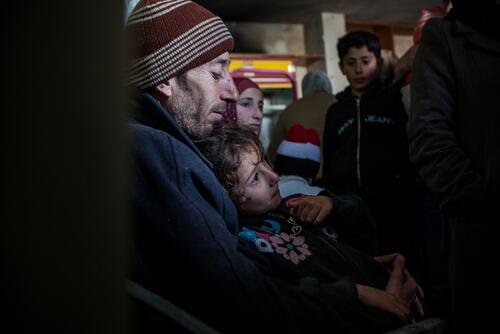
A father and his daughter wait in MSF's mobile clinic to see a doctor in Northern Syria, on Tuesday, February 5, 2013. This is the fourth mobile clinic session MSF has conducted in the same village, according to Dr. Tharcis Zinet, as the need from its people for basic healthcare is widespread. The village experienced heavy fighting until five months ago.
Syria

My enemy's doctor is my enemy

What do the Syrian National Coalition, a foreign jihadi group, a Gulf State and the Iranian and American governments all have in common? Statement - 7 Mar 2013
 
An MSF doctor is doing a dressing on a severely burnt boy in an advanced medical post.*** Local Caption *** MSF is supporting advanced medical posts with training and donations of drugs and medical material
Syria

Humanitarian assistance in deadlock

After two years of extremely violent conflict, the humanitarian situation in Syria is now catastrophic and the aid provided falls drastically short of what is needed. MSF calls on the parties involved in the conflict to negotiate an agreement on humanitarian aid, to facilitate its supply around the country via neighbouring countries or across front lines. Press Release - 7 Mar 2013
 
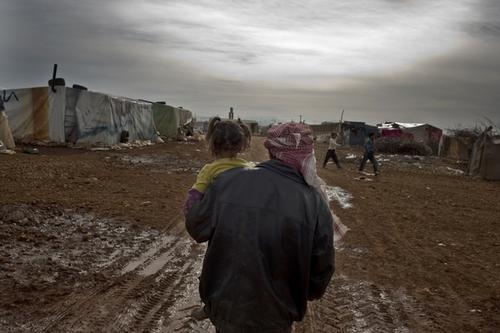
A Syrian refugee carries his two-year-old daughter in the rain-soaked Taybeh makeshift refugee camp outside Baalbek in Lebanon's Bekaa Valley, January 18, 2013.  Unhygienic conditions in the camp are leading to various communicable illnesses, especially among children. The camp is home to approximately 300 people who fled conflict in Syria.
Lebanon

Aid lags as Syrian refugee numbers increase

Syrians who have fled violent conflict at home in search of safety in Lebanon do not receive anywhere near adequate levels of humanitarian assistance and are living in extremely precarious conditions, a detailed survey released today by MSF reveals. More than half of interviewees cannot afford treatment for chronic diseases and nearly one-third have been forced to suspend treatment. Press Release - 7 Feb 2013
 
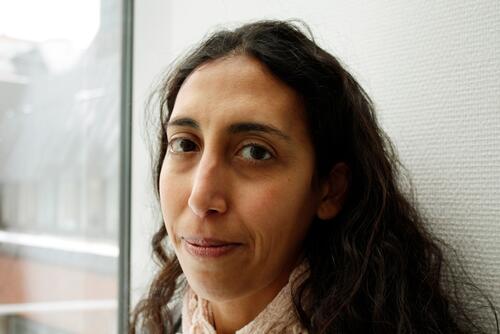
Katrin Kisswani, MSF OCB emergency field coordinator. Speaks Swedish, English and Arabic.
Syria

'The impact of the attacks is devastating'

'We’ve been working mainly in the Jabal Al-Akkrad region, which is fairly mountainous and close to the border with Turkey. While some of these areas haven’t suffered the same frequency and intensity of fighting as areas further inland, the situation remains extremely volatile and dangerous.' Interview with Katrin Kisswani, who headed MSF activities in northern Syria for two months. Voices from the Field - 4 Feb 2013
 
 MSF has been providing surgical care to victims of violence, in a hospital set up in the north of Syria, since June 2012.
Syria

MSF criticises aid imbalances

International aid provided to Syria is not being distributed equally between government and opposition controlled areas. The areas under government control receive nearly all international aid, while opposition-held zones receive only a tiny share. Donors must support cross-border humanitarian operations to reach opposition-held areas, says MSF ahead of the Donors’ Conference for Syria. Press Release - 29 Jan 2013
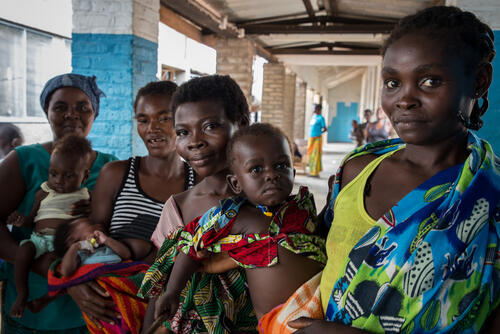
Four mothers posing in a corridor of the Hospital in Bili. All four of them are staying in the hospital with their child, that's suffering from a severe case of malaria. Since the beginning of the project in 2016, the pediatric ward already treated more than 4.000 cases of complicated/severe form of malaria.
Médecins Sans Frontières (MSF)

Independent medical humanitarian assistance

We provide medical assistance to people affected by conflict, epidemics, disasters, or exclusion from healthcare. Our teams are made up of tens of thousands of health professionals, logistic and administrative staff - most of them hired locally. Our actions are guided by medical ethics and the principles of independence and impartiality. We are a non-profit, self-governed, member-based organisation.

Learn more