



Ebola disease in DRC: find out how we're responding
Learn more
1390 Results
 
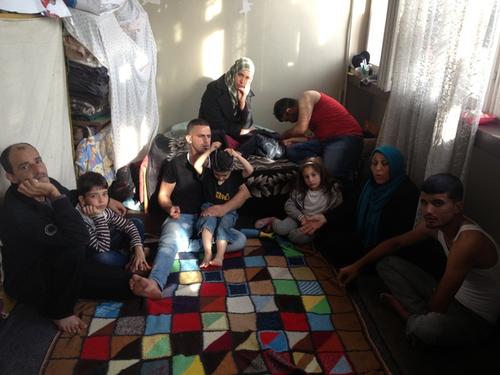
The country is facing a large influx of arrivals (11,000 people) and has begun preventing immigrants from entering its territory. Some 7,000 Syrians have been registered between January and October 2013. People face poor reception conditions and there is no access to healthcare and mental health support. As a result of the recent exploration carried out in 3 detention centres in Sofia (Vrezdevna, Voena Rampa) and in Harmanli (in Haskovo Province, South-central Bulgaria), MSF team is providing primary healthcare and non food items to asylum seekers and migrants in both cities.
Bulgaria

Syrian refugees face appalling conditions

MSF begins health activities to help Syrian refugees in Bulgaria. Press Release - 21 Nov 2013
 
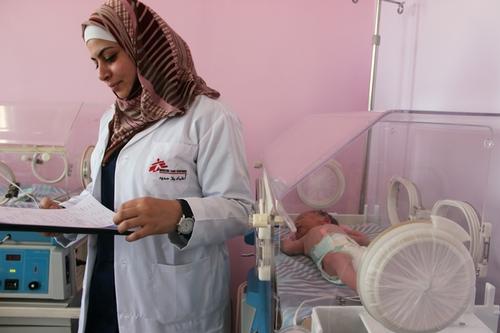
Newborn Syrian baby Zain Al-Abideen receives care from an MSF nurse in the neonatal unit at the mother and child hospital in Irbid.
Jordan

MSF opens mother and child hospital in Irbid to support Syrian refugees

The new MSF mother and child hospital in Irbid, Jordan has officially opened Press Release - 17 Nov 2013
 
Las familias de presos requieren, por lo general, atención psicológica. Mujeres, madres o hijos acusan todos  la ausencia del familiar preso. En el caso de Adel,  que se puso en huelga de hambre, agravó la condición de la familia. 
Prisoners’ families usually need psychological attention. Women, mothers, fathers, children, they are all affected by the absence of the prisoner. Adel’s case, who went into hunger strike, worsened the condition of his family.
Palestine

Occupied Minds - Children and live ammunition

Part III of Occupied Minds, a series of stories about MSF patients affected by the Israeli-Palestinian conflict. Voices from the Field - 14 Nov 2013
 
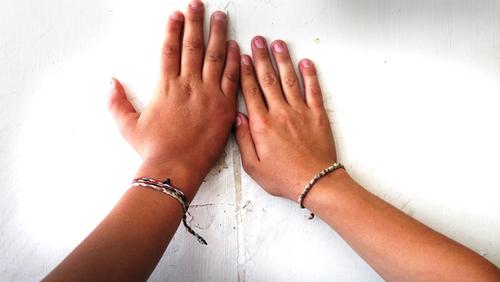
Los equipos de Salud Mental de MSF en Hebrón y Jerusalén Este han detectado un aumento de menores con necesidades de atención psicológica. Hussein y Ziad conservan los brazaletes que les dieron como regalo los prisioneros cuando pasaron por la cárcel. Tienen 15 y 14 años. 
The MSF teams in Hebron and East Jerusalem have detected an increase of minors in need of psychological attention. Hussein and Ziad keep the bracelets that the inmates made for them while they were in prison. They are 15 and 14 years old.
Palestine

Occupied Minds - Children and home detention

Occupied Minds is a series of stories about Médecins Sans Frontières (MSF) patients affected by the Israeli-Palestinian conflict, people receiving assistance from MSF mental health teams in Hebron and in East Jerusalem. Voices from the Field - 14 Nov 2013
 
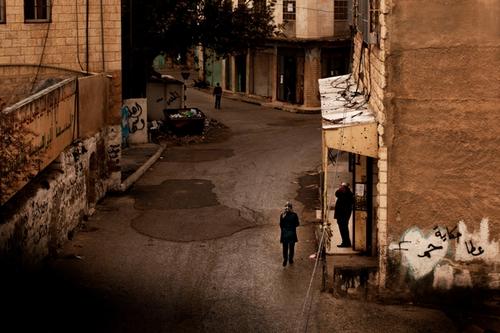
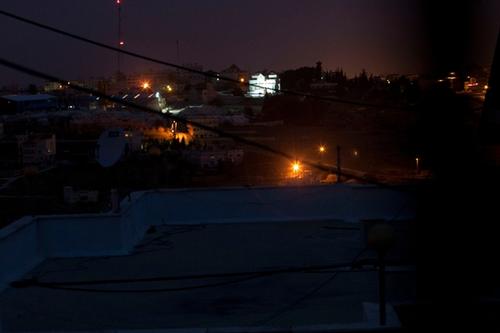
Las incursiones de soldados israelíes en casas palestinas se hacen por lo general por la noche de forma violenta. Youssef fue detenido tras una incursión en la casa de su padre. La familia quedó traumatizada. 
Incursions by Israeli soldiers are often carried out at night in a very violent way. Youssef was detained after an incursion in his father’s house. The family was left traumatized.
Palestine

Occupied Minds - Night incursions in Hebron

Project Update - 14 Nov 2013
 
This IDP camp in Al Safira district (Aleppo province) is empty. After the October attack, IDPs  had fled north .
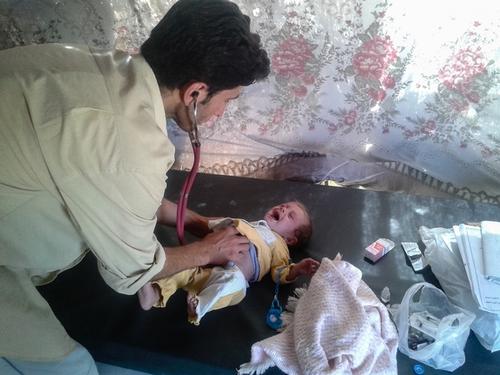
MSF had distributed some tents to IDPs. A medical student was running an OPD set up with MSF support
Syria

Civilians forced to flee Al Safira under heavy bombardment

More than 130,000 people have fled the district of Al Safira, in Aleppo province Press Release - 25 Oct 2013
 
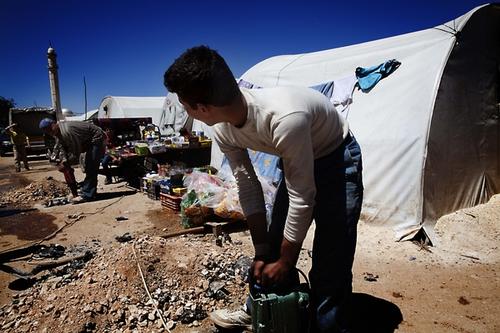
A transit camp in Aleppo province, next to the Turkish border. Around November 2012, 4,000 displaced people were staying in this temporary settlement – in April 2013, there were around 10,000.
Syria

Political will shown to work for chemical weapons access in Syria – same now needed urgently for humanitarian aid

The political will shown for chemical weapons work in Syria must be applied to humanitarian access. Press Release - 15 Oct 2013
 
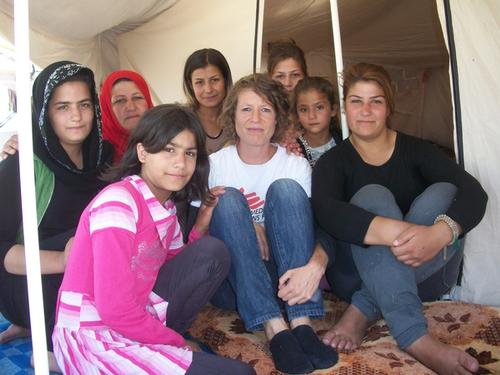
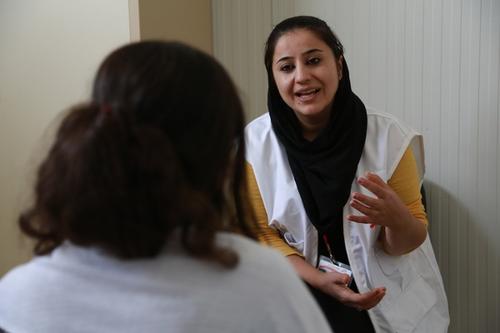
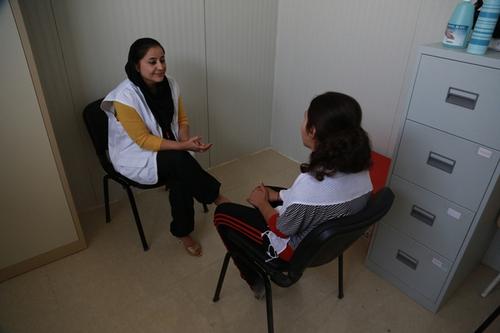
Dr Henrike Zellmann is the supervising psychologist for MSF in Domeez refugee camp in northern Iraq. She is pictured here with some of the Syrian refugees who MSF has been assisting.
Iraq

As soon as the door is closed, we spend time with them, and we listen

An insight into mental healthcare for Syrian refugees in Domeez camp, Iraq Project Update - 8 Oct 2013
 
Alma is a 16 year old girl from Syria who is receiving counselling from MSF in Domeez refugee camp, northern Iraq. Her testimony is below. The war and its aftermath have had far reaching consequences for the mental health of children. As of October 2013 in Domeez, children and adolescents comprise 50 percent of all MSF’s new patients. Every week, between 15 and 20 children and adolescents aged 18 and under are admitted to the program. 

"We’ve been living in the camp for six months, after coming from Damascus to escape the war. There are six people in my family and we all live in one tent. At first we were happy to be here, and to be safe. Compared to Damascus, it is better. There we lived amidst war, at least here it is safe. 

But I am not happy here. After I arrived here, when I got upset or angry, I would faint. Last week, this happened twice. In the last month, it has happened six times. 

I don’t know why it happens. After I faint, and I have gained consciousness, I lie there for an hour or so then I get up. I have shortness in breath after it happens and it takes an hour to feel ok again. 

Most of the time there is no reason.

I don’t sleep very well and I am scared when I sleep. When I wake up, I am still scared. I am afraid of the tents. They remind me of the funeral procession when my cousin was killed in Syria. I remember people crying and I feel that I have dark things in front of my eyes. 

Every second night, I have nightmares. 

I also don’t eat very much. From yesterday until now, I did not eat. 

My biggest wish is to go back to Syria with my family. I want to study, but it’s not possible, either here or in Syria. It is difficult to have hope for the future when we don’t know what will happen."
Syria

An invisible crisis - alarming psychological needs among refugees in Iraq

MSF is seeing an alarming deterioration in the mental health situation of Syrian refugees in Domeez refugee camp in northern Iraq. This deterioration is linked not only to what they have witnessed in Syria, but also the ongoing life of uncertainty, inadequate conditions, and the lack of hope for the future they face living in the camp. Project Update - 8 Oct 2013
 
Alma is a 16 year old girl from Syria who is receiving counselling from MSF in Domeez refugee camp, northern Iraq. Her testimony is below. The war and its aftermath have had far reaching consequences for the mental health of children. As of October 2013 in Domeez, children and adolescents comprise 50 percent of all MSF’s new patients. Every week, between 15 and 20 children and adolescents aged 18 and under are admitted to the program. 

"We’ve been living in the camp for six months, after coming from Damascus to escape the war. There are six people in my family and we all live in one tent. At first we were happy to be here, and to be safe. Compared to Damascus, it is better. There we lived amidst war, at least here it is safe. 

But I am not happy here. After I arrived here, when I got upset or angry, I would faint. Last week, this happened twice. In the last month, it has happened six times. 

I don’t know why it happens. After I faint, and I have gained consciousness, I lie there for an hour or so then I get up. I have shortness in breath after it happens and it takes an hour to feel ok again. 

Most of the time there is no reason.

I don’t sleep very well and I am scared when I sleep. When I wake up, I am still scared. I am afraid of the tents. They remind me of the funeral procession when my cousin was killed in Syria. I remember people crying and I feel that I have dark things in front of my eyes. 

Every second night, I have nightmares. 

I also don’t eat very much. From yesterday until now, I did not eat. 

My biggest wish is to go back to Syria with my family. I want to study, but it’s not possible, either here or in Syria. It is difficult to have hope for the future when we don’t know what will happen."
Syria

It is difficult to have hope for the future when we don’t know what will happen

Testimony of Alma, a 16 year old girl from Syria who is receiving counselling from MSF in Domeez refugee camp, northern Iraq. Voices from the Field - 8 Oct 2013
Four mothers posing in a corridor of the Hospital in Bili. All four of them are staying in the hospital with their child, that's suffering from a severe case of malaria. Since the beginning of the project in 2016, the pediatric ward already treated more than 4.000 cases of complicated/severe form of malaria.
Médecins Sans Frontières (MSF)

Independent medical humanitarian assistance

We provide medical assistance to people affected by conflict, epidemics, disasters, or exclusion from healthcare. Our teams are made up of tens of thousands of health professionals, logistic and administrative staff - most of them hired locally. Our actions are guided by medical ethics and the principles of independence and impartiality. We are a non-profit, self-governed, member-based organisation.

Learn more