



Ebola disease in DRC: find out how we're responding
Learn more
1390 Results
 
Las familias de presos requieren, por lo general, atención psicológica. Mujeres, madres o hijos acusan todos  la ausencia del familiar preso. En el caso de Adel,  que se puso en huelga de hambre, agravó la condición de la familia. 
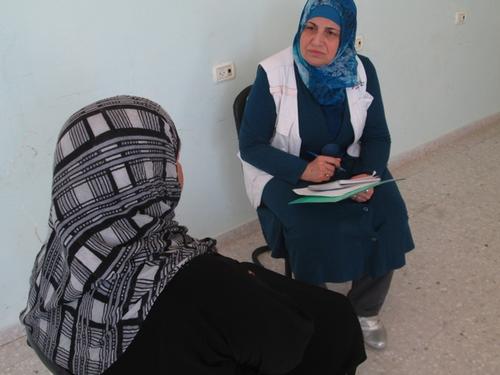
Prisoners’ families usually need psychological attention. Women, mothers, fathers, children, they are all affected by the absence of the prisoner. Adel’s case, who went into hunger strike, worsened the condition of his family.
Palestine

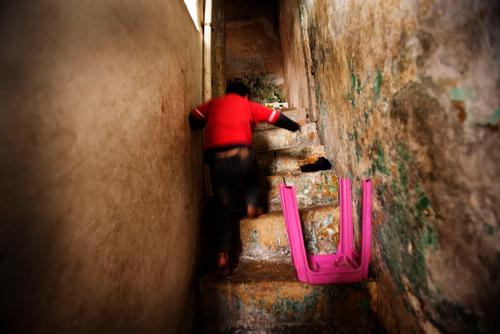
Growing up quickly in a West Bank refugee camp

A six-year-old growing up on the West Bank is helped by an MSF psychologist Project Update - 26 Mar 2014
 
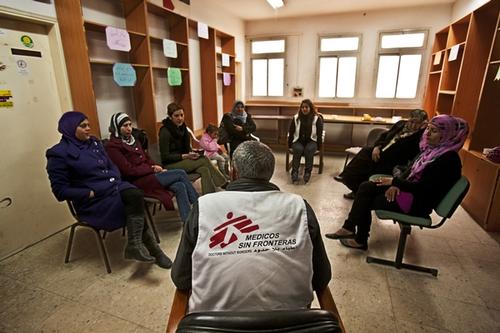
In East Jerusalem, many cases taken on by the MSF mental health teams are related to minors: arrested in school, in home detention or traumatised by the army's night incursions.
Palestine

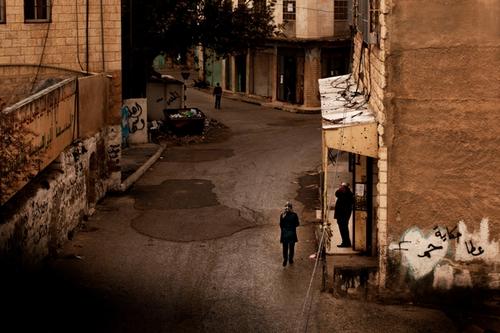
One year in Hebron and East Jerusalem

AN MSF field coordinator describes the difficulties of working in Palestine Voices from the Field - 19 Mar 2014
 
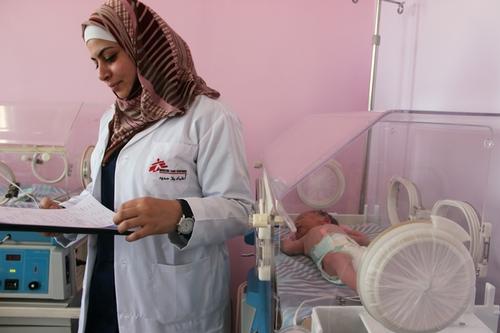
Newborn Syrian baby Zain Al-Abideen receives care from an MSF nurse in the neonatal unit at the mother and child hospital in Irbid.
Syria

MSF response to Syrian crisis

An update on MSF response to the Syrian crisis, including aid for Syrian refugees Project Update - 12 Mar 2014
 
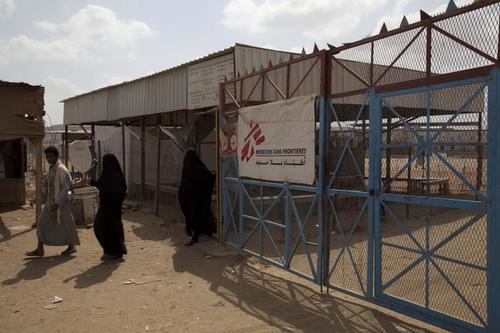
Yemen is a country of transit for the thousands of migrants who leave the Horn of Africa to try to get to the countries of the Arabian Peninsula, mainly from Ethiopia to Saudi Arabia. During the trip and especially in Yemen, these people are victims of traffickers who extort money from them and torture them. Last April, the Yemeni authorities carried out a campaign to release hundreds of migrants held by traffickers and begin to repatriate them to their home countries. Since then, the number of people who voluntarily approach the detention center for migrants seeking repatriation has greatly increased.
The detention center in Sana'a, Yemen's capital, has a maximum capacity of 200-250; the centre currently houses about 750.
Yemen

“No patients, no problems:” Exposure to risk of medical personnel working in MSF projects in Yemen’s governorate of Amran

This paper provides a better understanding of the various forms of insecurity affecting MSF projects in Yemen. Journal article - 18 Feb 2014
 
In June 2010, MSF opened a hospital on the outskirts of Al-Mazraq, in the north of Yemen’s Hajjah governorate, close to the region of Sadaa, with the aim of providing care to the displaced people living in the area. For nearly three years, MSF provided primary and specialist care to the displaced and local populations. The project closed in June 2013 because the IDP situation has stabilized.
Yemen

MSF suspends activities in Ad Dhale following security concerns

MSF suspends its support to the Al Nasser Hospital in Ad Dhale due to an increase in insecurity. Press Release - 15 Feb 2014
 
In Hebron and East Jerusalem, MSF is running a medical and psychosocial programme for people suffering from trauma because of the conflict. MSF teams focus on people with psychological distress (acute stress, anxiety disorders, post traumatic syndromes, depression) caused by violent incidents involving Israeli settlers and Israeli Army, but also due to the intra-Palestinian conflict. In Hebron, MSF staff carried out 1726 individual mental health consultations and 945 medical consultations in 2011.
In the beginning of 2011, MSF conducted a needs assessment in East Jerusalem and decided to start providing in this part of the city mental health care to the population who suffers trauma or psychological distress due to the consequences of violence caused by the conflict and who has no access to mental health services. MSF therapies started in July in the Shufat refugee camp and Silwan area and since then MSF staff carried out 223 individual mental health consultations.
Palestine

House arrest is a 'tradition'

An MSF psychologist helps a young Palestinian under house arrest Project Update - 14 Feb 2014
 
In Hebron and East Jerusalem, MSF is running a medical and psychosocial programme for people suffering from trauma because of the conflict. MSF teams focus on people with psychological distress (acute stress, anxiety disorders, post traumatic syndromes, depression) caused by violent incidents involving Israeli settlers and Israeli Army, but also due to the intra-Palestinian conflict. In Hebron, MSF staff carried out 1726 individual mental health consultations and 945 medical consultations in 2011.
In the beginning of 2011, MSF conducted a needs assessment in East Jerusalem and decided to start providing in this part of the city mental health care to the population who suffers trauma or psychological distress due to the consequences of violence caused by the conflict and who has no access to mental health services. MSF therapies started in July in the Shufat refugee camp and Silwan area and since then MSF staff carried out 223 individual mental health consultations.
Palestine

Imprisoned by the mind

An MSF psychologist describes how prison has damaged the mental health of a young Palestinian man Project Update - 17 Jan 2014
 
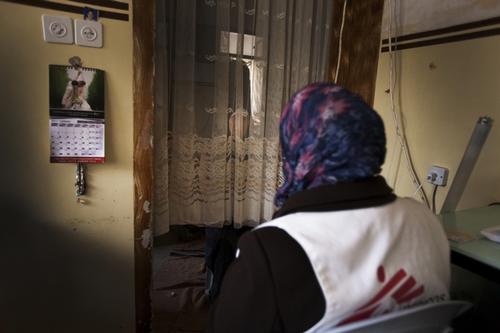
MSF staff member Wissam runs a psychological session in the village of Salem near Nablus. The patient, a woman named Um Taha witnessed her son being arrested by Israeli security forces. *** Local Caption *** Doctors Without Borders/Médecins Sans Frontières (MSF) runs mental health programs in the West Bank aimed to alleviate the impact of trauma, stress, and pervasive and often targeted violence, offering psychological and social support as well as medical care to the victims of violence caused by Israeli forces and settlers and intra-Palestinian disputes.
Palestine

Therapies to better cope with violence

MSF teams offer therapies to help victims cope better with violence Project Update - 13 Jan 2014
 
msf-placeholder
Syria

MSF working hard to secure safe return of five staff taken in northern Syria

MSF continues to put all efforts in securing the safe return of five staff taken from an MSF house in northern Syria. Statement - 10 Jan 2014
 
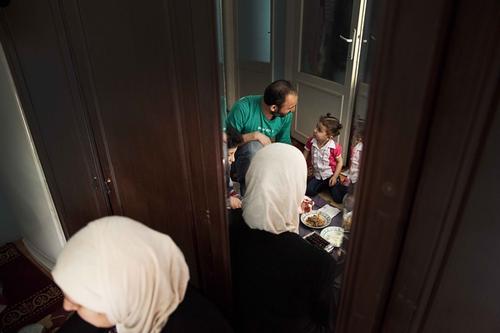
A family of Syrian refugees living in Istanbul. Photo for the Syrian Exodus project.
Syria

Syrian Exodus: Born in exile

This is the second chapter of the Syrian Exodus, an MSF multimedia project to follow the route of Syrians fleeing the war. See chapter one and three. Project Update - 20 Dec 2013
Four mothers posing in a corridor of the Hospital in Bili. All four of them are staying in the hospital with their child, that's suffering from a severe case of malaria. Since the beginning of the project in 2016, the pediatric ward already treated more than 4.000 cases of complicated/severe form of malaria.
Médecins Sans Frontières (MSF)

Independent medical humanitarian assistance

We provide medical assistance to people affected by conflict, epidemics, disasters, or exclusion from healthcare. Our teams are made up of tens of thousands of health professionals, logistic and administrative staff - most of them hired locally. Our actions are guided by medical ethics and the principles of independence and impartiality. We are a non-profit, self-governed, member-based organisation.

Learn more