


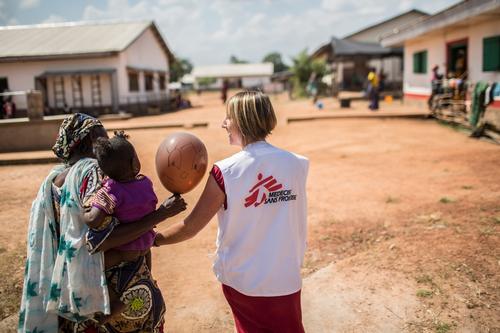

Ebola disease in DRC: find out how we're responding
Learn more
1390 Results
 
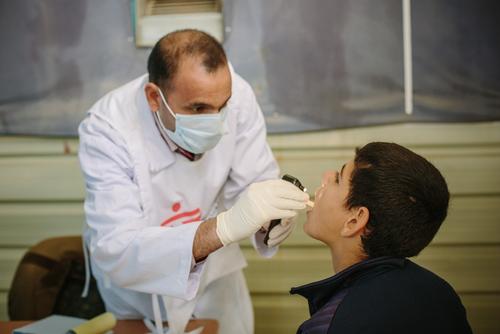
MSF has worked in Kirkuk since 2010 and since July has rapidly increased its assistance to the displaced population, operating mobile clinics in six locations throughout the city, focusing on chronic disease and maternal and pediatric care. Since July, MSF teams provided 5.821 medical consultations. MSF is also distributing 25,000 blankets and more than 3,700 kits with hygiene items to displaced families in Kirkuk.
Iraq

Thousands of displaced in Kirkuk lacking essential aid

Thousands fleeing violence are in desperate need of care. Press Release - 4 Dec 2014
 
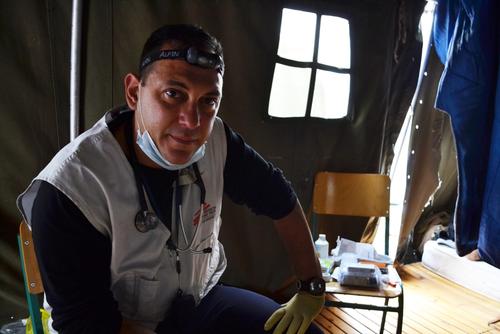
A tent at the Police Station of Kos is used as a bedroom and health screening room at the same time, due to lack of proper facilities 
 “Most of these people have been rescued at sea. When we examine them, they are usually very cold and have suffered considerably. From what I’ve seen, the conditions on arrival are  inadequate for their needs, and major improvements need to be made” says Dimitris Jannussis, MSF Doctor.
Greece

Testimonies from Syrian refugees and MSF staff

The people who arrive in the Greek islands have gone through a lot of hardship. We have seen people suffering from hypothermia and respiratory tract infections. They have suffered a lot, both physically and psychologically. Voices from the Field - 3 Dec 2014
 
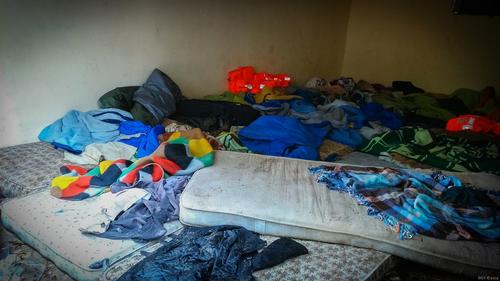
Garage shelter for refugees in Leros island,Greece. Coast Guard station yard
Mediterranean migration

EU and Greece turn their backs on refugees arriving at Greek islands

Refugees are subjected to a dysfunctional reception system and inhumane living conditions Press Release - 3 Dec 2014
 
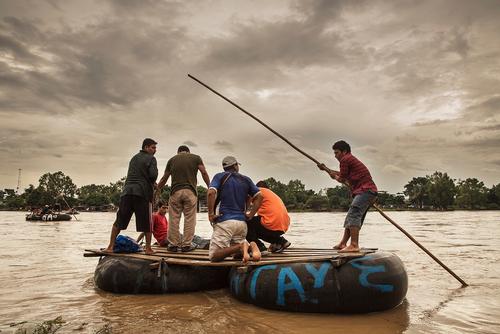
The Suchiate river, on the border between Mexico and Guatemala. The Central American migrants cross it on small boats. It's the beginning of their tough journey through Mexico.
Refugees, IDPs and people on the move

EXODUS: Three stories, three continents, but a shared motivation – to escape violence

MSF launches web documentary to tell the stories of those who have no choice but to leave Voices from the Field - 2 Dec 2014
 
Paoua hospital.
Cathy Beuve, MSF nurse. *** Local Caption *** In CAR, despite an overall increase in aid in recent years, access to health care remains a major problem, even in areas that are not directly affected by the conflict. A majority of Central Africans continue to live in extremely precarious conditions. Several mortality surveys conducted by MSF in particular regions of the country highlight crude mortality rates and specific extremely high - sometimes three to five times higher than the emergency threshold.<br>

These mortality rates are partly attributable to a structural deficit of the health system that does not allow the public to have access to basic health care for diseases such as malaria, respiratory infections and diarrheal diseases.<br>

In Paoua, MSF teams are working in collaboration with the Ministry of Health in all hospital reference departments (pediatrics, surgery, maternity, emergency, hospitalization and HIV & TB treatment). In 2011, MSF issued more than 72,000 consultations in Paoua hospital and peripheral health centers, and more than 6600 patients have been hospitalized. The teams have conducted over 8000 ANC consultations and 1432 deliveries. MSF also supports patients with advanced AIDS and cases of co-infection HIV / TB. In 2011, 247 patients received antiretroviral therapy.<br>
HIV/AIDS

‘Double victims’ – in conflict zones, people with HIV are twice as vulnerable

The past decade has seen major improvements in people’s ability to access lifesaving HIV treatments – but if you live in Central African Republic (CAR), South Sudan or parts of Yemen, you could be forgiven for thinking nothing has changed. The fact is that in most unstable areas, HIV services remain largely non-existent. Voices from the Field - 1 Dec 2014
 
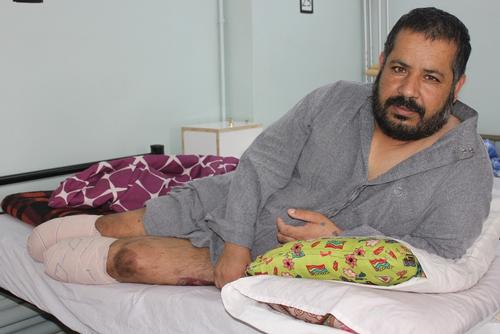
Nawaf, a 45-year-old patient:“I was blown up by a landmine while herding sheep and I lost both my legs. Two weeks later, my brother was also wounded in the same way. After four months of treatment, I tried on my prosthetics two days ago, I feel so happy. It’s a feeling that you can’t explain. I didn’t know that it would be possible. I can’t wait to go back to Syria to show my family that I can walk again.”
Jordan

A year of saving Syrian lives

Learn more about MSF's trauma surgery project on Jordan's border with Syria. Project Update - 24 Nov 2014
 
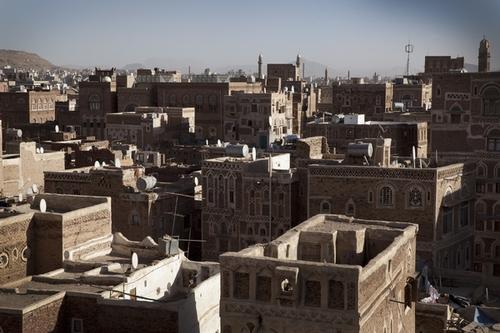
Since the beginning of the year, MSF is working in Sana’a, the capital of Yemen, to help reduce the stigma faced by people living with HIV and improve their access to quality healthcare.
Sana’a landscape.
Yemen

Enrolment for antiretroviral treatment increasing in health facilities

Stigma and discrimination towards people living with HIV and AIDS has reduced significantly in some public health facilities Press Release - 19 Nov 2014
 
Amina was diagnosted diabetic type I at the age of four years old. She never missed her insuline injections except from this time she had to flee Raqqa (Syria) with her family and seek refuge in Lebanon.
Lebanon

Syrian refugees struggle to live with diabetes

“Why continue living under these conditions?” says Ismael. “If I must die, I must die.” Voices from the Field - 19 Nov 2014
 
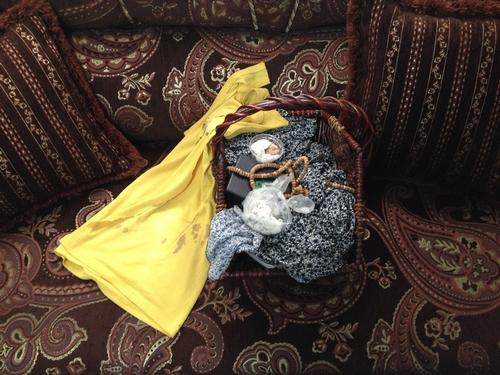
Bassim was killed by Israeli soldiers while crossing a checkpoint into the West Bank. These are his belongings. Hebron, West Bank
Palestine

Occupied Minds: When only one bullet ends an entire family’s dream

The dream of a joint wedding for both brothers turns into a nightmare. Voices from the Field - 14 Nov 2014
 
msf-placeholder
Occupied Minds

Occupied Minds: a Bedouin mother tells her story

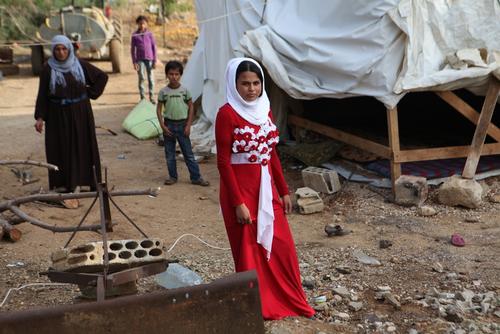
There are about 50 members from the same Bedouin family who live in a small area located at the end of Anata, in the east of Jerusalem. The area is rocky, with small flat areas where the tents where they live are installed. Each family usually has between 35 and 60 sheep, which they take every morning to graze the short grass growing between the rocks. This is a hot spot as the community is caught in the middle of crossfire from both sides: the Palestinian youths throw stones and the Israeli army fire bullets and tear gas. The bullets and stones fall on this area. Voices from the Field - 31 Oct 2014
Four mothers posing in a corridor of the Hospital in Bili. All four of them are staying in the hospital with their child, that's suffering from a severe case of malaria. Since the beginning of the project in 2016, the pediatric ward already treated more than 4.000 cases of complicated/severe form of malaria.
Médecins Sans Frontières (MSF)

Independent medical humanitarian assistance

We provide medical assistance to people affected by conflict, epidemics, disasters, or exclusion from healthcare. Our teams are made up of tens of thousands of health professionals, logistic and administrative staff - most of them hired locally. Our actions are guided by medical ethics and the principles of independence and impartiality. We are a non-profit, self-governed, member-based organisation.

Learn more