



Ebola disease in DRC: find out how we're responding
Learn more
1758 Results
 
msf-placeholder
Ebola and haemorrhagic fevers

Attention, World: The Ebola fight isn’t over

"Ebola may have faded from the headlines, but it hasn’t gone away," says Dr Joanne Liu, International President of MSF. "We don’t know how far away the finish line is, but we do know that to reach it, everyone involved in the response – both national and international – needs to channel all their energies into keeping up the momentum. And by accelerating use of the new vaccine in the affected countries, we can help break chains of transmission and protect frontline workers. " Opinion - 13 Aug 2015
 
CENTRAL AFRICAN REPUBLIC, BOSSANGOA, 3 OCTOBER 2014
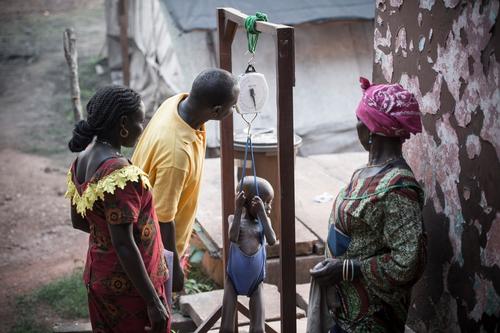
Bossangoa Hospital: an MSF-nurse makes notes about his patients in the nutrition ward where severely malnourished children are taken in. The hospital is run by Minister of Health and is supported by MSF.
Central African Republic

Local health worker killed near Bossangoa

Local health worker Pkecko Harly (also called Alfred), was killed by an unidentified individual during an armed robbery while he was on his way back from Bossangoa (Ouham prefecture) to Pama. Project Update - 7 Aug 2015
 
msf-placeholder
South Sudan

Health risks increasing for people in Bentiu Protection of Civilian Camp

“The current situation is precarious, with new arrivals coming every day to the UN Protection of Civilians camp in Bentiu in search of shelter and protection. The upsurge of fighting in Unity state since April has forced many from their homes and an estimated 110,000 displaced people are now living here. That’s more than double the number of people here a few months ago and it feels more like a city than a camp," says Dr Ruby Siddiqui, MSF's epidemiologist. "There is a real risk of an outbreak of hepatitis E virus. Although there have been sporadic cases of hepatitis E virus detected since October 2014, over the last six weeks there appears to have been a consistent and significant increase in people with jaundice (signs of liver inflammation) who have later tested positive for hepatitis E by rapid diagnostic testing. Currently MSF is seeing a high hospitalisation ratio (37.0%) and a high case fatality ratio (4.0%)." Voices from the Field - 3 Aug 2015
 
msf-placeholder
South Sudan

Activity Update June 2015

MSF is particularly concerned about the effects of fighting in Upper Nile State. Humanitarian needs are growing, but aid organisations are finding it increasingly difficult to access the most severely affected areas, such as Wau Shilluk and Noon. Insecurity has also restricted MSF’s work in Malakal and Melut through June and July. Crisis Update - 31 Jul 2015
 
msf-placeholder
Tanzania

130,000 refugees vaccinated against cholera in the overcrowded Nyarugusu camp

A cholera vaccination campaign to protect Burundian and Congolese refugees in the overflowing Nyarugusu camp in Tanzania has been completed this week. However, with people still living in very precarious conditions, there is a parallel urgent need to improve the sanitary situation in the camp. Press Release - 30 Jul 2015
 
msf-placeholder
Mali

MSF continues its activities in Timbuktu despite insecurity

Since 2014, deteriorating security, explosive devices on roads and the risk of carjacking have forced MSF to reduce its activities in Timbuktu. In spite of all this, MSF continues to fully support three community health centres on the outskirts of Timbuktu with primary, emergency obstetric and neonatal care, immunisation and nutrition programmes. Project Update - 24 Jul 2015
 
msf-placeholder
South Sudan

MSF calls for urgent humanitarian access to Upper Nile state

“The continuing violence in South Sudan is forcing ordinary people to live in inhumane conditions,” says William Robertson, MSF’s program manager for South Sudan. “People are being exposed to continual violence, increased displacement, fear of attacks, disease outbreaks and the risk of starvation. MSF is deeply concerned about the continued denial of access for aid organisations to conflict areas and other remote areas of South Sudan, which is leaving people without the humanitarian assistance they urgently need.” Press Release - 23 Jul 2015
 
msf-placeholder
Nigeria

“Our team is working all the time, because IDPs arrive every week.”

“None of the hospitals outside of Maiduguri and Biu are currently functioning. And most of them were completely destroyed with bombs. Those that weren’t destroyed were looted,” says Dr. Faisal Ga'al, MSF project coordinator in Maiduguri. “This is now the first stage of the crisis in Borno state, but the gaps will be huge when people start going back to their homes. They will need emergency support for some time. They are going back to zero – there is no means for people to make a living in the area.” Voices from the Field - 23 Jul 2015
 
msf-placeholder
South Sudan

Patient tells of cholera recovery at new MSF Cholera Treatment Centre in Juba

“I’m happy because of the care and treatment I received here. I’m now feeling better, not like when I arrived. I would like to tell people suffering from cholera that there is an MSF centre in Munuki which provides care, support and food.” says Madeleine, one of the first patients admitted to MSF's newly built Cholera Treatment Centre (CTC) in Munuki, Juba. Voices from the Field - 22 Jul 2015
 
msf-placeholder
Tanzania

Camp for Burundi refugees ‘at breaking point’

As large numbers of refugees fleeing unrest in Burundi cross the border to neighbouring Tanzania, the overcrowded refugee camp of Nyarugusu “has reached breaking point”, according to Sita Cacioppe, emergency coordinator for Médecins Sans Frontières (MSF). Press Release - 20 Jul 2015
Four mothers posing in a corridor of the Hospital in Bili. All four of them are staying in the hospital with their child, that's suffering from a severe case of malaria. Since the beginning of the project in 2016, the pediatric ward already treated more than 4.000 cases of complicated/severe form of malaria.
Médecins Sans Frontières (MSF)

Independent medical humanitarian assistance

We provide medical assistance to people affected by conflict, epidemics, disasters, or exclusion from healthcare. Our teams are made up of tens of thousands of health professionals, logistic and administrative staff - most of them hired locally. Our actions are guided by medical ethics and the principles of independence and impartiality. We are a non-profit, self-governed, member-based organisation.

Learn more