



Ebola disease in DRC: find out how we're responding
Learn more
1758 Results
 
msf-placeholder
South Africa

South Africa should override patent on key HIV medicine after widespread stock out problem

Stock outs of critical HIV drug LPV/r are causing thousands of South Africans to go without HIV treatment, potentially leading to drug resistance developing or people becoming sick. The stock out is due to pharma company AbbVie - which holds patents on the drug, preventing generics being produced or imported - not providing enough of a supply. The South African government needs to issue a compulsory licence, which allows generic versions to be produced, used or imported in the country, in order to ensure access to lifesaving treatment for people. “People are being turned away from clinics without medicine and are being asked to purchase it on the private market. Many simply cannot afford it and this causes distress,” said Dr. Amir Shroufi, MSF’s Deputy Medical Coordinator in South Africa. “Alarmingly, people without access to treatment over time can become resistant to lopinavir/ritonavir and require more expensive medicines – they also risk falling sick and could even die.” Press Release - 27 Oct 2015
 
msf-placeholder
India

At African Union – India meeting, leaders should work together to protect access to affordable medicines

“African leaders really should see this summit as an opportunity to work together with Prime Minister Modi to protect affordable access for people across the developing world”, said Dr Van Cutsem. “They need to remember that millions of people in Africa are alive today because of affordable medicines made in India.” Press Release - 26 Oct 2015
 
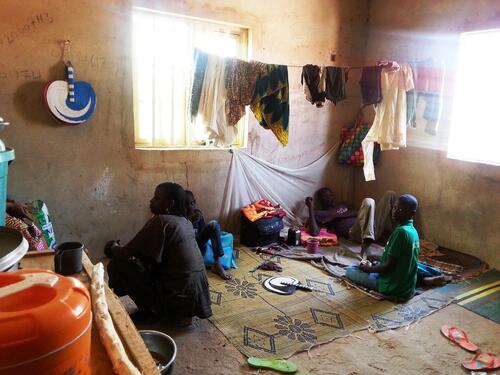
Situated in the Lake Chad region, the site of Koulkimé in Chad hosts approximately 1,800 displaced people according to OCHA. They have fled Islamic State's West Africa Province (ISWAP), also known as Boko Haram, as well as military operations carried out by the Chadian government.  MSF is working together with the Chadian Ministry of Health to support the primary health centre in Koulkimé.
Chad

Plunging from one nutrition crisis to the next

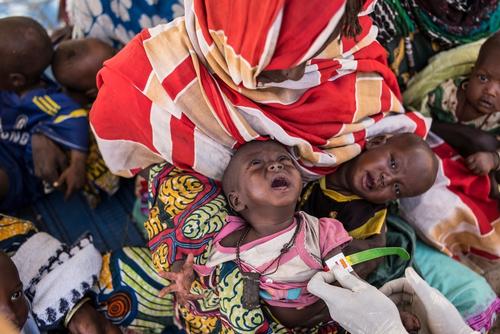
MSF's medical teams are responding to a nutrition crisis in Bokoro, in the Hadjer-Lamis region of central Chad.“Providing feeding programmes and medical assistance to acutely malnourished children is essential, but it is simply not enough to stop hundreds of thousands of children across Chad repeatedly descending into emergency levels of malnutrition,” says Alberto Jodra, MSF head of mission in Chad. “Far more needs to be done to address malnutrition’s multiple structural causes and to ease the suffering of communities like Bokoro from plunging from one hunger crisis to the next.” Project Update - 16 Oct 2015
 
msf-placeholder
Mediterranean migration

Alhassane Zaharia from Benin

Alhassane Zaharia from Benin, on board of Dignity I, talks about his journey to Europe: "This journey is too dangerous. Even now I still don´t have enough courage to look at the sea." Voices from the Field - 15 Oct 2015
 
msf-placeholder
Central African Republic

Thousands flee latest violence in Bangui

40,000 people have fled from their neighbourhoods. “They left with nothing and now they’re living in the most appalling conditions. Most have no shelter, no food and almost no access to medical care”, says Jean-Guy Vataux, MSF head of mission in Bangui. Project Update - 14 Oct 2015
 
MSF set up operations in Borno in May 2013 but had to pull out because of the security situation. In August 2014, MSF returned to Maiduguri on a permanent basis. The security situation in Borno continues to be extremely volatile with regular reports of clashes between the military and insurgents, particularly in rural areas. The government is planning the return of IDPs to their home communities by January 2016.  But this plan encounters resistance from IDPs as the security situation in the surrounding areas remains tense. 

Since 28 September 2015, an MSF team has been working in the 11-bed emergency room at Umaru Shehu hospital in Maiduguri. MSF continues its sanitarian and health surveillance/monitoring in 15 IDP camps. MSF also continues its medical activities in 2 camps – ATC and Teachers Village camps – where we provide primary healthcare and antenatal consultations.  MSF also carries out water & sanitation activities in 9 of the 15 IDP camps. In late September 2015 MSF transferred secondary healthcare activities from Maimusari clinic to the Infectious Diseases Hospital. MSF continues to run two clinics in urban districts in Maimusari and Bolori to provide primary healthcare.
Nigeria

A new MSF emergency project in Maiduguri

Since 28 September 2015, MSF has been working at Umaru Shehu hospital in Borno State capital Maiduguri in northeast Nigeria, treating patients referred from smaller health facilities and providing care to people wounded during attacks. Project Update - 13 Oct 2015
 
msf-placeholder
South Sudan

No medical assistance available in Leer, following repeated lootings of MSF facility

MSF was forced to suspend medical activities and evacuate its team from Leer, after a MSF's compound in Leer was looted twice by well-organized armed men on 2 and 3 October. “MSF strongly condemns these armed robberies of its medical personnel and facilities,” says MSF Emergency Manager Tara Newell. “These incidents have forced MSF to suspend its medical activities in Leer and they are responsible for depriving the population of urgently needed medical assistance.” Press Release - 6 Oct 2015
 
msf-placeholder
Central African Republic

Renewed violence in Bangui makes it difficult to access hospital

A new eruption of violence has engulfed the Central African capital since 26 September. Despite the tension and insecurity Médecins Sans Frontières (MSF) teams are maintaining their presence and are treating the wounded who manage to arrive at the three MSF medical facilities in town. Press Release - 30 Sep 2015
 
New arrivals wait to be registered at Bentiu POC. They reported insecurity, continued fighting and lack of food as factors for coming into the POC. September 2015. Bentiu, South Sudan. Brendan Bannon
South Sudan

Malaria in Bentiu, South Sudan

This past August and September 2015, MSF teams have treated as many as 4,000 malaria patients every week at its healthcare facilities in the Bentiu Protection of Civilians camp (PoC), a staggering 43-fold increase from the beginning of the year. Photo Story - 29 Sep 2015
 
msf-placeholder
Central African Republic

MSF brings medicines and basic care to a remote area in the north-eastern province of Vakaga

“When we arrived the first week of September we found a very precarious situation as regards healthcare,” said the MSF's head of the medical intervention, Chiara Domenichini. “The community provided us with mortality data that were very alarming, more than twice what is considered an emergency situation.” MSF's emergency team in CAR has carried out a brief intervention in the remote north-eastern province of Vakaga, where humanitarian aid has been scarce despite the clear effects of years of conflict and displacement and the shortage of health resources in the area, which is home to about 70,000 people. Voices from the Field - 28 Sep 2015
Four mothers posing in a corridor of the Hospital in Bili. All four of them are staying in the hospital with their child, that's suffering from a severe case of malaria. Since the beginning of the project in 2016, the pediatric ward already treated more than 4.000 cases of complicated/severe form of malaria.
Médecins Sans Frontières (MSF)

Independent medical humanitarian assistance

We provide medical assistance to people affected by conflict, epidemics, disasters, or exclusion from healthcare. Our teams are made up of tens of thousands of health professionals, logistic and administrative staff - most of them hired locally. Our actions are guided by medical ethics and the principles of independence and impartiality. We are a non-profit, self-governed, member-based organisation.

Learn more