



Ebola disease in DRC: find out how we're responding
Learn more
1758 Results
 
Khadija, 42, is a mother of four from Syria who is now detained on Samos island, Greece, along with her children. She spoke to MSF from behind two metal fences. 
“What is going to happen next? Will they kill us here in Europe? My husband was killed and our house was destroyed by a barrel bomb in 2013. Since then we have been moving from village to village looking for safety, until I lost hope and I brought my children to Turkey. I worked many jobs but it was so hard for me to manage with four children so I decided to come here to be safe. Yet here we are behind barbed wire like criminals, this is extremely unjust.
For more details see: https://lc.cx/4BCC
Greece

Will they kill us here in Europe?

Voices from the Field - 13 Apr 2016
 
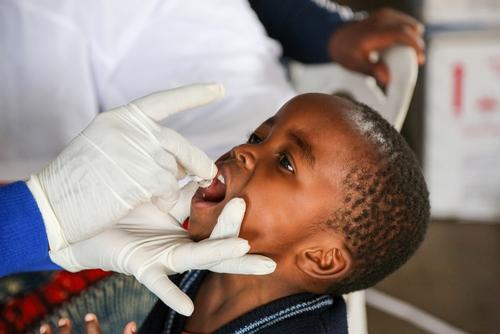
Cholera Vaccination at St Joseph Churh, one of the 15 sites of vaccination in Kanyama districts.
Zambia

Largest ever oral cholera vaccination campaign underway in Lusaka

“Lusaka has experienced regular cholera epidemics in the past, but this is the first outbreak since 2010,” says Caroline Voûte, MSF emergency coordinator. “With such a long period between outbreaks, the population has little to no acquired immunity to the disease, leaving a ‘blank slate’ for cholera transmission in these densely populated, flood-prone areas.” Press Release - 9 Apr 2016
 
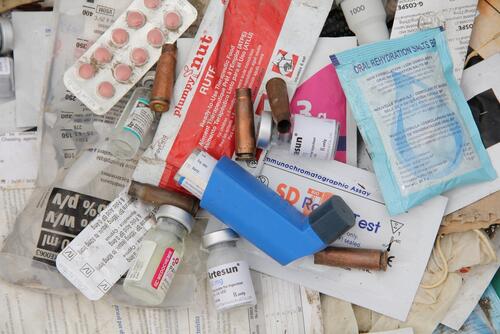
Bullet casings were found throughout the MSF medical centre, which was extensively looting during and after fighting in Pibor, South Sudan from Feb 23-25, 2016. Life-saving medicines, medical equipement and essential records were strewn everywhere while cabinets and shelves were tossed and emptied in a whirlwind of theft and disrespect for medical care.
South Sudan

MSF issues open letter on nationwide lack of essential medicines

“The conflict in South Sudan has now continued for over two years, heavily impacting its population,” Dr. Liu wrote, calling the worsening drug shortages “an additional and preventable medical emergency.” Statement - 7 Apr 2016
 
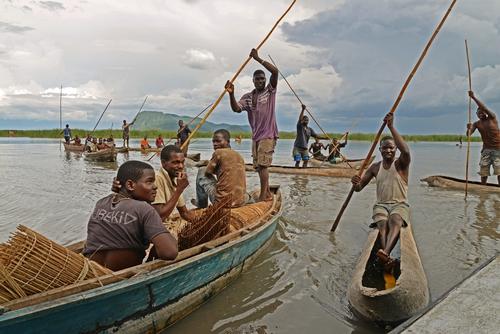
At the crossing of MSF vaccination team, some fishermen come close to the boat and vaccination takes place directly on the water.
Malawi

A cholera response among fishing communities on and around Lake Chilwa

Each year there are between three million and five million cases of cholera worldwide, causing between 100,000 to 120,000 deaths. In 2014, MSF treated around 21,000 cases of cholera in its projects worldwide. The first case of cholera was registered in Malawi in 1973. Outbreaks have occurred almost every year since with the highest number of cases and deaths reported in 2001–2002. Photo Story - 4 Apr 2016
 
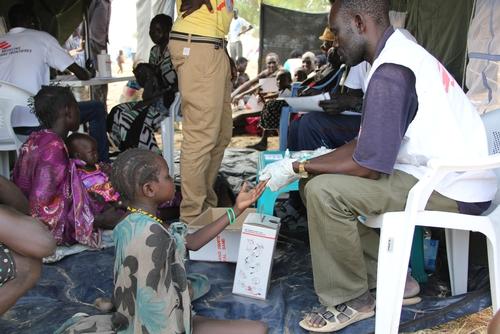
An MSF medical staff performs a paracheck rapid malaria test for a sick child in the UN compound in Pibor South Sudan. Over 2000 people are seeking shelter in conditions that fall way short of minimum humanitarian standards in an emergency setting. The majority of patients treated are under five years of age, suffering from malaria, respiratory tract infections and diarrhea.  MSF is the only provider of medical care in the camp
South Sudan

Activity Update, March 2016

MSF condemns the outrageous violence in the Malakal Protec­tion of Civilians site on February 17 and 18, which claimed the lives of 19 people, including two MSF staff. MSF employs more than 3,000 South Sudanese staff and 330 international staff to respond to a wide range of medical emergencies and provide free and high quality healthcare to people in need in 17 project loca­tions across the country. Crisis Update - 1 Apr 2016
 
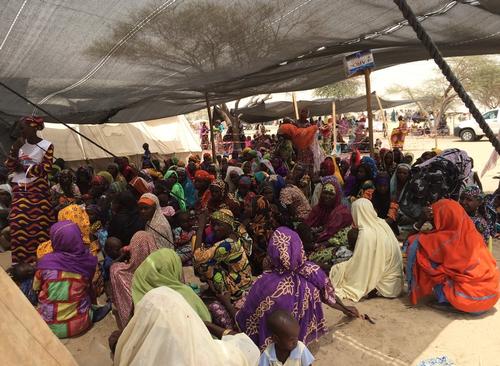
MSF clinic in Gari Wanzam where thousands of newly displaced people from Bosso district have have sought refuge in the last days.
Lake Chad Crisis

Testimony of Falmatou, a Nigerian refugee in Niger

Falmatou lives alone with her eight children in a refugee camp in southern Niger after having fled her village in northern Nigeria, during a violent attack by ISWAP (Boko Haram). Voices from the Field - 31 Mar 2016
 
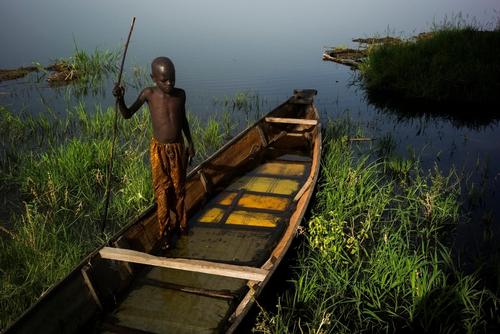
A young boy stands on a pirog, a wooden boat, after fishing in the lake near Kaya, an internally displaced persons camp with about 1200 people near the town of Bol in Chad. Many people drink water directly from the lake, risking illness. Many have left Kaya because the lack of food and decided to go back to their villages located on Lake Chad’s islands.
Lake Chad Crisis

Lake Chad crisis update: Trapped in deadly violence

With more than 2.7 million people uprooted from their homes, the Lake Chad basin is currently home to one of the African continent’s biggest humanitarian crises. The region is reaching breaking point due to attacks by the Islamic State’s West Africa Province group (ISWAP), also known as Boko Haram, and a strong military response which has been launched to curb the violence. Project Update - 30 Mar 2016
 
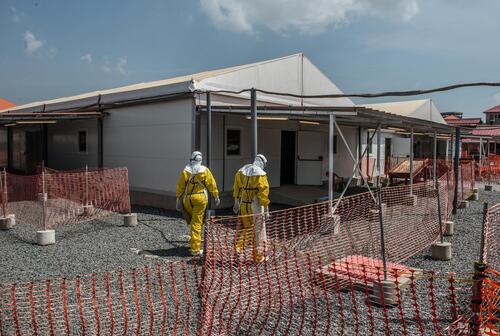
The Ebola outbreak that was declared in August in the Equateur province of the Democratic Republic of Congo (DRC) has not yet been contained. The Ebola response teams, including 50 members of Médecins Sans Frontières (MSF), are currently working in very difficult conditions because of the lack of roads in the area, the misinformation in the local communities about the disease, and the risk of not treating those who might have been in touch with the virus.
Ebola and haemorrhagic fevers

MSF supported research on Ebola

A review of MSF's Ebola-related research carried out in Guinea, Sierra Leone and Liberia, including clinical, epidemiological and anthropological research. Report - 23 Mar 2016
 
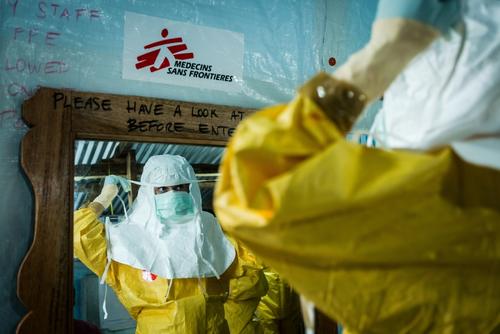
All healthcare workers must wear full Personal Protective Gear (PPEs). Before they cross over into the hot zone, or patient area at ELWA3. A mirror next to the entrance reminds them to check their PPEs for any holes or openings. This could mean the difference between life and death. ELWA3 is the Ebola Case Management Center run by MSF in Monrovia.
Ebola and haemorrhagic fevers

Ebola 2014-2015 Facts & Figures

Through this short report, MSF would like to provide transparency about its expenditure linked to the worst Ebola outbreak in history.
Report - 23 Mar 2016
 
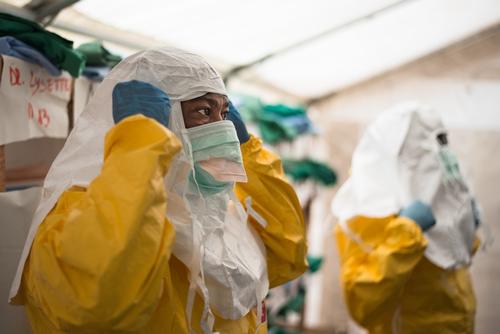
A staff member puts on PPE equipment as they prepare to enter the isolation area at the MSF Ebola treatment center in Nongo.
Ebola and haemorrhagic fevers

Ebola Activity Update - March 2016

Crisis Update - 23 Mar 2016
Four mothers posing in a corridor of the Hospital in Bili. All four of them are staying in the hospital with their child, that's suffering from a severe case of malaria. Since the beginning of the project in 2016, the pediatric ward already treated more than 4.000 cases of complicated/severe form of malaria.
Médecins Sans Frontières (MSF)

Independent medical humanitarian assistance

We provide medical assistance to people affected by conflict, epidemics, disasters, or exclusion from healthcare. Our teams are made up of tens of thousands of health professionals, logistic and administrative staff - most of them hired locally. Our actions are guided by medical ethics and the principles of independence and impartiality. We are a non-profit, self-governed, member-based organisation.

Learn more