



Ebola disease in DRC: find out how we're responding
Learn more
1758 Results
 
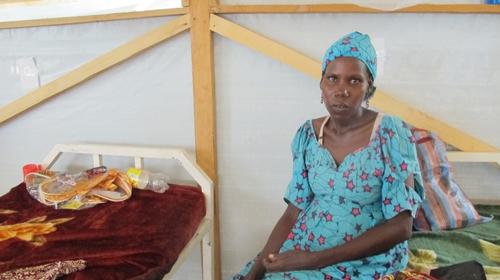
Dayo, 31, was referred to Mora Hospital in Cameroon in late July by MSF teams in Banki, Nigeria.

 She accompanied her sick four year-old son, Barine. The child urgently needed to be admitted to hospital as he was suffering from severe acute malnutrition.
Nigeria

We are scared to return

Patient testimonies from Banki Voices from the Field - 11 Aug 2016
 
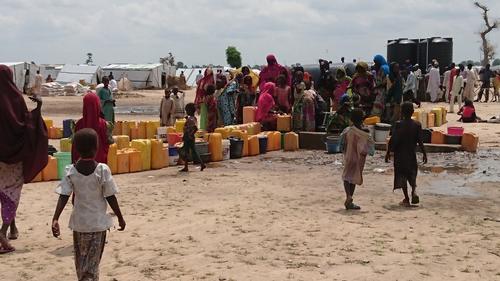
Muna camp in Maiduguri.
Nigeria

Crisis Info on Borno emergency - August 2016

Project Update - 10 Aug 2016
 
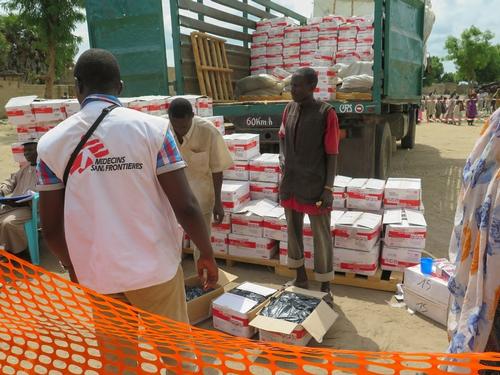
During the second week of July 2016, MSF organised an exploratory mission and an emergency distribution for more than 15,000 displaced people leaving in dire conditions in the city of Banki, in Borno State – Nigeria.
Project Update

Crisis Info - July 2016

Crisis Update - 27 Jul 2016
 
During the second week of July 2016, MSF organised an exploratory mission and an emergency distribution for more than 15,000 displaced people leaving in dire conditions in the city of Banki, in Borno State – Nigeria.
Nigeria

MSF warns of large-scale humanitarian disaster in Borno State

More than 500,000 people are living in catastrophic and unsanitary conditions in a number of villages and towns across Borno State, northeastern Nigeria. “In Banki, as in a number of other areas, people have almost no access to humanitarian aid,” says MSF’s emergency programme manager Hugues Robert. Press Release - 27 Jul 2016
 
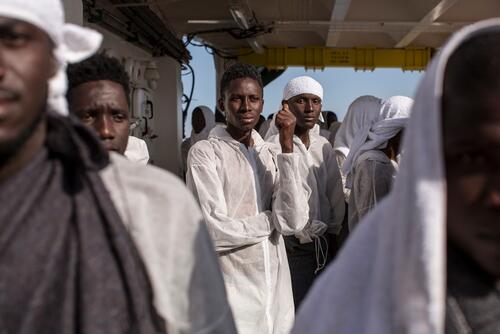
MV Aquarius disembarks 209 people and the dead bodies of 21 women and one man in Trapani, Sicily on the 22nd July 2016.

The search and recue vessel, a partnership between MSF and SOS Méditerranée, responded to a boat in distress on 20th July 2016.

"We see from the people that survived that they are unusually silent. They are just staring with these empty eyes into nothingness for hours and hours. It's been horrific. These things shouldn't happen. It's 2016. It shouldn't happen anymore." 

Dr Erna Rijnierse, Doctor onboard MV Aquarius a search and rescue vessel run in partnership between MSF and SOS Méditerranée.
Mediterranean migration

MSF doctor recounts finding deaths at sea

By Dr Erna Rijnierse, an MSF doctor onboard the search and rescue vessel the MV Aquarius Voices from the Field - 25 Jul 2016
 
For the first time, a Médecins Sans Frontières team went to Dikwa, a town 90km from Maiduguri in Borno State, northeast Nigeria, to carry out a nutrition assessment on children under the age of 5 years. There are around 70,000 displaced people living in Dikwa, some of whom have have been living in Boko Haram controlled areas until very recently. The team recorded a 13% rate of severe malnutrition amongst those screened.
On the morning of 20th July alone, they identified 34 children who required hospitalisation and a further 663 severely malnourished cases. Due to the limited medical and transport capacity, the team was only able to evacuate the most urgent cases, who were immediatey admitted to the Gwange Inpatient Therapeutic Feeding Centre (ITFC), on the outskirts of Maiduguri.

Triage in Maimusari health center. Every day, medical team is doing about 500 consultations as well as 300 prenatal consultations and 10 deliveries.
Nigeria

Crisis Info on Borno Emergency - July 2016

Crisis Update - 22 Jul 2016
 
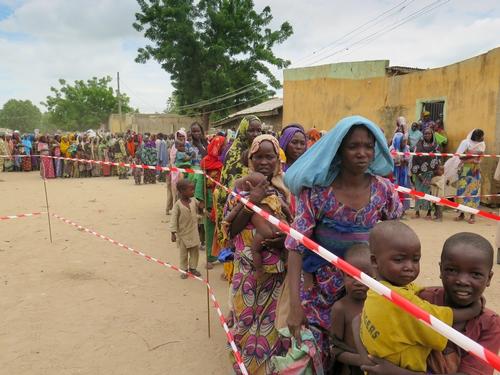
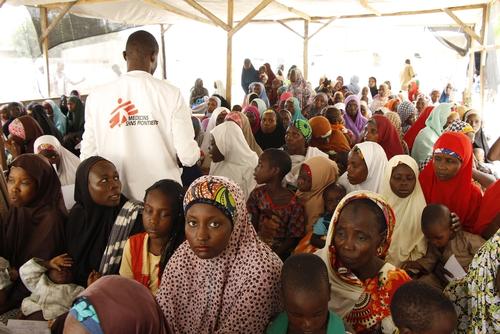
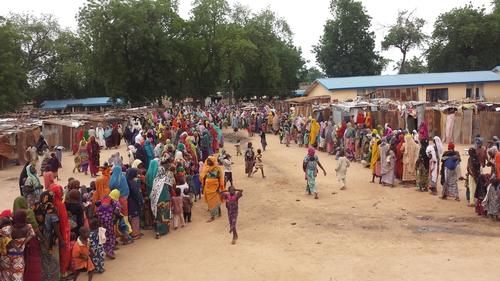
People are queuing for screening. The displaced population in Bama camp is estimated between 10 000 to 12 000 persons.
Nigeria

Health disaster in Borno State

The health situation in Borno State in northeast Nigeria is critical. At least 500,000 people who are either displaced or cut off in enclaves outside state capital Maiduguri are in urgent need of food, medical care, drinking water and shelter. “Aid agencies must deploy a massive relief operation to respond to this health disaster”, says Dr Isabelle Defourny, director of operations at Médecins Sans Frontières (MSF). Press Release - 20 Jul 2016
 
Community Care Giver Nonhlanhla Ngema passes a long queue of patients at Eshowe Gateway Clinic to pick up ARVs for members of her Community ART Group (CAG). Medecins Sans Frontieres (MSF) has been piloting CAGs as a model of care for stable HIV+ patients in rural districts of southern Africa, where HIV prevalence is at its highest. CAG members meet once every two months to review their health and arrange for collection of their ARVs without having to sit in long queues at clinics.
HIV/AIDS

MSF calls for quality HIV care in neglected communities

While significant progress has been made in South Africa since the first Durban conference in 2000, deadly and unnecessary HIV treatment gaps persist in other countries Press Release - 18 Jul 2016
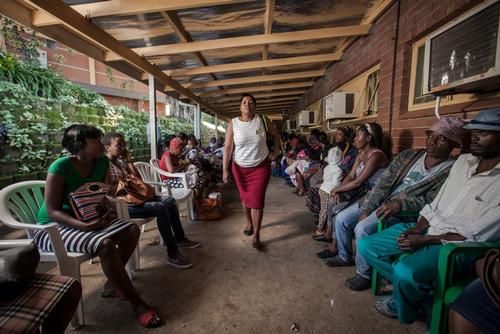
Four mothers posing in a corridor of the Hospital in Bili. All four of them are staying in the hospital with their child, that's suffering from a severe case of malaria. Since the beginning of the project in 2016, the pediatric ward already treated more than 4.000 cases of complicated/severe form of malaria.
Médecins Sans Frontières (MSF)

Independent medical humanitarian assistance

We provide medical assistance to people affected by conflict, epidemics, disasters, or exclusion from healthcare. Our teams are made up of tens of thousands of health professionals, logistic and administrative staff - most of them hired locally. Our actions are guided by medical ethics and the principles of independence and impartiality. We are a non-profit, self-governed, member-based organisation.

Learn more