



Ebola disease in DRC: find out how we're responding
Learn more
1758 Results
 
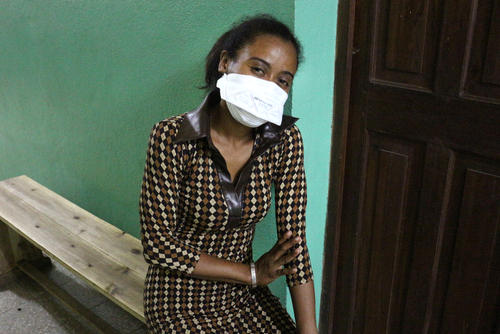
Innocente, 33 years old, is a Doctor in a Hospital 45 km away from Tamatave, where MSF is supporting the local hospital.

“For five days, I was really tired; I had aches, headaches and chest pain. I thought I was suffering from angina. On 5 October, I had an alarming symptom: I started spitting blood. As I had done training about pneumonic plague with some colleagues, I went to Tamatave’s hospital to do some tests. I was clearly a suspect case, and then they confirmed that I was infected by the plague. I got an injection and stayed at the hospital. My family was panicked. From the second day, the symptoms began to disappear: swollen glands, headaches etc… As I was feeling better, I began to help the medical staff here even though I was still recovering. There were a lot of patients, a lot of plague cases the first week of the epidemic. Now, it has slowed down. The medical staff told me to take two weeks off to rest. I don’t know if my family is ready for me to come back home. They say they are but I can feel that they’re still afraid of me. So I stay away to leave my family in peace. I’m feeling positive. I don’t want to live with this secret: I had the plague and I was cured.”
Madagascar

MSF provides support in tackling plague outbreak

The plague is understandably a scary disease, but quick, hands-on action can drastically lower the number of fatalities and bring the outbreak to an end. Project Update - 19 Oct 2017
 
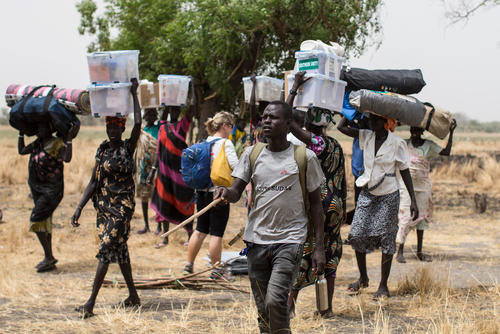
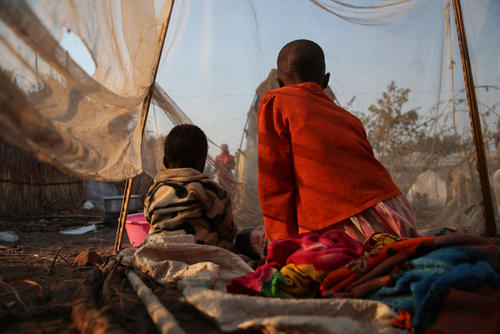
The MSF team prepares to move from one location to the other, Thaker, Leer County, South Sudan, March 21, 2017.
South Sudan

Continuing displacement is the new reality for many along northern frontier

“An older man came and dropped to the ground on his knees... he did not know what to do anymore. He just wept, in the middle of the group, like he had run out of hope.”
Project Update - 6 Oct 2017
 
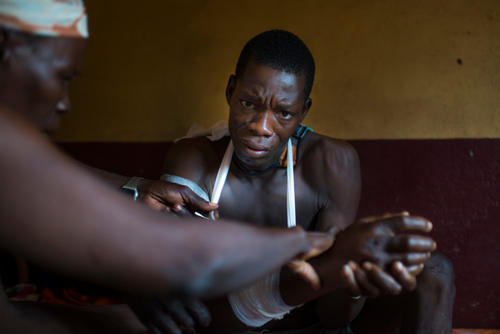
Savien Robert Zoulemati, 25, father of a week-old baby, from Yakidi village, near by Ippy. “Because me don’t have money, we went hunting. We were a group of five. After the hunt, we came back to the camp, fixed dinner and get some rest. I was lying down when heavily armed Peuhls (Fulanis) attacked us. They came by the river to not be noticed and started shooting at us. My four companions escaped and I got the bullets, one broke my arm, the second went through my hip, the third wounded my right leg. They took us by surprise, hence it was difficult to know how many they were. My companions had abandoned me and I was left with no help. I held my broken arm to my chest. It took me a lot of energy to get head back to the village, I vomited and bled, I was tired, worn out. My hunting companions had alerted the village and by the evening, my parents came to look for me and bring me back home on their bicycle. Peuhls attack us because they see us as FPRC and anti-balaka.”
Central African Republic

Crisis update - September 2017

Violence has led to over 600,000 people being internally displaced within CAR; MSF is providing medical assistance in several areas throughout the country. Crisis Update - 3 Oct 2017
 
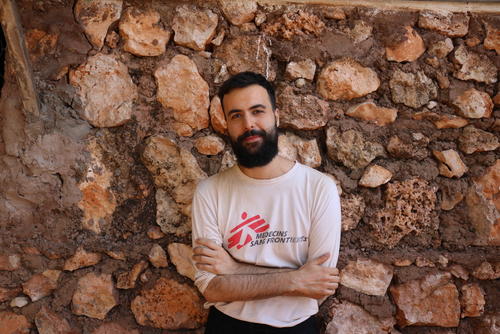
Roberto Wright, from MSF's emergency team, is an Anthropologist from Brazil. In Ethiopia’s Somali region he is responsible for developing a community engagement strategy for MSF’s community health outreach staff, which involves training them to speak to people in the informal settlements about how the organization is working to identify, treat and prevent malnutrition.
Ethiopia

“If people don’t understand what we do, they will never come to our health centres”

“Part of my work is to understand their approaches regarding traditional medicine and to explain MSF care to them so that they can combine both.” Voices from the Field - 25 Sep 2017
 
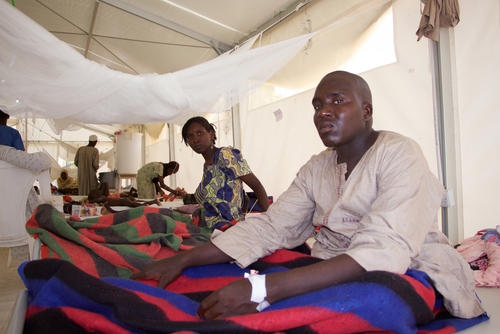
Algoni  and his wife Khadija, live in Muna Camp, having fled their homes in Dikwa, Borno state. They have been receiving treatment in MSF’s cholera treatment unit for three days.
Nigeria

MSF scales up activities as cholera spreads in Borno state

“We remain alert and through our community health workers continue to monitor the spread of the outbreak, and respond to it across Borno state.” Project Update - 19 Sep 2017
 
msf-placeholder
Chad

In eastern Chad, cholera continues to spread

MSF is working with the Chadian Ministry of Public Health to cope with an outbreak of cholera in the east of the country. Project Update - 15 Sep 2017
 
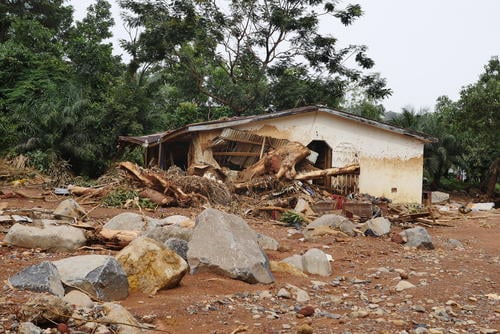
A building affected by the mudslide.
Sierra Leone

MSF supports communities hit hard by mudslide and flooding

MSF is focusing on ensuring people have access to clean water and sanitation facilities, crucial for meeting people’s needs, and preventing outbreaks of diseases. Project Update - 24 Aug 2017
 
Refugees wait to be vaccinated at the MSF clinic in the Cacanda camp. MSF routinely carries out vaccinations, although it also conducted a campaign which led to the immunisation of more than five thousand children against measles, yellow fever, polio and a further five preventable diseases.
Democratic Republic of Congo

Crisis update – July 2017

DRC: Update on humanitarian crisis in Greater Kasai region Crisis Update - 21 Aug 2017
 
Recent violence in Tanganyika has displaced thousands of people who are now living in and around Kalémie. Among them are many children separated from their parents when they fled.
Democratic Republic of Congo

No water, no space – dire living conditions in Kalémie

“They have survived several attacks and have been forced to abandon their previous shelters. Each time, they lose some possessions and many have nothing left.” Press Release - 18 Aug 2017
 
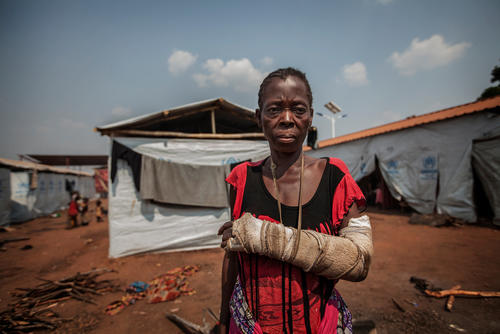
A refugee in the Cacanda camp shows the traumatic injury caused during the conflict in the Democratic Republic of Congo (DRC). MSF provides mental health services for refugees in need, many of whom are direct witnesses or victims of the violence.
Democratic Republic of Congo

In Kasai, “even the birds had stopped singing”

"The wounds of the patients that we treat tell us about the extreme levels of violence that the people of Kasai are facing." Voices from the Field - 16 Aug 2017
Four mothers posing in a corridor of the Hospital in Bili. All four of them are staying in the hospital with their child, that's suffering from a severe case of malaria. Since the beginning of the project in 2016, the pediatric ward already treated more than 4.000 cases of complicated/severe form of malaria.
Médecins Sans Frontières (MSF)

Independent medical humanitarian assistance

We provide medical assistance to people affected by conflict, epidemics, disasters, or exclusion from healthcare. Our teams are made up of tens of thousands of health professionals, logistic and administrative staff - most of them hired locally. Our actions are guided by medical ethics and the principles of independence and impartiality. We are a non-profit, self-governed, member-based organisation.

Learn more