



Ebola disease in DRC: find out how we're responding
Learn more
1758 Results
 
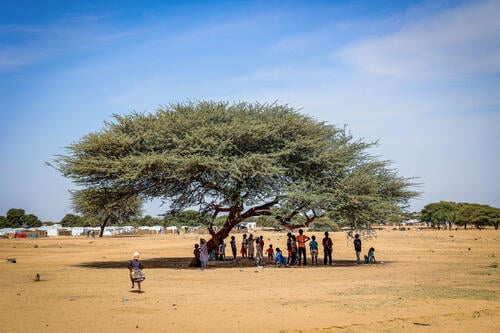
Children playing under a tree in Iridimi camp near Iriba in eastern Chad.
Conflict in Sudan

Documentary: El Fasher under siege

Four people from El Fasher, Sudan, share their testimony about the destruction of their city. Documentary - 16 Dec 2025
 
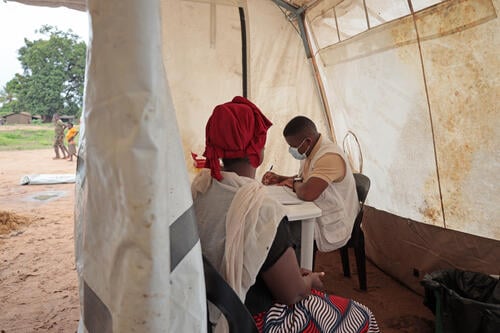
Maria João, a displaced person from Memba District, receives a medical consultation at an MSF mobile clinic in Alua Velha, Eráti District, Nampula Province.
Her health has deteriorated due to injuries from fleeing and possible infections, while her children, aged 10 and 13, face dietary and health challenges. Despite seeking medical help, the local clinic lacked medicines.

Maria fled attacks carried out by a Non-State Armed Group active in Norther Mozambique. She arrived in Alua Velha with her husband and two children, having escaped gunfire and destruction in her home village of Necoro, in Memba district. They walked 25 km before taking a motorbike to reach safety. Initially, they lived under a mango tree for five days before moving into her husband’s family home, which is now overcrowded with 15 people and insufficient resources. In Necoro, she sold mahewe (a fermented beverage made from corn flour, water and sugar) but her house and freezer where she stored the beverage were burned, and her husband’s motorbike was destroyed.

She reports being too frightened to return to Necoro, where violence, including beheadings and arson, has displaced her four times since 2024. 

Although she sometimes helps with farming in Alua Velha, she has no clear plans for the future and lacks the means to rebuild her life. The conflict has impacted her health, food security and finances, leaving her with no belongings or prospects.
Mozambique

MSF begins emergency response after 100,000 people flee violence in northern Mozambique

MSF teams are providing displaced people, and host communities, with medical care and essential services. Project Update - 16 Dec 2025
 
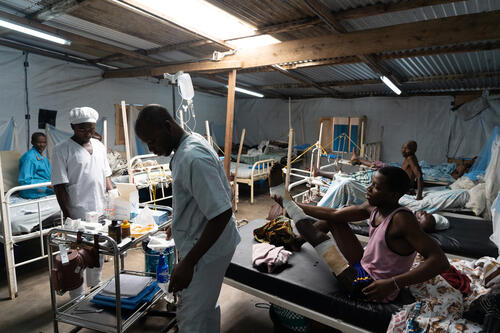
Patients at the Masisi General Reference Hospital recover following surgical operations. Almost all of them have suffered some kind of violent injury.
Democratic Republic of Congo

MSF briefs UN Security Council on staggering violence in DRC

Dr Javid Abdelmoneim addressed the UN Security Council, providing them with a briefing on what MSF witnesses in the eastern region of Democratic Republic of Congo. Speech - 12 Dec 2025
 
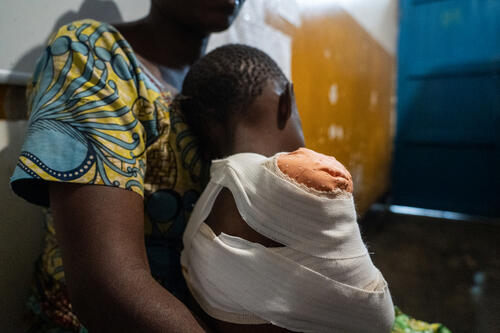
At the Mweso General Hospital, a mother holds her two-year-old daughter, injured by a bomb blast.
Democratic Republic of Congo

Piecing together bodies and minds amid violence in eastern DRC

Civilians are paying the heaviest price of the ongoing armed violence across eastern Democratic Republic of Congo, as they suffer from trauma wounds, mental health issues and are victims of sexual violence. Project Update - 9 Dec 2025
 
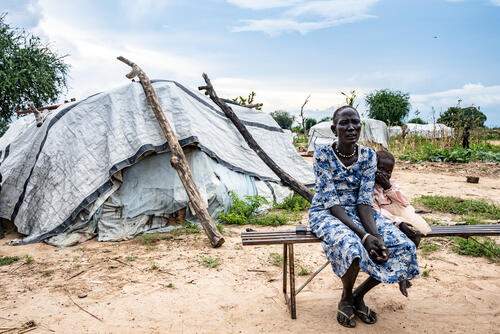
Mother and daughter in an IDP camp

Arual Manyok, 32, and her daughter Adit Ayuel, 3, who received Malaria Drug Administration( MDA), talk to MSF staff in front of their tukul.

"If we compare before and after MSF started bringing malaria drugs, there is a big difference. All the children who got the medicine have not had malaria again. Only the children who did not get the drugs are getting sick.” says Arual

South Sudan is at the middle of the malaria season. The majority of patients at Mayen Abun Hospital are positive for malaria, some of them suffering from severe cases.

As this is a recurring situation, MSF has been running a mass drug administration (MDA) rounds since 2023, providing prophylactic treatment to children under the age of 15.

This has already had a massive impact on the community: positive rates among children are much lower than in previous years (even though the country as a whole is experiencing an increased malaria peak compared to previous years due to the influx of refugees and flooding), and the rate of severe cases is also much lower.

An MSF outreach team visited one IDP camp to check some of the children who had already received 3 rounds of prophylaxis and to discuss the impact with the families.
South Sudan

Gaps in healthcare threaten lives as violence escalates in South Sudan

Amid escalating violence, disease outbreaks, healthcare shortages, and decreasing aid funding, South Sudan’s health system is stretched to breaking point. Press Release - 9 Dec 2025
 
MSF set up a healthcare post in Tawila Umda to stabilise newly arrived people and refer the most serious cases, such as the wounded or those requiring surgery, by ambulance to Tawila Hospital. 
Tawila Umda
Conflict in Sudan

People who escaped El Fasher are struggling to survive one month after RSF takeover

MSF teams are treating people who have escaped the horrific violence in El Fasher, Sudan, as they arrive to unsuitable living conditions in Tawila. Project Update - 26 Nov 2025
 
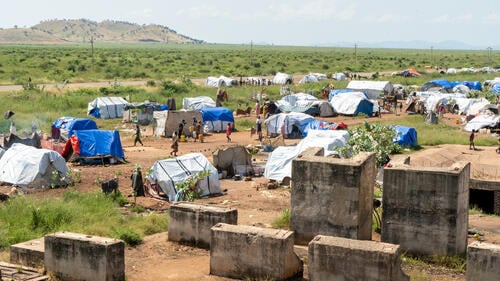
Concrete remains of the old mining factory, abandoned since the 2011 conflict, now stand surrounded by makeshift huts and families seeking safety.
Conflict in Sudan

How many more atrocities must people in Sudan endure?

Jean-Nicolas Armstrong-Dangelser, our senior operations adviser for Sudan, explains how the devastating conflict in Sudan represents a systemic failure. Voices from the Field - 18 Nov 2025
 
Three years after the 2022 Pretoria peace agreement ended hostilities in Ethiopia's Tigray region, over 760,000 people remain displaced, many in overcrowded camps with limited access to food, clean water, sanitation, and shelter, as communities grapple with the lasting impacts of violence and collapsed services. 

The psychological impact of the conflict exacerbated by the current living situation remains one of the most pressing but often overlooked consequences. 

As trauma caused by violence, loss, and displacement continues to affect thousands of people in the region, access to mental health care remains extremely limited leaving a lot of survivors to cope with the long-term effects of trauma alone. 

MSF currently provides mental health counseling at two locations in the region. Since 2023, Mental health care services have been offered at the Five Angels and Semaetat IDP Camp, and starting in 2024, counseling is also offered at the MSF facility within Maiani Hospital.  

These services include one-on-one counseling, psycho-education sessions with health promotion teams, group therapy, and referrals to hospitals for psychiatric care, ensuring regular support for the community.
Ethiopia

Mental health care cannot wait in Tigray

Three years since the cessation of hostilities in Tigray, Ethiopia, people are living with the psychological impacts of trauma without widely available support. Project Update - 10 Oct 2025
 
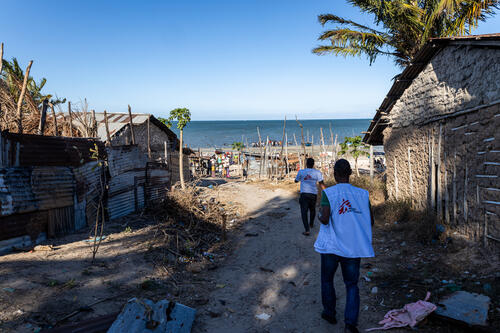
An MSF team walk through the town of Mocímboa da Praia, in northern Mozambique, to assess people’s medical and humanitarian needs.
Mozambique

MSF suspends activities in Mocímboa da Praia as violence surges

MSF suspends activities in the town and district of Mocímboa da Praia in Cabo Delgado province as violence surges. Civilians, medical workers must be protected. Press Release - 26 Sep 2025
 
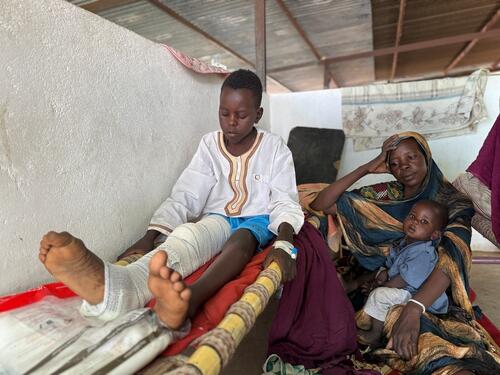
Adil, 12-year-old, next to his mother Nawal and little brother Musa. As many of the children recovering the paediatric ward of Tawila Hospital on that day, Adil is suffering from a bullet injury, as he was shot on his way out of Zamzam camp. 
Out of the 779 patients MSF have treated since April 11th for gunshot wound, 138 were children.
Conflict in Sudan

Deadly attacks across Darfur leave nearly 100 wounded in MSF-supported facilities

A day of RSF and SAF attacks across Darfur, Sudan, has seen 99 wounded patients arrive at MSF-supported facilities. Press Release - 11 Sep 2025
Four mothers posing in a corridor of the Hospital in Bili. All four of them are staying in the hospital with their child, that's suffering from a severe case of malaria. Since the beginning of the project in 2016, the pediatric ward already treated more than 4.000 cases of complicated/severe form of malaria.
Médecins Sans Frontières (MSF)

Independent medical humanitarian assistance

We provide medical assistance to people affected by conflict, epidemics, disasters, or exclusion from healthcare. Our teams are made up of tens of thousands of health professionals, logistic and administrative staff - most of them hired locally. Our actions are guided by medical ethics and the principles of independence and impartiality. We are a non-profit, self-governed, member-based organisation.

Learn more