



Ebola disease in DRC: find out how we're responding
Learn more
1758 Results
 
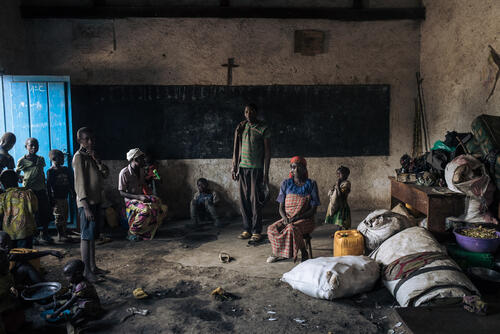
Displaced people, including children, stand in the classroom of Rumangabo elementary school, which in recent weeks has been transformed into an IDP site that hosts more than 3,000 people, on July 15, 2022, in North Kivu province, eastern Democratic Republic of Congo. The front line between the Congolese army and the M23 armed group is just a few miles from the village.
Democratic Republic of Congo

Hundreds of thousands at risk without food, shelter or healthcare in North Kivu

As violence and conflict continue to flare between the M23 group and the army in DRC, hundreds of thousands of people have been displaced, without food, healthcare or proper shelter. Project Update - 3 Aug 2022
 
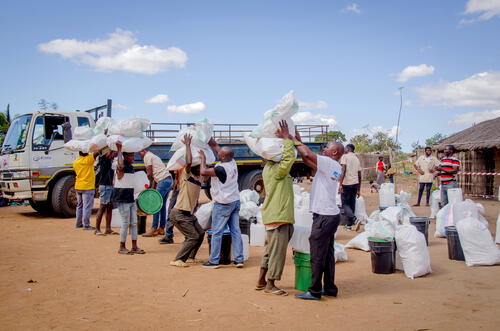
An MSF team distributes kits of essential items such as tents, jerrycans and mosquito nets in Ntele, in Montepuez district, in Mozambique’s Cabo Delgado province.
Mozambique

Three new developments in the Cabo Delgado crisis

The northern province of Cabo Delgado is one of Mozambique’s most volatile regions. An intense conflict began in the region in October 2017, which has resulted in some 800,000 people fleeing from their homes. These are the latest developments. Project Update - 11 Jul 2022
 
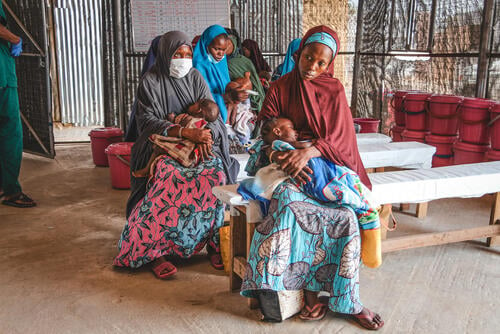
Mothers sitting with their children in the triage area of Nilefa Kiji nutrition hospital run by MSF in Maiduguri, Borno State in Nigeria. All the children are triaged and then moved to the emergency room, ambulatory or inpatient feeding centres depending on their condition.
Nigeria

Urgent humanitarian response needed to avoid deadly consequences in Borno

MSF teams are seeing an unprecedented influx of malnourished children in our nutrition centre in Maiduguri, Nigeria - without an urgent response thousands of children could die. Press Release - 30 Jun 2022
 
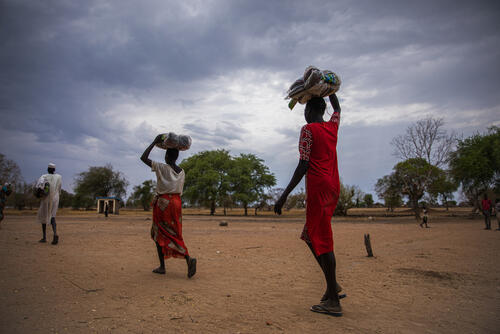
People depart after receiving blankets and jerry
cans in Nyin Deng Ayuel displacement camp in Twic County. After fleeing violence in Agok, thousands of people have been left without basic essentials to survive.
South Sudan

Thousands at severe risk due to malnutrition and deadly diseases in Twic County

Sami Al-Subaihi, MSF emergency project coordinator in South Sudan, shares his urgent concerns for more than 20,000 people, who are at severe risk of malnutrition and deadly diseases in Twic County. Voices from the Field - 29 Jun 2022
 
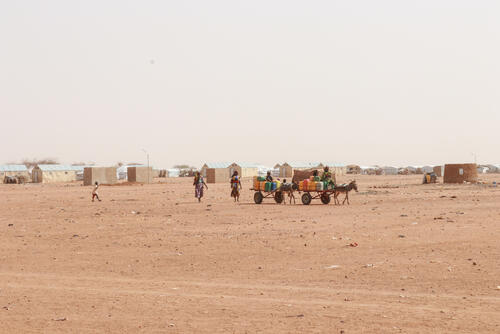
Gorom Gorom (Sahel region of Burkina Faso): a camp for internally displaced people with limited access to basic resources such as water and food. Access to health care also remains challenging for those who have lost everything in their escape from armed conflict.
Burkina Faso

Enormous needs for hundreds of thousands of people displaced by ongoing conflict and insecurity

An urgent upscale in humanitarian funding is essential as 1.9 million people have been forced to flee their homes in Burkina Faso due to conflict. Project Update - 27 Jun 2022
 
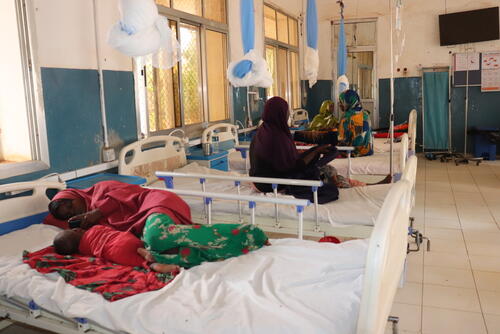
Measles patients in BRH isolation ward where they're receiving treatment.
Somalia

Drought intensifies health crises across Somalia and Somaliland

Somalia is facing one of its worst droughts in decades, following poor rainy seasons and a locust invasion. MSF teams are responding to measles, cholera, and acute malnutrition. Project Update - 7 Jun 2022
 
Our team of doctors, nurses, nutrition assistants and logisticians leave the base early in the morning so that we can start the mobile clinic at first light.
Central African Republic

MSF condemns the killing of our colleague in Central African Republic

An MSF staff member has been killed at his home by a member of the armed forces of the Central African Republic. MSF condemns this incident in the strongest possible terms. Statement - 31 May 2022
 
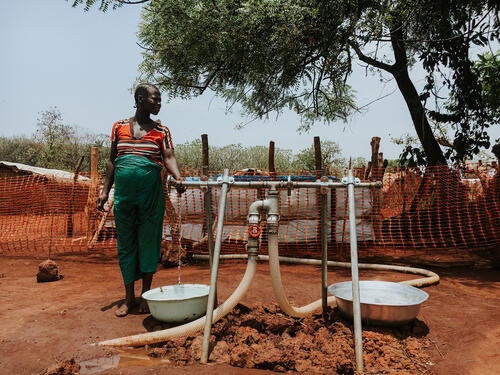
A resident of the Bogouyo IDP site in front of the emergency water point set up by MSF when the teams arrived.
Central African Republic

Violence and displacement in Ippy mirror people’s daily reality in CAR

Far from international media attention, armed violence continues to rage in many parts of the Central African Republic (CAR), forcing entire communities from their homes and onto a path of death and despair. Project Update - 23 May 2022
 
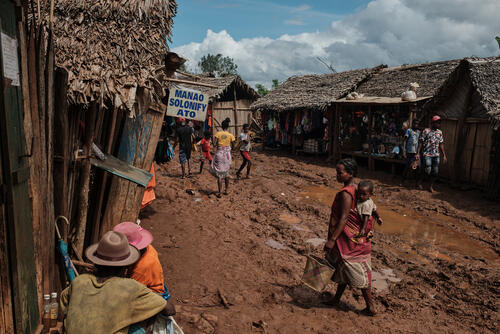
Juliette walking on the streets of Ambodrian i’Sahafary a village only accessible by boat where MSF set-up a moblie clinic.

Juliette, 23, is pregnant and the mother of two children aged 5 and 2. 
She is a rice, coffee and pepper farmer. 

Juliette lives in the "fokontany" (neighbourhood) of Ambodiriana, an hour's walk from the Ambodirian'i Sahafary health centre, where she came for a medical consultation.

Her house and those of her neighbours were ravaged by the cyclone Batsirai. His rice, coffee and pepper crops were also destroyed. Normally, the rice was to be harvested in April. 

She says:
"During the cyclone, we took refuge in a smaller house because the larger ones were blown away. The wind blew violently, and we were not able to anticipate the consequences by reinforcing the houses, nor by storing food.


Without money, we can't do anything. If health care wasn't free, we wouldn't go to the doctor. You do the doctor yourself."
Madagascar

Communities devastated by cyclones in Madagascar

Communities in Madagascar are recovering from cyclones in February of this year. These cyclones are the latest in a series of climate shocks which have impacted Madagascar. Project Update - 5 May 2022
 
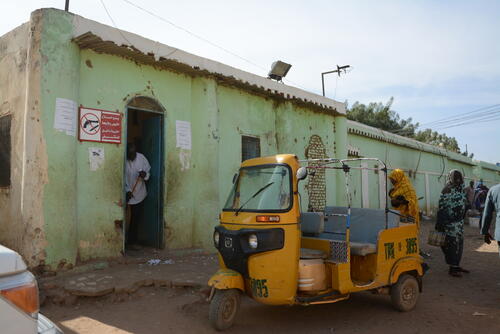
El Geneina Teaching Hospital back entrance. No weapons allowed. El Geneina city
Sudan

Violent attacks leave tens of thousands without access to healthcare in West Darfur

Fresh violence in parts of West Darfur, Sudan, has forced people to flee for their lives. Project Update - 29 Apr 2022
Four mothers posing in a corridor of the Hospital in Bili. All four of them are staying in the hospital with their child, that's suffering from a severe case of malaria. Since the beginning of the project in 2016, the pediatric ward already treated more than 4.000 cases of complicated/severe form of malaria.
Médecins Sans Frontières (MSF)

Independent medical humanitarian assistance

We provide medical assistance to people affected by conflict, epidemics, disasters, or exclusion from healthcare. Our teams are made up of tens of thousands of health professionals, logistic and administrative staff - most of them hired locally. Our actions are guided by medical ethics and the principles of independence and impartiality. We are a non-profit, self-governed, member-based organisation.

Learn more