




Ebola disease in DRC: find out how we're responding
Learn more
115 Results
 
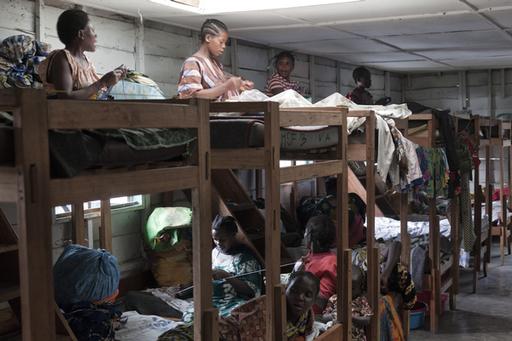
Heavily pregnant women relax In the dormitory at the Village des Mamans in Masisi. 

The free antenatal care set up for pregnant women with potential complications, became so popular that MSF constructed bunk beds to accommodate the influx of women. 

At first, the women were nervous about sleeping on bunks which provided a talking point in the Village.

This photo was taken as part of the www.msfdelivers.org fundraising campaign.
Democratic Republic of Congo

Ethnic violence in Masisi limits access to treatment

While people living in Goma and sheltering in nearby camps continue to live in fear of new clashes between an armed group called theM23 and loyalist forces, MSF is witnessing increased violence in Masisi some 80km to the north-west. In this isolated area of North Kivu, the medical emergency organisation is providing support to the region’s primary hospital. Voices from the Field - 19 Dec 2012
 
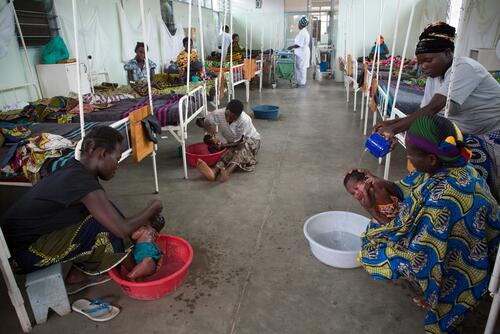
Mothers wash their new born babies in one of the three post-natal wards. MSF has worked in Burundi since 1992. In the town of Kabezi, Bujumbura rural province, MSF has been managing an emergency center for gynecological and obstetric care since 2006. The center offers neonatal services as well as an ambulance service transport system for women who are in need of emergency care. By introducing emergency obstetric care and a referral system, MSF has drastically reduced the level of maternal mortality in Burundi.
Women's health

Safe Delivery: Reducing maternal mortality in Sierra Leone and Burundi

New research from Médecins Sans Frontières (MSF) projects in Kabezi, Burundi, and Bo, Sierra Leone, indicates that it is possible to achieve a rapid and substantial decrease in maternal deaths of up to 74 per cent by providing access to emergency obstetric care. Report - 19 Nov 2012
 
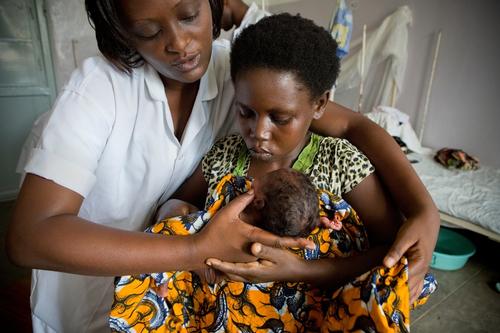
Jeannine Ntunzwenimana, 20, was seven months pregnant when her water broke. "This is my second child, my first is 3 years and 6 months old. My first pregnancy was by c-section at the MSF hospital. My water broke early, I was very affraid because it was too soon. I went to the nearest health center at Gitaza. It was one and a half hour walk away. An ambulance from MSF came to pick me up. The health center called them because they said they weren't able to help the baby. If MSF was not here, I could of died and my baby too. The way they welcome us is very different to other places." Jeannine named her daughter Fridatienne Itangakubuntu who weighed 1.3 kilos when she was born two weeks ago. MSF has worked in Burundi since 1992. In the town of Kabezi, Bujumbura rural province, MSF has been managing an emergency center for gynecological and obstetric care since 2006. The center offers neonatal services as well as an ambulance service transport system for women who are in need of emergency care. By introducing emergency obstetric care and a referral system, MSF has drastically reduced the level of maternal mortality in Burundi.
Women's health

Burundi and Sierra Leone: Access to emergency care significantly reduces maternal mortality

New research from MSF projects in Kabezi, Burundi, and Bo, Sierra Leone, indicates that up to 74 per cent of maternal deaths could be avoided by providing access to emergency obstetric care. MSF data for 2011 indicate that the introduction of an ambulance referral system together with the provision of emergency obstetric services can significantly reduce maternal mortality. Press Release - 19 Nov 2012
 
msf-placeholder
Somalia

The risks of childbirth

MSF expanded its medical services in Galkayo North in December 2011 by adding maternity and obstetric care. The number of deliveries has since boomed to about 200 per month, many coming from increasingly far away. Project Update - 6 Jun 2012
 
msf-placeholder
Fistula

Fistula reconstructive surgery returns lives, dignity and well-being

Sigrid describes what took place in one of the MSF fistula camps, from mid-November to the end of December, 2010, in Boguila, a town in western Central African Republic. In the second of two fistula camps that MSF organized in the country, 65 women were treated. Voices from the Field - 8 Mar 2011
 
hopital de Jahun
 Programme de prévention et de réparation des fistules  (obstetrical fistula ) vésico-vaginales, scènes et portraits de patientes
Nigeria

Preventing and treating obstetric fistulas in Nigeria

Obstetric fistulas, most often the result of prolonged obstructed labor, is an opening that occurs between the bladder and the vagina, or between the rectum and the vagina and causes a woman to become incontinent, among other devastating medical and social consequences. According to the UN, an estimated two million women live with fistulas today—about half of them in Nigeria. Voices from the Field - 8 Mar 2011
 
msf-placeholder
Fistula

The 'backyard disease'

In Burundi, MSF set up a special centre at the Gitega regional hospital that is devoted exclusively to these operations. Every year it operates on 350 women. Project Update - 7 Mar 2011
 
msf-placeholder
Women's health

The other Butterfly Effect: MSF treats women injured in childbirth

An estimated two million women live with fistula worldwide, most in Africa. This problem is largely hidden because it often affects young women who live in poor and remote areas, with very limited to no access maternal health care. Project Update - 7 Mar 2011
 
A Somali baby is being weighed in the MSF health care clinic in Dagahaley Refugee Camp, Dadaab. The health clinic operates for 25 000 people or anyone who cannot reach the hospital.
Dominic Nahr / Oeil Public
Somalia

In a Somaliland camp, a triple blessing amidst ongoing hardship

“I thought my time had come too,” she recalls. “I said goodbye to everyone who visited me and asked them for forgiveness. I never thought that I would survive.”
MSF’s outreach team found Fardows while surveying the Shadaha camp for people in need of emergency medical attention. They took her to hospital, where she learned she was pregnant with triplets.
Voices from the Field - 13 Dec 2010
 
msf-placeholder
Chad

100 women operated for obstetric fistula so far this year in Chad

Médecins Sans Frontières (MSF) has been running a fistula project in Abéché General Hospital in eastern Chad since January 2008, where a team performs surgical operations on patients to repair their internal injuries and provide a cure for their incontinence. Project Update - 21 Sep 2009
Four mothers posing in a corridor of the Hospital in Bili. All four of them are staying in the hospital with their child, that's suffering from a severe case of malaria. Since the beginning of the project in 2016, the pediatric ward already treated more than 4.000 cases of complicated/severe form of malaria.
Médecins Sans Frontières (MSF)

Independent medical humanitarian assistance

We provide medical assistance to people affected by conflict, epidemics, disasters, or exclusion from healthcare. Our teams are made up of tens of thousands of health professionals, logistic and administrative staff - most of them hired locally. Our actions are guided by medical ethics and the principles of independence and impartiality. We are a non-profit, self-governed, member-based organisation.

Learn more