



Ebola disease in DRC: find out how we're responding
Learn more
431 Results
 
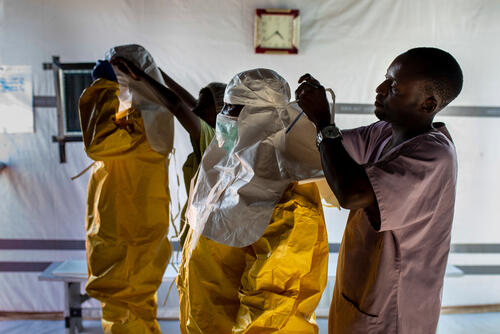
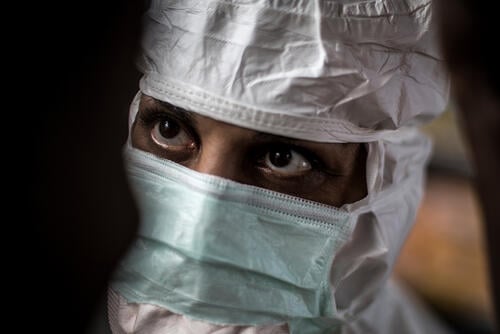
Medical and hygienist staff get dressed with the PPE to get into the high risk zone of the Ebola Transit Center in Bunia
DRC Ebola outbreaks

Tenth Ebola outbreak in DRC still rages, one year on

The Ebola outbreak in DRC, which has become the second-largest recorded anywhere and the worst on record in DRC, is still raging a year on. Trish Newport reflects on the response over the last 12 months. Voices from the Field - 1 Aug 2019
 
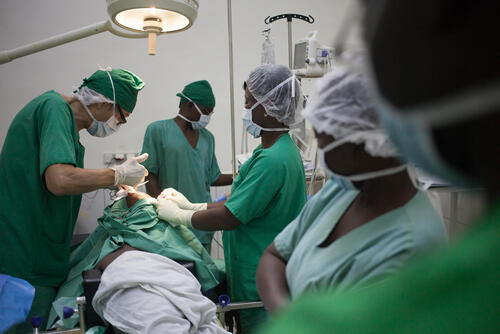
A surgeon at MSF SICA Hospital in Bangui tries to extract a bullet deeply lodged in a patient's shoulder.

Un chirurgien de l'hôpital MSF SICA à Bangui tente d'extraire une balle profondément logée dans l'épaule d'un patient.
Central African Republic

“It felt like it was raining bullets” in attacks on villages that kill over 50

On Tuesday 21 May, dozens of civilians were killed when three villages in the Ouham-Pendé region were attacked by gunmen. One of the survivors, who was transferred to Bangui and treated by MSF, recalls the events. Voices from the Field - 24 May 2019
 
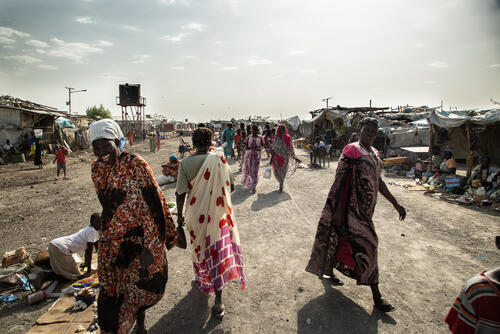
Women walk down a market street in the Protection of Civilians site in the northern town of Malakal, South Sudan.
South Sudan

There’s a lot to be done to address the uncountable health needs

Africa's newest country, South Sudan, is still feeling the effects from violence since 2013, including a decimated health system where there are few local medical staff and people can walk up to 7 days to a hospital, explains Endashaw Mengistu. Voices from the Field - 16 Apr 2019
 
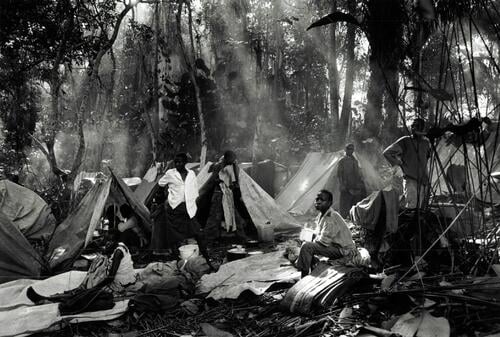
At the village of Biaro. The Zairian Red Cross are present (brought here by the rebels of Kabila, who want to make sure the bodies are burried as fast as possible, fearing typhus epidemic) and make a count of all the orphans: above 1000 children. They are lined up along the railway tracks.Tens of thousands of Rwandan Hutu refugees, (they all come from the refugee camps of Goma and Bukavu), fleeing the Zairian rebels of Laurent- Desire Kabila, for the last 5 months, hiding in the bush, exhausted, famished, and all waiting to return home, to Rwanda, are today in the midst of a new nightmare. They had taken residence in camps in 1994, when they fled their country in fear of retribution for the massacres of hundreds of thousands of Rwandan Tutsi by Hutu extremists. The presence of Hutu nettled Zairian Tutsi, who joined forces with Kabila, a longtime Mobutu foe, and  launched the insurgency. The fighting forced most of the Rwandan refugees to go home in Autumn 96, but about 350.000 of them have been marooned in tough eastern Zaire, fighting terrain. They are dying at an alarming rate. They need food, water ans safe passage home. But no one has made the refugees a priority. The Zairian rebels of Kabila who seized Kisangani, Zaire'sthird city, had ordered the Rwandan Hutu Refugees, who were in this region's camps, to move back south.
Rwanda

Rwandan genocide 25 years on: MSF caught in spiral of extreme violence from Rwanda to Zaire

Twenty-five years after the Rwandan genocide, MSF takes a look back at the events before, during, and after one of the most horrific events in human history, outlining what our teams witnessed on the ground in Rwanda and Zaire (now DRC). Voices from the Field - 5 Apr 2019
 
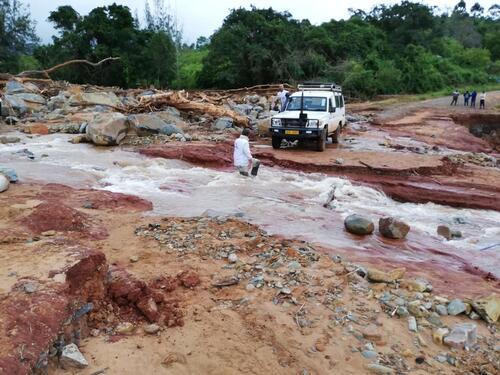
MSF logistics coordinator, Guillaume Malin makes an assessment to check if the MSF vehicle can pass through the river. MSF teams are conducting outreach programs to reach inaccessible areas in Chimanimani, eastern Chimanimani to provide medical supplies for survivors of cyclone Idai.
Cyclone Idai & Southern Africa flooding

The first six days after Cyclone Idai in Zimbabwe

Medical team leader Marthe Frieden went from working on her 'quiet' MSF project in Zimbabwe's Manicaland province, to the emergency of Cyclone Idai. Here she recounts the first six days of the response. Voices from the Field - 29 Mar 2019
 
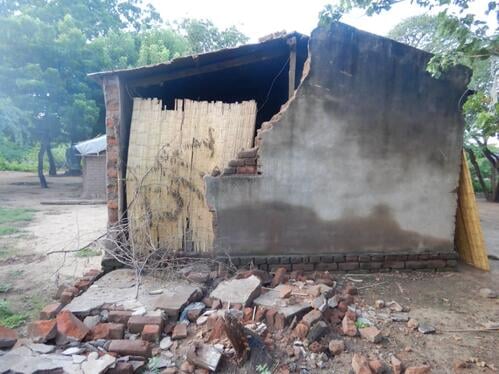
In Makhanga district, a huge number of houses have collapsed. Many thousands remain in displacement camps and makeshifts sites such as schools and churches. Big reconstruction efforts will be required in coming weeks.

Following heavy rains that affected the southern region of Malawi, an MSF team of 18 people is supporting the health ministry to cover the needs of an estimated 18,000 people in Makhanga on the eastern bank of the Shire river, with health, sanitation, NFI needs.
Cyclone Idai & Southern Africa flooding

Malawi: “This time, the flooding has destroyed houses, not lives”

Parts of Malawi have been submerged by floods from rains that later turned into Cyclone Idai. MSF logistician Labana Steven is part of the emergency response and explains the difference between these floods and those of previous years. Voices from the Field - 29 Mar 2019
 
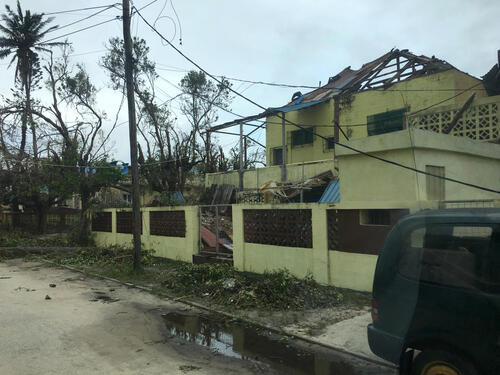
Scenes of destruction in Beira city.

MSF response to flooding in Mozambique after the flooding that affected Mozambique, Malawi and Zimbabwe in Southern Africa.
Cyclone Idai & Southern Africa flooding

“A lot of water” - on the ground after Cyclone Idai in Mozambique

MSF emergency coordinator Gert Verdonck, shares his first impressions of the scene of devastation in Beira, Mozambique in the wake of Cyclone Idai.
Voices from the Field - 20 Mar 2019
 
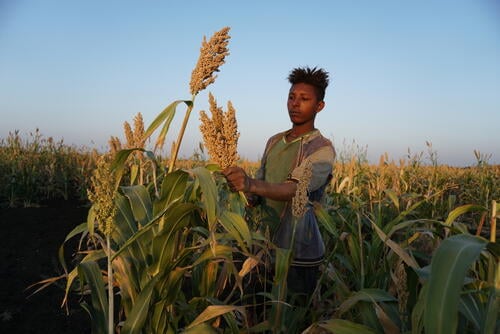
In the early morning in a sorghum field about 30-minute-drive by car from Abdurafi town. A group of migrant workers harvest sorghum. They usually come at the start of the harvest season (June) to the area to earn their living as daily worker on the big farms. Snakebites hit the poorest of the poor: in Ethiopia’s north the remote rural communities are more at risk as they live in simple mud tukuls/huts and often have no protective measures, such as bednets and beds that can protect them against snakes and kala azar. If they are bitten or fall ill with kala azar they have very limited access to health education and medical care. Patients and their families often resort to traditional medicine, or seek medical care too late, because they cannot afford to pay for treatment. Many have to travel for hours, especially migrant workers who live in the remote fields, to reach medical facilities, while timely treatment of snakebite is crucial.
The 18 years young man Getasew Dessie is from a village in South Gonder, coming to the farming region for two years. It takes him two days to reach Abdurafi. “My name is Getasew Dessie I am 18 years old, and I am from Esetia part of South Gonder. It is hard work, because it is always very hot and we live in the fields all the time, we have not free time, but work as much as we can. This is the last crop we harvest. We finish soon. I do not know if I can go home afterwards it depends on the situation. And how much money I could earn, but I would like to go home.”
Snakebite

“The first ten minutes are critical”: treating snakebite in Ethiopia

Snakebite overwhelmingly affects the rural poor, such as migrant harvest workers in northern Ethiopia. Access to treatment remains difficult, due to high prices for antivenoms, and the unavailability of effective antivenom in remote places.
Voices from the Field - 14 Feb 2019
 
January 15, 2018.
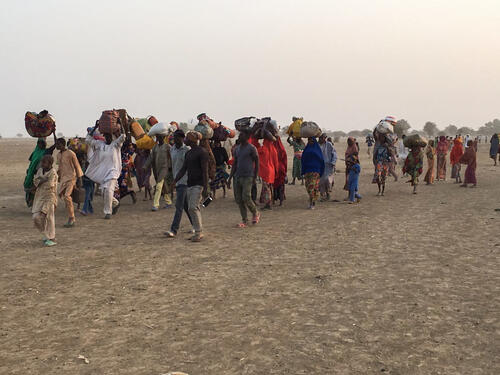
Some 8000 people who fled Rann after attack last night seek shelter in Bodo, Cameroon.
An MSF medical team arrived in Bodo today. There they found more than 8’000 people, (estimate) mostly women and young children. 1’200 people have been able to settle inland and more than 7’000 people are still at the river (border).  But people continue to arrive. They have no shelter, no fresh water and fled Rann with no belongings. The local community organized solidarity to provide them with some food. MSF teams are bringing medical supplies and are preparing to support the local health centre there. MSF teams are planning to return tomorrow with emergency food, shelter and a watsan team to support them. This is devastating news for the people in Rann who have already suffered so much.
Nigeria

Rann was attacked – and was left “like a graveyard”

MSF nurse Isa Sadiq Bwala describes what he saw in Rann, northeastern Nigeria, following a devastating attack on the town on 14 January. Voices from the Field - 16 Jan 2019
 
MSF medical activity manager, Saschveen Singh is seen whilst putting on her personal protective equipment(PPE) before heading into the red zone, inside the MSF supported ebola treatment centre(ETC) on November 04, 2018 in Butembo.
DRC Ebola outbreaks

Ebola in DRC: This has touched my heart forever

blogs.msf.org - 14 Jan 2019
Four mothers posing in a corridor of the Hospital in Bili. All four of them are staying in the hospital with their child, that's suffering from a severe case of malaria. Since the beginning of the project in 2016, the pediatric ward already treated more than 4.000 cases of complicated/severe form of malaria.
Médecins Sans Frontières (MSF)

Independent medical humanitarian assistance

We provide medical assistance to people affected by conflict, epidemics, disasters, or exclusion from healthcare. Our teams are made up of tens of thousands of health professionals, logistic and administrative staff - most of them hired locally. Our actions are guided by medical ethics and the principles of independence and impartiality. We are a non-profit, self-governed, member-based organisation.

Learn more