



Ebola disease in DRC: find out how we're responding
Learn more
431 Results
 
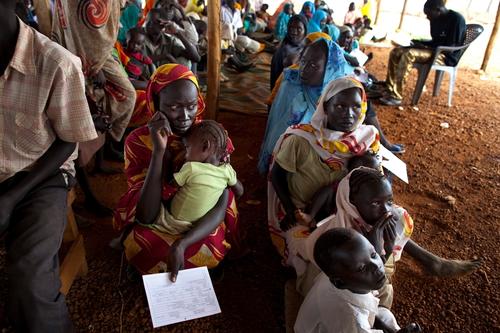
JAMAM, SOUTH SUDAN - JULY 17:  Sudanese refugees wait in line in the out patient department at the MSF ( Medecins Sans Frontieres ) field hospital July 17, 2012 in Jamam refugee camp, South Sudan.
South Sudan

We did not want to leave but we could not stay

Sudanese refugees have begun crossing the border into South Sudan again Voices from the Field - 7 Jan 2013
 
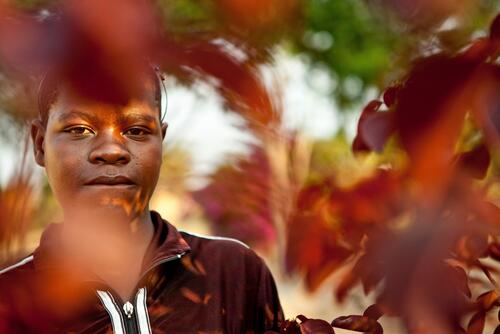
Vimbai Chitani (15) is a patient enrolled in the MSF HIV/AIDS project in Epworth, an urban settlement adjacent to the capital Harare of Zimbabwe. 
"In 2007 I was very ill. I had rashes all over my body and my whole body ached. A week after I started medication I was already feeling much better. Now, I am anxious that my mother may send me to my grandmother in the  countryside as we cannot afford my
school anymore." 
With 14.3 per cent prevalence rate (UNAIDS 2009), Zimbabwe is one of the countries worst affected by the
worldwide HIV/AIDS epidemic. Since 2006, MSF has been running an HIV/AIDS project in Epworth. In August 2011, MSF had 12,864 patients under care in both of its clinics there.
Zimbabwe

"We cannot normalise a situation that is not normal"

Mari Carmen Viñoles and Jean François Saint-Sauveur landed in Harare, the capital of Zimbabwe in April 2009, after several previous assignments with MSF. Mari Carmen arrived to start work as general coordinator of MSF programmes, while Jean François took on the role of medical coordinator. They talk about their experiences working in a country that is being badly hit by the HIV pandemic. Voices from the Field - 21 Dec 2012
 
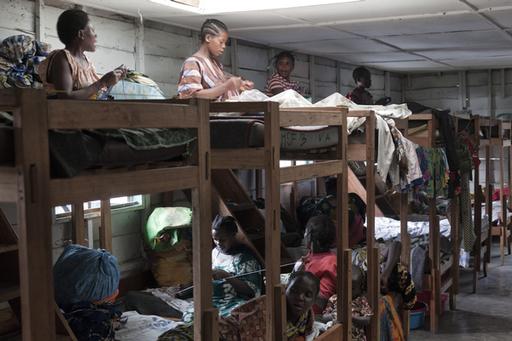
Heavily pregnant women relax In the dormitory at the Village des Mamans in Masisi. 

The free antenatal care set up for pregnant women with potential complications, became so popular that MSF constructed bunk beds to accommodate the influx of women. 

At first, the women were nervous about sleeping on bunks which provided a talking point in the Village.

This photo was taken as part of the www.msfdelivers.org fundraising campaign.
Democratic Republic of Congo

Ethnic violence in Masisi limits access to treatment

While people living in Goma and sheltering in nearby camps continue to live in fear of new clashes between an armed group called theM23 and loyalist forces, MSF is witnessing increased violence in Masisi some 80km to the north-west. In this isolated area of North Kivu, the medical emergency organisation is providing support to the region’s primary hospital. Voices from the Field - 19 Dec 2012
 
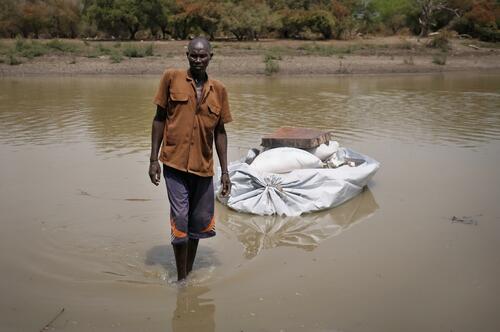
Some people displaced along the Pibor river collect the UN food distribution on behalf of several families and convert the plastic sheeting into a simple corracle to float down the river.

In the midst of the destroyed villege of Lekwongole, people come back during the day to receive food distributions from the UN and medical care from MSF, but return 

Jonglei State in South Sudan is in the grip of a cycle of extremely violent inter-communal fighting. Since 2008 MSF has witnessed in increase in intensity of the generations-old cattle-rustling between communities of different ethnicity. Over Christmas and New Year of 2011 a particularly violent attack in the area around Pibor and the outreach location of Lekwongole village displaced tens of thousands and left Lekwongole and some surrounding villages razed to the ground. MSF's hospital in Pibor was looted and the clinic in Lekwongole was largely destroyed. MSF treated 108 trauma victims in the following weeks, many women and children with gunshot wounds. But the consequences of fear and displacement in the bush continued long after, with malaria and malnutrition at very high levels in MSF's hospital.
South Sudan

Saving lives at the clinic under the tree

David Bude is an Médecins Sans Frontières (MSF) clinician who was working in MSF’s health clinic in the remote village of Lekwongole, near Pibor town, in South Sudan’s violence-afflicted Jonglei State. When fighting erupted in Lekwongole in August 2012, he fled along with the rest of the population. While in hiding, deep in the bush, David used his medical skills to save lives in exceptionally difficult circumstances. Voices from the Field - 13 Dec 2012
 
An MSF Team arrives in a village in northwest Central African Republic near Boguila to carry out interviews for a new mortality study.
In April 2012, a MSF team conducted a survey in the northwest prefecture of Ouham, in and around Boguila, where MSF manages a hospital. The team collected data on the number of people who had died in those households since the start of June 2011, and asked interviewees how the deaths occurred and where they had taken place. The data collected gives MSF a clearer picture of the health status of the population in the area, and will help the organization determine its future medical activities. The team found an "alarmingly high" number of children under the age of five are dying in parts of the Central African Republic. A lack of easily accessible health care was a principal reason, with 60 percent of those dying at home and 13 percent on the road to hospital.
Central African Republic

"As many children die here as in a war zone"

In the forests of Central African Republic, children under five are dying in numbers normally seen only in wars or natural disasters. MSF nurse Margarete Sepùlveda is doing her bit to change this.
By Nils Mork
Voices from the Field - 10 Dec 2012
 
Eden, a nine-year-old boy, was seriously injured in the recent fighting between the Armed Forces of the Democratic Republic of Congo (FARDC) and the M23 rebel group in Goma, eastern Congo. He is one of 60 wounded patients currently being treated by MSF teams and local health staff in Virunga hospital. Goma, North Kivu.
Democratic Republic of Congo

Nine-year-old Eden wounded in Goma violence

Eden, a nine-year-old boy, was seriously injured in the recent fighting between the Armed Forces of the Democratic Republic of the Congo and the M23 rebel group in Goma, eastern Congo. He is one of 60 wounded patients currently being treated by MSF teams and local health staff in Virunga hospital. Voices from the Field - 30 Nov 2012
 
MSF Expert Client performing a HIV test at the MSF Dipping Tank community testing campaign at Nhletsheni, in Shiselweleni region, south of Swaziland.
Eswatini

Trying out new approaches to treat HIV

Thirty years into the HIV/AIDS epidemic, and more than a decade into antiretroviral (ARV) treatment being introduced in developing countries, the latest scientific evidence shows that treatment both keeps people healthy, and prevents the virus from spreading to others. Micaela Serafini,MSF medical referent, speaks about MSF’s work in Swaziland. Voices from the Field - 28 Nov 2012
 
A group session to encourage people to express themselves. The mental stress of being a refugee can disable a person, making an already difficult situation even harder to cope with. Depression, anxiety and fear are common symptoms, as are unexplained physical complaints. In Doro camp, set up for refugees who crossed from Sudan’s Blue Nile State into South Sudan’s Maban County, MSF is supporting its medical activities with psychosocial work.
South Sudan

Story of a mental health patient

Athena Viscusi has recently returned from South Sudan, where she was working as MSF’s mental health officer in Jamam refugee camp in Maban county. Here, Athena tells the story of one particular patient who left an indelible mark on the team. Voices from the Field - 31 Oct 2012
 
July 2012, in the health zone of Bouna, disctrict of Moïssala, Chad. 
For the first time, MSF is rolling out a large-scale in-situ strategy for the preventive treatment of malaria, called seasonal malaria chemoprevention (SMC), in a pilot projects in Chad.  Antimalarial treatments have been administered to some 10,000 children aged between 3 months and 5 years old. MSF teams saw a drop fluctuating between 72% and 86% in the number of simple malaria cases.
Malaria

'We may have found a real arm to fight malaria' in Mali and Chad

Since July, MSF has been employing seasonal malaria chemoprevention (SMC) for the first time in two Sahelian countries. The initial results are encouraging. Dr Estrella Lasry, malaria specialist at MSF, reflects on the different aspects and future prospects of this strategy. Voices from the Field - 24 Sep 2012
 
Le 26 juin 2012. Yida, Soudan du sud. Camp de refugies de Yida. // PHOTOS : V. WARTNER/20 MINUTES.<br/>South Sudan, Yida refugee camp.
South Sudan

Making progress in Yida camp

The work of MSF in Yida camp is proving effective. Mortality rates in the camp have been brought down. However, living conditions remain a concern, as does the high prevalence of disease. The main causes of mortality have not changed since early July when the situation reached a critical threshold. André Heller, MSF's head of mission in South Sudan, explains why. Voices from the Field - 18 Sep 2012
Four mothers posing in a corridor of the Hospital in Bili. All four of them are staying in the hospital with their child, that's suffering from a severe case of malaria. Since the beginning of the project in 2016, the pediatric ward already treated more than 4.000 cases of complicated/severe form of malaria.
Médecins Sans Frontières (MSF)

Independent medical humanitarian assistance

We provide medical assistance to people affected by conflict, epidemics, disasters, or exclusion from healthcare. Our teams are made up of tens of thousands of health professionals, logistic and administrative staff - most of them hired locally. Our actions are guided by medical ethics and the principles of independence and impartiality. We are a non-profit, self-governed, member-based organisation.

Learn more