



Ebola disease in DRC: find out how we're responding
Learn more
431 Results
 
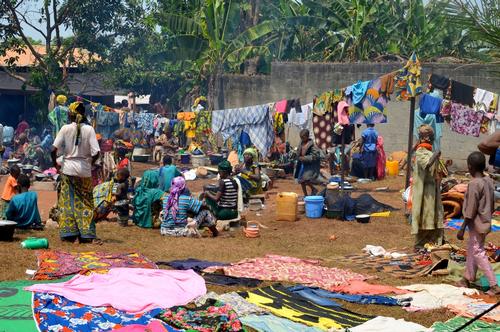
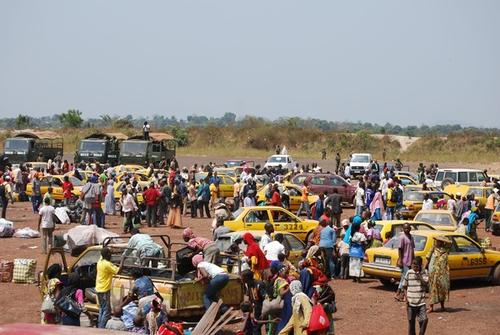
Street scene in Carnot. *** Local Caption *** Since February 1st, date of the anti-Balakas takeover of the city, a thousand people (mostly Peuls/Fulani in transit on their way to Cameroon) are trapped in the city ,victims of attacks and violences.
Central African Republic

"Carnot has not been calm since then"

Dramane Kone, MSF project manager, describes the situation in Carnot, CAR. Voices from the Field - 31 Mar 2014
 
msf-placeholder

Slideshow: Giving birth in Central African Republic - Sonia's story

In pictures: Giving birth in Central African Republic - Sonia's story. Voices from the Field - 27 Mar 2014
 
msf-placeholder
Ebola and haemorrhagic fevers

Ebola epidemic in Guinea

Interview with MSF doctor and footages from Ebola response in Uganda in 2007 Voices from the Field - 26 Mar 2014
 
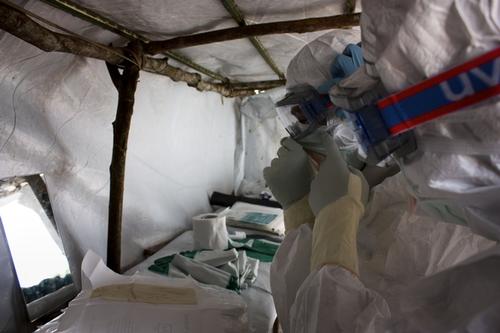
Kaluamba, isolation unit for suspected cases. An MSF team of nine Ebola specialists from the capitals Kinshasa, DRC, and Brussels, Belgium, is currently working in Western Kasai. Logisticians are building an isolation ward in the village of Kampungu, and putting in place all protection measures. The medical team is also providing care to all people suspected of having the disease.
Guinea

“There is no treatment and no vaccine for Ebola. The priority is to isolate suspected cases”

Interview with Dr Esther Sterk, MSF specialist on tropical diseases, on the Ebola epidemic. Voices from the Field - 24 Mar 2014
 
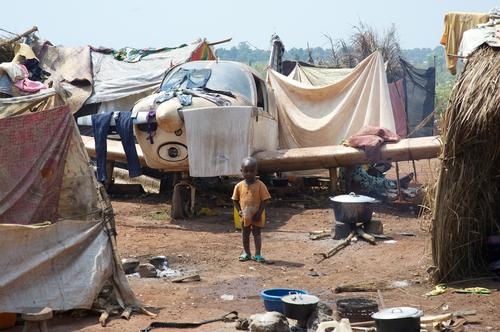
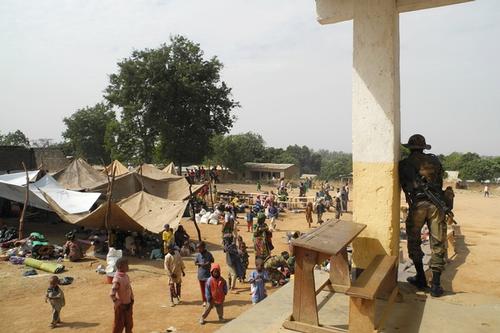
Mpoko IDP Camp at the airport. Hundreds of thousands of people fled the violence raging in Bangui since Decembre 5, 2013, seeking refuge in several camps in the city. Over 100,000 people are residing at the Mpoko camp at the airport. Some look for shelter under abandoned planes.
Central African Republic

A year of unimaginable violence, suffering and fear

Interview with Ronald Kremer, medical emergency coordinator who just returned from CAR. Voices from the Field - 24 Mar 2014
 
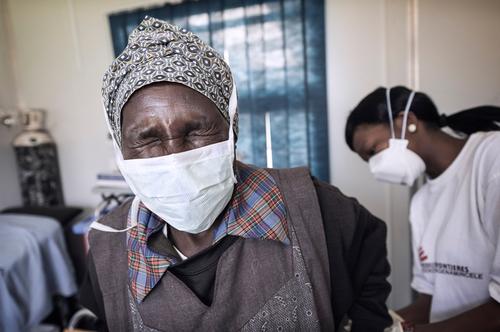
This patient needs to come to the clinic every day for an injection. Swaziland, MSF clinic in Makanyane. October 2013.
Tuberculosis

The old devil in new clothes

An op-ed written by Jennifer Hughes, MSF TB doctor in South Africa Voices from the Field - 19 Mar 2014
 
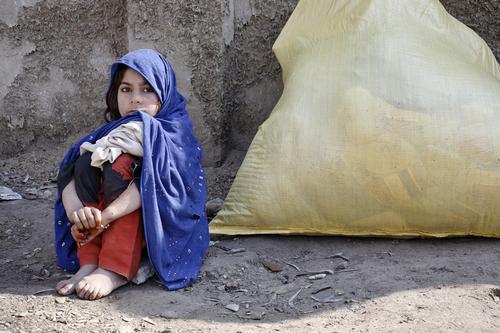
A girl sits next to relief items her family received in an MSF distribution.
 Since September 2008, MSF has been distributing relief items to displaced families living in improvised camps and with resident families. From September 2008 to March 2009, 30 000 people had benefited from MSF distributions in Peshawar, Charsadda and Mardan districts. *** Local Caption *** A massive influx of displaced people fleeing fighting in Bajaur Agency (500 000 people) in August 2008 and in Swat and Buner in April 2009 (1 to 2 million people) has caused significant strain on local families and health centres all around the region. Between 80  90% of the displaced population are living with resident families and improvised settlements all around the NWFP. The rest are living in official displaced persons camps. The dispersion of the displaced population over a large area and the general insecurity in the region have been major factors limiting MSF action.
Women's health

International Women's Day 2014: Forced to Flee

Stories from MSF's patients in Pakistan, Haiti, South Sudan, Philippines, Mauritania and Kenya. Voices from the Field - 7 Mar 2014
 
Muslim community leaving Bangui
Central African Republic

Trapped in PK 12 camp with nowhere to run

Desperate and dangerous conditions around PK 12 camp in Bangui Voices from the Field - 3 Mar 2014
 
msf-placeholder
South Sudan

"The operating table had been burned, the fridges were melted"

Project Coordinator Sarah Maynard describes the devastation she encountered upon returning to MSF’s hospital in Leer Voices from the Field - 26 Feb 2014
 
“Armed groups in the town looted our belongings and threatened to kill us,” says Mamadou, 33, owner of a grocery store in Bouar’s Haoussa district. “We had to leave to save our lives. We’d rather suffer in Cameroon than stay here.”
Central African Republic

"The people who leave take enormous risks"

Florent Uzzeni, deputy emergency programme manager, describes what he is seeing unfold on the ground. Voices from the Field - 24 Feb 2014
Four mothers posing in a corridor of the Hospital in Bili. All four of them are staying in the hospital with their child, that's suffering from a severe case of malaria. Since the beginning of the project in 2016, the pediatric ward already treated more than 4.000 cases of complicated/severe form of malaria.
Médecins Sans Frontières (MSF)

Independent medical humanitarian assistance

We provide medical assistance to people affected by conflict, epidemics, disasters, or exclusion from healthcare. Our teams are made up of tens of thousands of health professionals, logistic and administrative staff - most of them hired locally. Our actions are guided by medical ethics and the principles of independence and impartiality. We are a non-profit, self-governed, member-based organisation.

Learn more