



Ebola disease in DRC: find out how we're responding
Learn more
431 Results
 
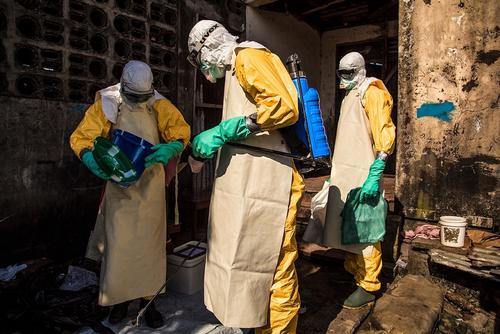
B Sunday Williams is the sprayer of the MSF burial team in Monrovia. He disinfects the hosue before the rest of the team goes inside.
Ebola and haemorrhagic fevers

A day in the life of a chlorine sprayer

The team collecting victims of Ebola – both living and dead – from the community in Monrovia face a challenging task in the fight against Ebola Voices from the Field - 16 Dec 2014
 
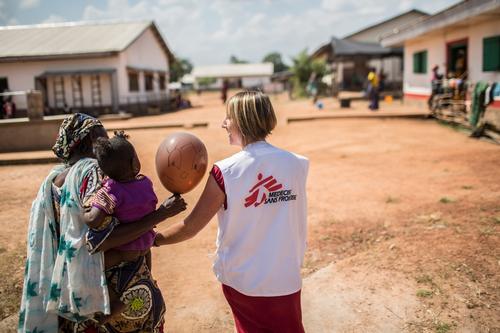
Paoua hospital.
Cathy Beuve, MSF nurse. *** Local Caption *** In CAR, despite an overall increase in aid in recent years, access to health care remains a major problem, even in areas that are not directly affected by the conflict. A majority of Central Africans continue to live in extremely precarious conditions. Several mortality surveys conducted by MSF in particular regions of the country highlight crude mortality rates and specific extremely high - sometimes three to five times higher than the emergency threshold.<br>

These mortality rates are partly attributable to a structural deficit of the health system that does not allow the public to have access to basic health care for diseases such as malaria, respiratory infections and diarrheal diseases.<br>

In Paoua, MSF teams are working in collaboration with the Ministry of Health in all hospital reference departments (pediatrics, surgery, maternity, emergency, hospitalization and HIV & TB treatment). In 2011, MSF issued more than 72,000 consultations in Paoua hospital and peripheral health centers, and more than 6600 patients have been hospitalized. The teams have conducted over 8000 ANC consultations and 1432 deliveries. MSF also supports patients with advanced AIDS and cases of co-infection HIV / TB. In 2011, 247 patients received antiretroviral therapy.<br>
HIV/AIDS

‘Double victims’ – in conflict zones, people with HIV are twice as vulnerable

The past decade has seen major improvements in people’s ability to access lifesaving HIV treatments – but if you live in Central African Republic (CAR), South Sudan or parts of Yemen, you could be forgiven for thinking nothing has changed. The fact is that in most unstable areas, HIV services remain largely non-existent. Voices from the Field - 1 Dec 2014
 
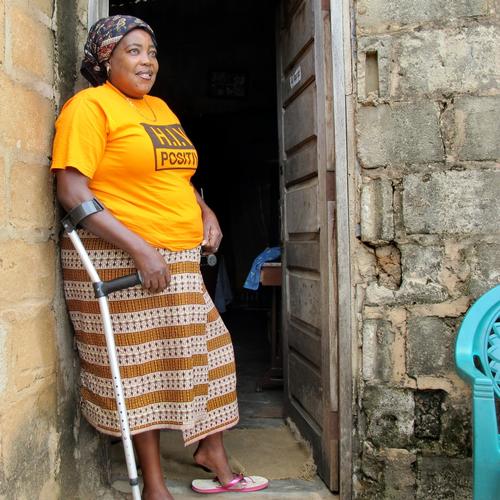
Cacilda Fumo has been on ART for over 10 years. She is a Community ART Group (CAG) member also, a self-formed group of six people patients maximum and minimum two stable on ART. In this programme, groups of patients were established, with patients taking turns to collect antiretroviral medicines for group members.
Mozambique

Not alone anymore

With 1.6 million people infected by HIV, or over one in ten adults, Mozambique has one of the highest HIV prevalence in the world. To tackle this public health crisis, the Mozambican government last year launched an ambitious acceleration plan that aims at doubling the number of its HIV positive citizens on ARV treatment. Voices from the Field - 26 Nov 2014
 
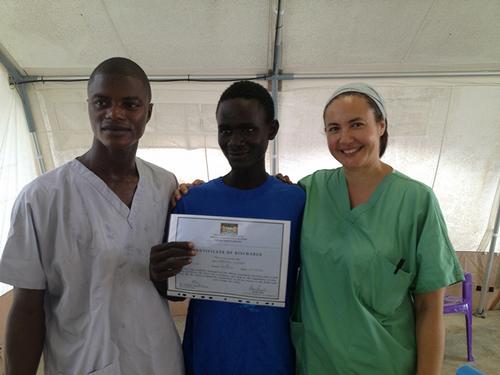
Dr Monica Arend-Trujillo in Bo, Sierra Leone
Sierra Leone

“Yesterday was a day of three miracles”

An MSF doctor recounts the heart-warming survival of three of her patients. Voices from the Field - 20 Nov 2014
 
Dr Susanne Mortazavi during outreach clinic in Shamwana, Katanga province, Democratic Republic of Congo
Women's health

The perils of childbirth in Democratic Republic of Congo

A heartbreaking account illustrating the reality that far too many women continue to die avoidable deaths during childbirth due to a lack of access to quality medical assistance. Voices from the Field - 20 Nov 2014
 
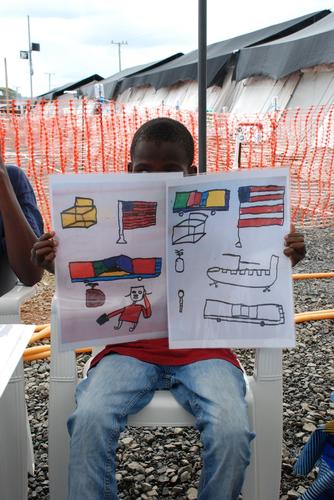
Ten-year-old Ebola survivor, Momodu, holds in his hands, pictures of drawings he did, while he was receiving care at the MSF's ELWA-3 Ebola Management Center in Monrovia
Liberia

The boy who coloured his way to recovery

Ten-year-old Momodu spent three weeks recovering from Ebola. The doctor who treated him tells his story. Voices from the Field - 17 Nov 2014
 
Nyanog and her two children trekked 15km to the MSF Primary Healthcare Centre in Majangkar to receive treatment for her son Akwe. The health facilities near her home do not have medicine
Malaria

the quandary of malaria patients in rural South Sudan

"Each time my children are sick, I rush them here. This is the only accessible, good facility I rely on" - Nyanog Adem, mother of six Voices from the Field - 6 Nov 2014
 
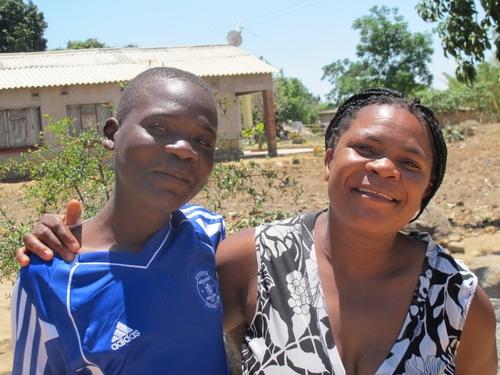
Gibson Chijaka cured from DR-TB after two years of treatment, with his sister-in-law Linnet Kadzere.

After a two year treatment Gibson Chijaka from Zimbabwe won the battle against DR-TB but lost two years of school life because of his medication. Gibson was treated in the MSF project in Epworth. Now he claims for shorter and less painful treatment.
Zimbabwe

Gibson Chijaka, “I am so happy and cannot hold back my joy.”

Gibson Chijaka, 16, was recently cured of DR-TB Voices from the Field - 28 Oct 2014
 
Le 26 avril 2014, 16 civils - dont 3 personnels MSF - ont été assassinés par des hommes armés dans l'enceinte de l'hôpital de Boguila au Nord-Ouest de la RCA. 
En signe de protestation et de solidarité avec la population centrafricaine , victime de violences récurrentes, entre le 5 et le 9 mai 2014, toutes les sections MSF ont suspendu leurs activités sur toute la RCA, ainsi que pour les populations centrafricaines réfugiées au Tchad, au Cameroun et en RDC. Seules les urgences vitales ont été prises en charge au cours de cette semaine. Photo prise devant le dispensaire MSF - vide - du camp de déplacés de M'Poko, situé près de l'aéroport de Bangui.<br/>


On the 26th of April of 2014, 16 civilians - including three MSF staff - have been killed by armed men in the Boguila hospital compound, northwest CAR. 
As a sign of protest and solidarity with the CAR population - victim of constant violence - between the 5th and the 9th of May of 2014, all MSF sections have suspended their activities throughout CAR, as well as the ones dedicated to the Central Africans refugees in Chad, Cameroon and DRC. Only vital emergencies were taken in charge during this period of time. Photo of the - empty - MSF clinic located in M'poko's IDP camp, near Bangui's airport.
Central African Republic

Population and MSF staff still under threat six months after deadly attacks

"Local people live in constant fear that they will be attacked. They try to rebuild their houses and work in the fields but, as soon as there is any kind of stability, they get attacked again." Voices from the Field - 27 Oct 2014
 
msf-placeholder
Central African Republic

Looking back on 10 days of violence in Bangui

MSF’s head of mission in Bangui recounts the challenges faced during that period. Voices from the Field - 23 Oct 2014
Four mothers posing in a corridor of the Hospital in Bili. All four of them are staying in the hospital with their child, that's suffering from a severe case of malaria. Since the beginning of the project in 2016, the pediatric ward already treated more than 4.000 cases of complicated/severe form of malaria.
Médecins Sans Frontières (MSF)

Independent medical humanitarian assistance

We provide medical assistance to people affected by conflict, epidemics, disasters, or exclusion from healthcare. Our teams are made up of tens of thousands of health professionals, logistic and administrative staff - most of them hired locally. Our actions are guided by medical ethics and the principles of independence and impartiality. We are a non-profit, self-governed, member-based organisation.

Learn more