



Ebola disease in DRC: find out how we're responding
Learn more
431 Results
 
msf-placeholder
Central African Republic

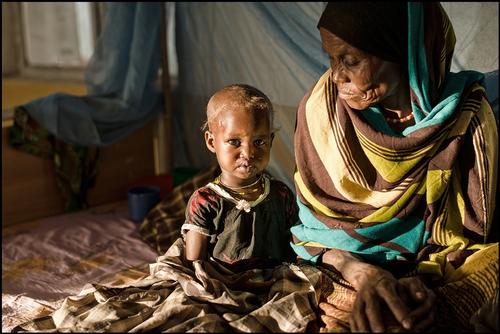
In the aftermath, everything has changed

Tatiana four years old, arrived at the hospital suffering from acute malaria, marasmus (a severe form of malnutrition) and hypothermia. Voices from the Field - 7 Apr 2015
 
msf-placeholder
Kenya

“A sadness has descended” in Garissa

What an MSF doctor witnessed when his team responded to the attack on Garissa University Voices from the Field - 4 Apr 2015
 
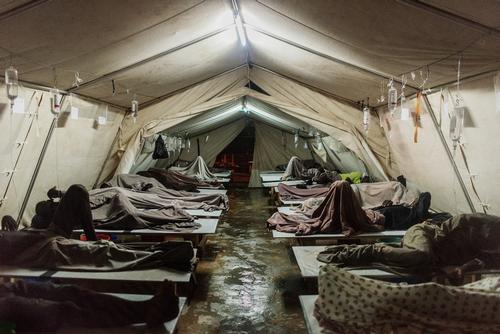
A night view of the CTC (Cholera Treatment Center) set up by MSF (Médecins Sans Frontières) and co-managed with the Mozambican ministry of Health in Tete district which is the most affected area in the country. Due to the critical conditions of several patients and high standards of hygiene required to contain the spread of cholera outbreak, the CTC needs a constant work, including night turns.
Mozambique

Cholera - the water thief

For the people in Tete, life or death depended on how quickly they could get to the treatment centre once the symptoms started. This is their story. Voices from the Field - 2 Apr 2015
 
Ebola has badly impacted public health services in Liberia.  Many medical structures, unable to handle infected patients, have closed at some point during the outbreak after dozens of health personal died fighting it. Today most facilities are still providing reduced services compared to before the outbreak. As the result, the population struggle accessing medical care for non-Ebola related diseases. MSF operations in Liberia are therefore shifting towards supporting the public health system. MSF has opened a paediatric hospital in Monrovia on March 23 and assists JDJ Memorial Hospital as well as 23 clinics in safely resuming activities.
Liberia

Rebooting public health services

As the number of Ebola patients declines, MSF is assisting the local health system to safely restore medical services. Voices from the Field - 2 Apr 2015
 
Ebola has badly impacted public health services in Liberia.  Many medical structures, unable to handle infected patients, have closed at some point during the outbreak after dozens of health personal died fighting it. Today most facilities are still providing reduced services compared to before the outbreak. As the result, the population struggle accessing medical care for non-Ebola related diseases. MSF operations in Liberia are therefore shifting towards supporting the public health system. MSF has opened a paediatric hospital in Monrovia on March 23 and assists JDJ Memorial Hospital as well as 23 clinics in safely resuming activities.
Liberia

No vaccinations for months has put children at risk

As of January, an estimated 92,000 children below one-year old in Liberia had not been vaccinated at all. Voices from the Field - 2 Apr 2015
 
Casey O’Connor, Project Coordinator in Lankien March 2015
South Sudan

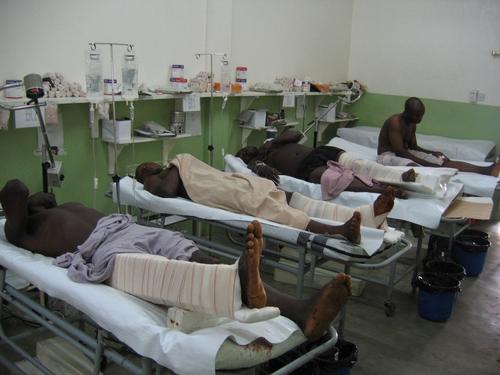
Stranded in the surgical ward

MSF has been trying to adapt to a new reality in South Sudan. It has shifted from addressing the huge medical needs of a people with generally no access to healthcare, to addressing the huge medical needs of people trapped in an armed conflict. Voices from the Field - 1 Apr 2015
 
Teme Hospital in Port Harcourt Nigeria was opened by Doctors Without Borders/Medecins Sans Frontieres (MSF) to treat trauma patients. Over 50% of the patients treated are injured in road traffic accidents. The hospital is located in a very impoverished area of Port Harcourt and also receives a high number of victims of violence.
Nigeria

MSF prepares to treat victims of possible electoral violence

Denis Mbae, has just come back from a year’s mission with MSF in Nigeria. This Kenyan nurse’s first assignment was during a cholera outbreak in Bauchi, northern Nigeria, in early 2014. Since last July he had been working with the emergency preparedness team in Abuja, the capital of the country. Voices from the Field - 30 Mar 2015
 
msf-placeholder
South Sudan

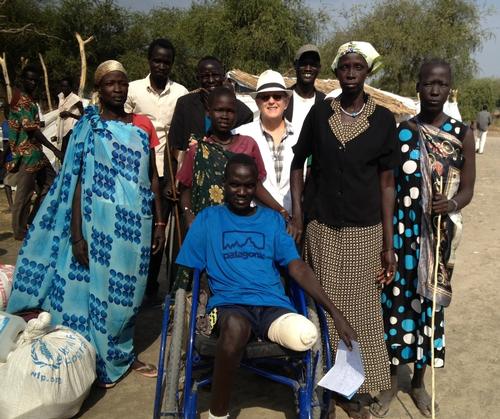
Innocent victims of the civil war

Caches of unexploded ordnance left behind by armed groups are still claiming innocent victims like 14 year old Kume. Voices from the Field - 24 Mar 2015
 
On arrival at the hospital, Hawsak was admitted immediately. She was suffering from severe acute malnutrition with complications. Meeting the little girl in the hospital’s stabilisation centre, four days after her admission, she still looked tired, but her eyes were slowly starting to sparkle with life. Ibrahim Mohammed, the MSF nurse at the stabilisation centre confirmed to us that Hawsak was then in a much better condition than when she was first admitted.
Ethiopia

Treating children against the ‘evil eye’ of malnutrition in the pastoralist community of Fiq

Local beliefs regarding the causes of malnutrition pose serious challenges to health organisations like MSF attempting to address the disease from a medical perspective Voices from the Field - 24 Mar 2015
 
In collaboration with the Ivorian Ministry of Health , MSF began operations July 4, 2014 in the Regional Hospital of Katiola , a town located 55 km north of Bouaké, in the central region Hambol . The project objective is to support pregnant women and newborns with quality care. MSF supports gynecological emergency obstetric and neonatal . In November 2014, the medical teams attended 170 deliveries , including 19 caesarean .
Côte d'Ivoire

Everyday life at MSF’s Katiola maternity centre

The stories of three patients at the maternity centre in Katiola, Côte d’Ivoire Voices from the Field - 6 Mar 2015
Four mothers posing in a corridor of the Hospital in Bili. All four of them are staying in the hospital with their child, that's suffering from a severe case of malaria. Since the beginning of the project in 2016, the pediatric ward already treated more than 4.000 cases of complicated/severe form of malaria.
Médecins Sans Frontières (MSF)

Independent medical humanitarian assistance

We provide medical assistance to people affected by conflict, epidemics, disasters, or exclusion from healthcare. Our teams are made up of tens of thousands of health professionals, logistic and administrative staff - most of them hired locally. Our actions are guided by medical ethics and the principles of independence and impartiality. We are a non-profit, self-governed, member-based organisation.

Learn more