Ebola disease in DRC: find out how we're responding
Learn more
431 Results
 
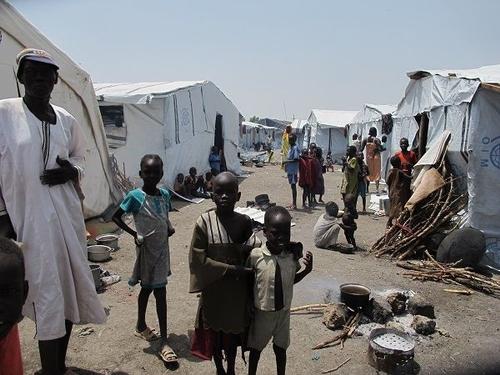
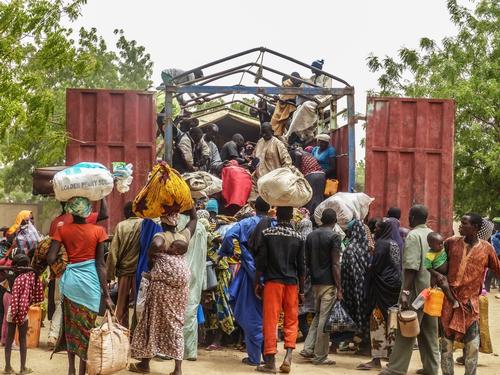
 *** Local Caption *** Since the on-start of the conflict in South Sudan, mid-December 2013, according to the UNCHR, more than 1,400,000 persons have been internally displaced and more than 450,000 would have sought refuge in the neighboring countries, amongst which 190,000 in Gambella region, western Ethiopia. The rainy season has temporarily slowed the stream of people arriving into the camps. The rate of new arrivals has slowed down in the last several months, from 1000 new arrivals per day in February to approximately 100 per week today. However UNHCR forecast expected an additional of 110,000 new arrivals in 2015 with restarting of the fighting in South Sudan during the dry season.<br/>
The current refugee population in Gambella region remains in a critical situation and additional population influxes could further destabilize an already difficult situation. In order to reduce child mortality, MSF is carrying out vaccination campaign targeting 50,000 children for PCV / vaccine and  26,000 children for DPT- Hib-HepB vaccine.<br/>
This vaccination campaign is a challenge due to logistical constraints (cold chain, waste management, transport, access, etc.) and the 2 doses minimum required for effective protection.<br/>
Extended preventive package in emergency situations is a major issue. New preventive strategy, including vaccination, could improve more rapidly the mortality and burden of diseases in acute phase of emergencies. This intervention is an example showing that is possible to extend the vaccination package in emergency situation and should be a first step to review current policy.
South Sudan

New wave of refugees fleeing ongoing violence in South Sudan

More than 3,000 people have recently made their way to the Gambella region in western Ethiopia, adding to the 200,000 already living there. Voices from the Field - 27 May 2015
 
msf-placeholder
Meningitis

Vaccine shortages causing delay in the fight against meningitis

MSF vaccination specialist discusses recent advances in responding to meningitis epidemics, and the improvements that are still needed. Voices from the Field - 27 May 2015
 
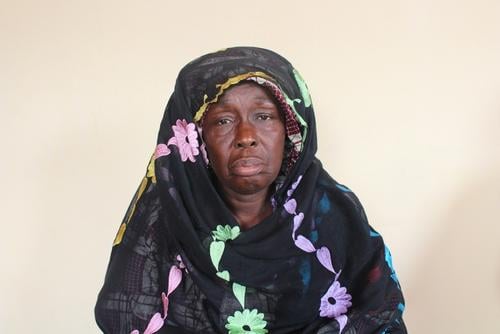
I decided to leave Nigeria because I am married and my husband works in Libya. So I had to come to Libya to take care of my husband. Staying in Libya is not easy. The fight is too much. You don’t sleep at night and if you go to work before you come back they’ll bust into your house, take your property, rape your wife. They do such horrible things. They kill Nigerians anyhow, so it is not safe for we Nigerians . Due to my condition [pregnant] it is very risky but I can’t go back to Nigeria either. So my husband's brother came from Nigeria to accompany me to Italy and wait for my husband to follow. I’m not too fine. I’m feeling feverish so I need somebody to stay with me. I said to my husband that if I have to go alone I won’t go. That’s why my brother came to watch me until my husband comes and meets me. I was the only pregnant woman in the boat we came with. It is risky for women to travel but they do what they do because they are not comfortable where they are. Libya is not a place for someone to stay. You can work but they will burst into your house and collect everything you worked for. So it is not a place to stay and that’s why we take the risk of entering into this water and go to Europe to look for a better life. We believe Europe is better than Libya. I hope my baby will have a better life but I know it’s going to be farther.
Mediterranean migration

Three Mediterranean boat migrants describe their gruelling quests for better lives

"We go away from our country because we have no choice. We don’t want to get the Europeans tired of us, to overwhelm them, but we have no choice. We risk our lives to help our families, or neighbours, our friends, our parents and our brothers. That’s why we embark on this journey." Voices from the Field - 25 May 2015
 
Continuing clashes in Upper Nile state in South Sudan are leading to more deaths and displacements of people. Since the beginning of April, over 6,600 people have fled their homes to seek shelter at the congested UN protection of civilians (PoC) base in Malakal. The new internally displaced people are living in big tents, with dozens of families sharing the same tent and sleeping on the floor.
South Sudan

"The situation has been tense"

An MSF doctor describes his experience while working in a Protection Of Civilians site outside Malakal where about 30,000 people displaced by civil war are living. Voices from the Field - 22 May 2015
 
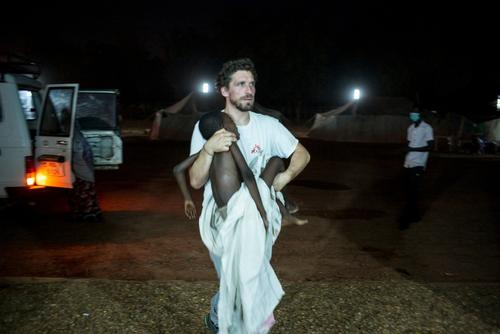
MSF Doctor Clement Van Galen carries a child with meningitis in critical condition.
Niger

‘It was chaos – the hospital was full to bursting’

A meningitis epidemic sweeping across Niger has already infected more than 6,500 people and claimed 443 lives according to the authorities. MSF’s Dr Clément Van Galen, in Niamey, reports on MSF’s emergency response. Voices from the Field - 21 May 2015
 
Elysee was abandoned by everyone – friends, family – when she was diagnosed with HIV. She arrived very weak in MSF’s Kabinda hospital, in Kinshasa, where the most advanced cases of HIV are treated.
Democratic Republic of Congo

Three HIV patient stories

Elysee, Elizabeth, and Clémentine, on the struggle to live with HIV in the DRC Voices from the Field - 13 May 2015
 
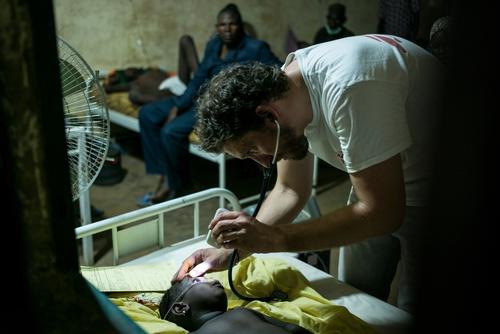
A patient affected by meningitis is cared by an MSF doctor Clement Van Galen.
Niger

Meningitis in Niger: 100 people hospitalised in critical condition every day in Niamey

MSF steps up its activities to tackle the epidemic Voices from the Field - 11 May 2015
 
Thousands of people have fled their villages on islands in Lake Chad, in south-eastern Niger, after Nigerien authorities urged them to leave the area following the deadly attack of Boko Haram on the island of Karamga on 25 April. About 1,500 additional people are now in a transit site in Diffa, the capital of the region.
Niger

“People are in need of food, water, shelter… the basics”

Interview with Abdalla Hussein, MSF’s emergency coordinator in Diffa, Niger Voices from the Field - 8 May 2015
 
msf-placeholder
Niger

Thousands facing precarious conditions after being forced to leave Lake Chad

MSF is one of the few organisations providing assistance to this vulnerable population Voices from the Field - 8 May 2015
 
Watta Jabateh is an Ebola survivor who lost nine family members, including her daughter.
Liberia

Counting the cost of the Ebola outbreak

As the World Health Organization declares Liberia Ebola-free on 9 May – having recorded no new cases of Ebola for 42 days – MSF takes a look at how Liberians are putting back together their fractured lives and shattered communities, nearly a year on from Liberia’s first recorded case of Ebola. Liberia has been hit the hardest by the Ebola outbreak, with 10,212 cases including 4,573 deaths. Mothers have lost children; children have lost parents; brothers and sisters have lost siblings. Communities have been decimated. But there are stories of survival and hope. Voices from the Field - 8 May 2015
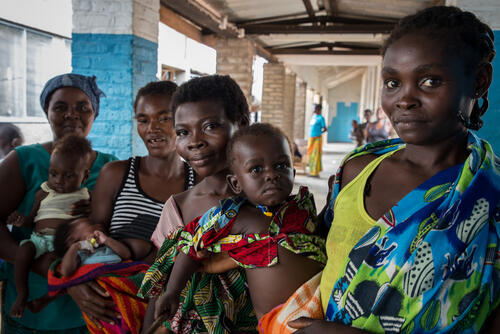
Four mothers posing in a corridor of the Hospital in Bili. All four of them are staying in the hospital with their child, that's suffering from a severe case of malaria. Since the beginning of the project in 2016, the pediatric ward already treated more than 4.000 cases of complicated/severe form of malaria.
Médecins Sans Frontières (MSF)

Independent medical humanitarian assistance

We provide medical assistance to people affected by conflict, epidemics, disasters, or exclusion from healthcare. Our teams are made up of tens of thousands of health professionals, logistic and administrative staff - most of them hired locally. Our actions are guided by medical ethics and the principles of independence and impartiality. We are a non-profit, self-governed, member-based organisation.

Learn more