



Ebola disease in DRC: find out how we're responding
Learn more
431 Results
 
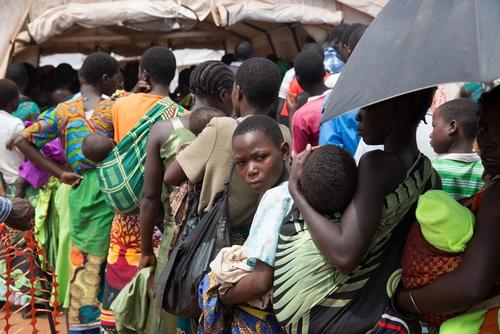
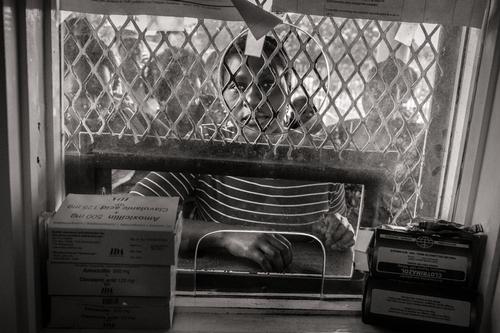
People queue outside a Medecins Sans Frontiers (MSF) clinic. 

Over 5.800 Mozambican nationals have camped in the village of Kapise 2 in Malawi after fleeing their homes in Mozambique, the majority of them women, children and the elderly. Half of the consultations in the MSF clinics are malaria cases.
Malawi

Humanitarian standards not reachable for more than 5,800 Mozambican refugees in Kapise camp

"MSF is working to improve the living conditions but we know we will not be able to reach the minimum standards," says Whitney Ward, MSF field coordinator in Kapise, Malawi. "There is no doubt that the camp needs to be moved. Firstly in a place that will ease the overcrowding, provide adequate resources as well as guarantee access and efficient deployment of aid." Voices from the Field - 17 Feb 2016
 
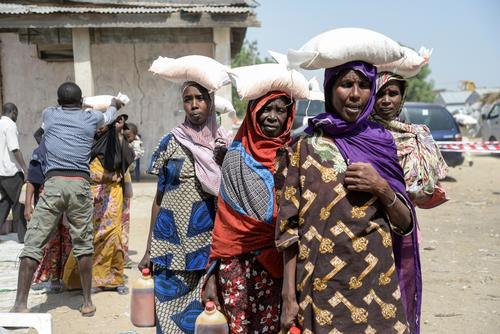
Between 600 and 620 families are living in the Fariya camp. (=3600 people).
1070 children under 5. Unofficial camp. Until our intervention, they had very little support. Latrines ACF, shleter by IOM. Most people are shuwa arab (ethnic group) coming from Marte. 
ACF just open an OPD on Monday. 
This was our second distribution there. 
300 living in 150 IOM shelters (2 families in 1 shelter). Others live in makeshift tents. 
People have been here for 10 months more or less. 
3 boreholes but only 1 working solar
Nigeria

After two years of crisis, what does the future hold for the displaced in Borno?

Interview with Isabelle Mouniaman-Nara, MSF programme manager in Nigeria Voices from the Field - 3 Feb 2016
 
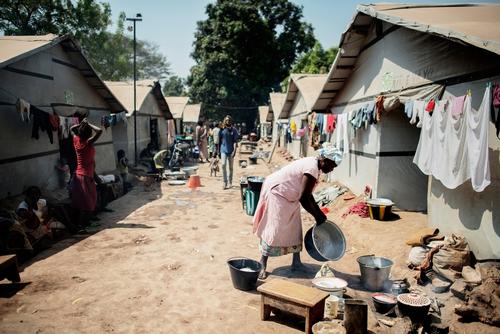
General view of a displaced persons camp in Benzvi, Bangui.
Central African Republic

No hope of returning home anytime soon

"The living conditions in the sites are very difficult. They live in tents built of waste tarpaulins that are full of holes," says Reims Pali, MSF Assistant Field Coordinator in CAR."They sleep on mats on the ground and are exposed to mosquitoes which may carry malaria. Unless the security situation gets better, they will have to stay here in these camps.” Voices from the Field - 27 Jan 2016
 
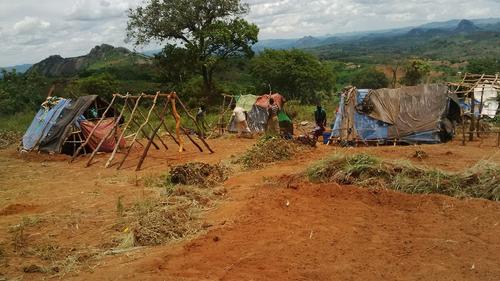
Close to 3.000 Mozambicans refugees have fled Tete province to Kapise village in neighboring Malawi, where they live in precarious conditions with limited access to shelter, mosquito nets, clean water and sanitation. MSF is providing assistance with mobile clinic as well as water and sanitation activities.
Malawi

Waves of Mozambicans fleeing violence seek refuge in Malawi

Interview with Bote Zamadenga, the MSF’s medical activities manager for the Corridor project in Malawi. Voices from the Field - 18 Jan 2016
 
Elyse Aichatou Yahaya Danzara is a nurse. Barely out of the midwifery school in 2005, she was recruited by Médecins Sans Frontières (MSF) to treat malnourished children as the country was hit by a food crisis of extreme gravity. For ten years now, Elyse continues his work in nutritional management structures MSF in southern Niger.
Niger

“Today, Nigeriens know that their children can recover from malnutrition”

Elyse Aichatou is a nurse. Having just left midwifery school in 2005, she was recruited by MSF to take care of malnourished children when the country was being hit by an extremely serious nutritional crisis. For 10 years, Elyse has continued her work at MSF’s nutritional centres in southern Niger. Here she talks about her experience and the problem of malnutrition in the Zinder region from 2005 until today. Voices from the Field - 22 Dec 2015
 
Dr. Alfonso Apolinar is the medical team leader for MSF in Nduta camp in Tanzania. With the nearby Nyarugusu camp stretched to capacity hosting around 90,000 Burundian refugees, Nduta camp was opened in October 2015 to accept new arrivals from Burundi as well as relocated refugees from Nyarugusu. Today, Nduta camp hosts around 27,000 refugees. MSF is the only medical organisation working in the camp. Teams are carrying out mobile clinics, and constructing a hospital with outpatient, emergency and intensive care services.
Tanzania

“People cope with these tough living conditions because often they haven’t known anything else.”

Dr Alfonso Apollinar is part of MSF’s emergency team responding to the refugee crisis in Tanzania, where more than 118,000 Burundians have fled to camps across the border. He describes the conditions in the increasingly overburdened camps Voices from the Field - 9 Dec 2015
 
MSF teams providing support to the Chadian Ministry of Health
A triple suicide attack that took place on the island of Koulfoua in the Lake Chad area in Chad on Saturday morning has reportedly killed 30 people and wounded up to 200. Médecins Sans Frontières (MSF) teams present in the area have immediately mobilised to provide support to the Chadian Ministry of Health.
Chad

I had never before seen these types of injuries”

Dr Silas Adamou Moussa is Deputy Head of Mission for MSF in Chad. He is part of the team who was deployed to Mani to assist wounded following the suicide attacks that took place on Koulfoua Island on the morning of 5 December. Voices from the Field - 8 Dec 2015
 
William Hennequin, MSF Head of Mission, with Hon. Hamilton Orata, deputy governor- Homa Bay County *** Local Caption *** On April 11th, 2014 –Médecins Sans Frontières (MSF) and local health authorities officially launched a new HIV program that they will jointly run in Ndhiwa sub-county, Homa Bay County, in Western Kenya. In this region, more than one fourth of the population is leaving with HIV.
During the 4 years of activities, the program will aim at reducing the number of new infections among the population as well as the mortality related to HIV. This will be made possible by implementing universal and regular testing for the whole population of Ndhiwa sub county and setting up early quality treatment for people living with HIV as well as providing quality care for people hospitalized. Furthermore, the increase access to viral load testing will help ascertain that patients are at the lowest risk of transmitting the virus
The MSF / Ministry of Health program will focus on simplifying the way healthcare is provided to patients, through an adaptation of medical protocols and the inclusion of non-medical workers in the provision of care. Such medical protocols will include encouraging the community to get tested and receive ART as early as possible if found infected to reduce transmitting the virus to others, as well as to support adherence to the treatment. Systematic screening and provision of ART for all HIV positive pregnant women will be implemented, in order to reduce mother-to-child transmission (PMTCT) of the virus. HIV testing program will also be integrated in routine immunization programs for young children. Medical male circumcision will also be key in impacting the rate at which men get infected.
Kenya

To curb the HIV epidemic, “clear objectives and patience are the keys”

In June 2014, MSF started a pilot project in Ndhiwa, a sub-county in western Kenya, aiming to curb the HIV epidemic there: one adult in four is HIV-positive and 2 in 100 get infected every year. William Hennequin, MSF representative in Kenya, presents some of the project’s achievements and challenges. Voices from the Field - 2 Dec 2015
 
Hermenegilda. Albazine’s Health Center. Maputo, Mozambique.
Access to medicines

Stockouts: Testimonies from patients and medical staff

Testimonies from AIDS patients. “Once I was two weeks without my ARVs. When I arrived at the health centre I was told there was no nurse there and no one found an alternative solution for me, so I went back home empty handed and desperate, " Sanculani Langui, from Marara Centro, Tete province, Mozambique. Voices from the Field - 30 Nov 2015
 
Situated in the Lake Chad region, the site of Koulkimé in Chad hosts approximately 1,800 displaced people according to OCHA. They have fled Islamic State's West Africa Province (ISWAP), also known as Boko Haram, as well as military operations carried out by the Chadian government.  MSF is working together with the Chadian Ministry of Health to support the primary health centre in Koulkimé.
Lake Chad Crisis

“The only certainty is that people will remain uprooted and continue to live in fear”

Interview with MSF Director of Operations in the Lake Chad region about the effect of continued attacks by the Islamic State’s West Africa Province (ISWAP) group, also known as Boko Haram. “In the Lake Chad area, we are seeing a regional crisis with large-scale humanitarian consequences. People continue to flee from violence, across borders and inside their own countries." Voices from the Field - 23 Nov 2015
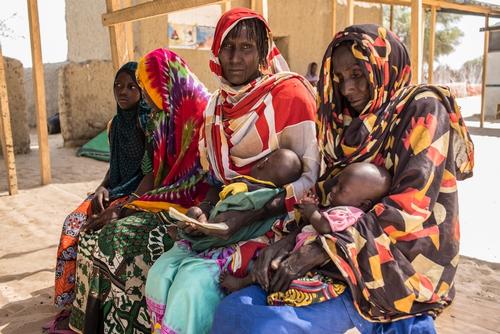
Four mothers posing in a corridor of the Hospital in Bili. All four of them are staying in the hospital with their child, that's suffering from a severe case of malaria. Since the beginning of the project in 2016, the pediatric ward already treated more than 4.000 cases of complicated/severe form of malaria.
Médecins Sans Frontières (MSF)

Independent medical humanitarian assistance

We provide medical assistance to people affected by conflict, epidemics, disasters, or exclusion from healthcare. Our teams are made up of tens of thousands of health professionals, logistic and administrative staff - most of them hired locally. Our actions are guided by medical ethics and the principles of independence and impartiality. We are a non-profit, self-governed, member-based organisation.

Learn more