



As part of the World Health Organisation’s (WHO) 152nd Executive Board, Médecins Sans Frontières (MSF) provided a statement regarding the Global Health for Peace Initiative (GHPI).
MSF sees first-hand the devastating impact of conflict on access to healthcare. Hence, as humanitarian health practitioners, the GHPI raises concerns for the ethical integrity and safety of humanitarian operations, staff and relationships with patients and communities.
The GHPI introduces a foundational switch, transitioning health actors from working ‘in’ conflict to working ‘on’ conflict. This questions the respect for medical neutrality and impartiality, notably in high intensity contexts. Upholding medical ethics is what promotes trust in the profession; this trust protects safe access to healthcare in all contexts.
Furthermore, the GHPI fails to address access and quality of care, and to differentiate the roles and responsibilities of various health actors in safeguarding health and peace. We urge the Secretariat to continue consultations with all actors to ensure that the GHPI does not do more harm than good.
A more detailed briefing paper produced by MSF was also shared with WHO and can be found below.
Palestine
MSF calls for protection of Palestinian communities after Israeli settlers injured staff member
Statement
19 Oct 2026
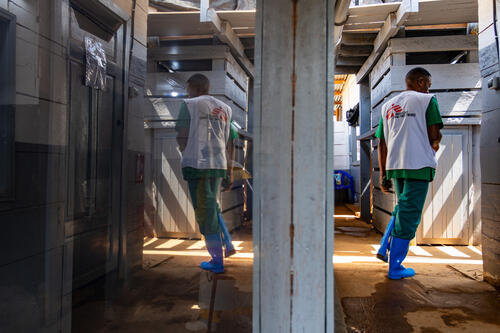
DRC Ebola outbreaks
Children are being left behind in the current Ebola disease outbreak response
Press Release
15 Oct 2026
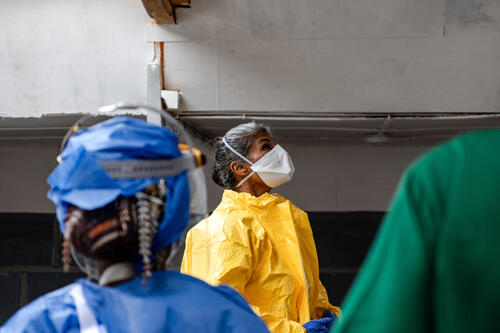
DRC Ebola outbreaks
What will it take to end the Ebola disease outbreak in Democratic Republic of Congo?
Project Update
30 Sep 2026