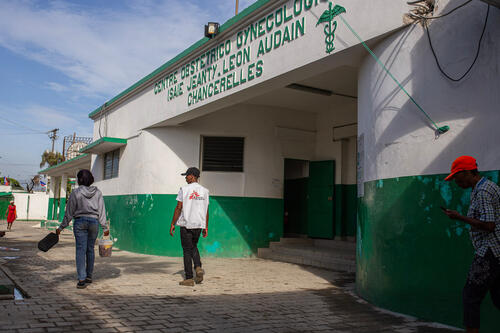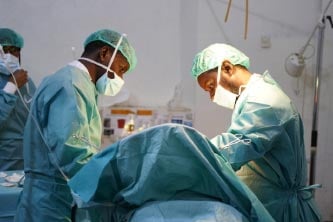
Port-au-Prince – Amid escalating armed clashes in Haiti’s capital, Port-au-Prince, Médecins Sans Frontières (MSF) has received numerous wounded patients at our hospitals, including women and children. MSF urgently calls on the authorities and all parties involved to spare civilians and ensure access to healthcare facilities for all the wounded and sick, without distinction.
Heavy gunfire and drone explosions have increased in the Plaine de Cul-de-Sac area, in the northeastern part of Port-au-Prince, following the disappearance, on 18 October 2026, of several members of the Gang Suppression Force during an attack on their vehicle by members of armed groups.
Between 18 and 26 October, 30 people injured by gunfire or drone explosions were admitted and treated at MSF hospitals in Tabarre and Cité Soleil.
“We are very concerned about this surge in violence in multiple densely populated neighbourhoods of the capital,” says Davina Hayles, MSF head of mission in Haiti. “Among the victims, we have admitted multiple women and children — it is shocking to see them arriving at our hospitals, wounded by gunfire or explosions.”
Among the victims, we have admitted multiple women and children — it is shocking to see them arriving at our hospitals, wounded by gunfire or explosions.Davina Hayles, MSF head of mission in Haiti
“We fear that this armed conflict will claim even more victims, and displace even more people in the coming days, particularly with the arrival of additional international security forces,” says Hayles. “Some of our locally based colleagues have themselves been forced to leave their homes and take refuge in MSF accommodations. It is imperative that civilians be protected and spared.”
Due to the ongoing conflict, MSF has also observed that multiple patients have faced serious difficulties accessing healthcare facilities.
“Some patients with gunshot wounds took several hours to reach our hospitals in Tabarre and Cité Soleil,” says Hayles. “Roads and bridges are blocked, and any travel is extremely risky. In a capital city where the healthcare system has collapsed and many facilities are closed, it is essential to ensure there is access to functioning healthcare facilities like ours.”
In the various neighbourhoods affected by armed conflict, MSF has also been forced to suspend our mobile clinics and distributions of treated water.
“This is a double blow for our patients and for people who lack access to treated water in these neighbourhoods of the capital,” says Hayles. “At any moment, they could become direct or collateral victims, and on top of that, they find themselves deprived of access to healthcare and water. This situation is dreadful.”
Haiti
Women risk their lives to reach sexual and reproductive healthcare in Port-au-Prince
Project Update
19 Aug 2026

Haiti
Haiti: MSF forced once again to suspend operations at the Isaïe Jeanty Maternity hospital amid violence
Statement
9 Aug 2026