


“When I woke at seven o'clock, my wife said, ’We still have one hour’. At eight o'clock, I received a text message from a friend saying, ’We’re stuffed’. I turned on the radio to hear them announce that rockets had been fired into Israel. Usually I don’t work on Fridays; I go to the market instead. But life hasn’t resumed its usual course. The ceasefire only lasted three days.
'First we heard the drones'
First we heard the drones – they make a terrible noise – and then a plane. Then, a little after 11 am, I heard a loud explosion. It was the sound of an airstrike not far from our home.
My three children had already retreated into the least exposed room in the house. I didn’t have to explain to them that they couldn’t play outside. Even my five-year-old daughter understands what it means for a truce to break. This war has made them very mature.
'We are in limbo'
I got ready to leave for the MSF office. I was expecting a call from Ayman, who coordinates the movements of MSF staff, to let me know when a car would pick me up. With the resumption of the bombing, we are in limbo. We need to be ready to respond, but we can’t predict exactly how we will be needed today.
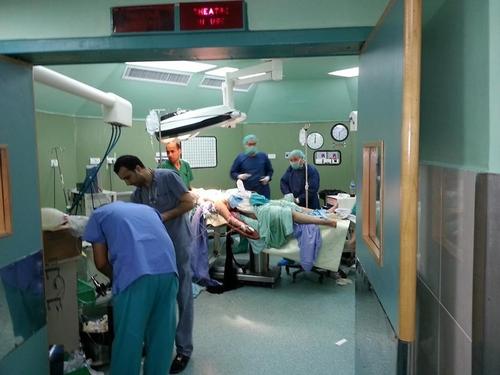
At Al Shifa hospital, MSF’s surgical team has begun to carry out the surgery that has been scheduled, as they haven’t received any wounded during the three days of the ceasefire, and all the patients are stabilised. In the intensive care unit, there are currently just nine patients, compared to up to 40 during the bombardment, when they had to send patients to the cardiology ward, the paediatric ward... But yesterday the situation was back to normal – if you can call it normal, because there are still entire families sheltering in the hospital courtyard. The families have received a small amount of food, but not enough. One mother complained that she had only three tins, five tomatoes and three cucumbers to feed her family.
Refuge in schools
Many families whose homes have been destroyed have sought refuge in schools. Yesterday, I helped MSF’s logistics team load up a truck with hygiene kits. The team took advantage of the ceasefire to distribute buckets, soap and toilet paper to 520 families sheltering in two government schools in Sheikh Redwan. I went there with Michele, MSF’s medical team leader. We saw that there was a functioning medical post with a well-stocked pharmacy. However, sanitary conditions are poor: there are not enough toilets for the 600 families living there; there are no showers; the only water is for drinking. Entering the school, I was struck by the smell.
Now we are waiting to see what will happen in Gaza. Yesterday, all people talked about the ceasefire and whether it would be extended; today, we know the answer.”