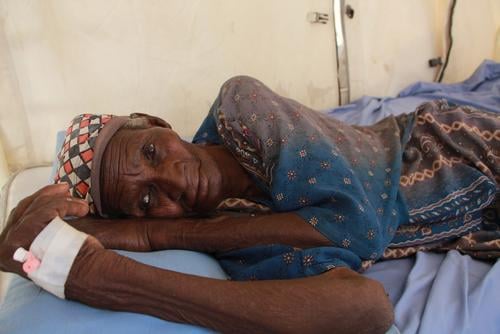
A woman being attended at the MSF hospital in Pulka. She arrived some weeks ago fleeing the ongoing conflict. 
Many displaced people report that in the places they fled survival is a struggle, as there are no functioning hospitals or markets because they have been burned down or demolished, and their farming activities were very limited. As a result, most of them arrive in poor condition due to the deprivations they have had to endure.
A woman being cared for at the MSF hospital in Pulka. She arrived some weeks ago, fleeing the ongoing conflict. Many displaced people report that in the places they fled survival is a struggle. There are no functioning hospitals or markets because they have been burned down or demolished, and farming activities were very limited. As a result, most of them arrive in poor condition due to the deprivations they have had to endure.
© Malik Samuel/MSF

Searching for aid after fleeing the fighting

A woman being cared for at the MSF hospital in Pulka. She arrived some weeks ago, fleeing the ongoing conflict. Many displaced people report that in the places they fled survival is a struggle. There are no functioning hospitals or markets because they have been burned down or demolished, and farming activities were very limited. As a result, most of them arrive in poor condition due to the deprivations they have had to endure.
© Malik Samuel/MSF
Ebola disease in DRC: find out how we're responding
Learn more

Tens of thousands of Nigerians have lost their homes and livelihoods in Borno State, in the northeastern part of the country, due to the conflict between government forces and Boko Haram. Displacement and fear have shaped their lives. This is what their journey looks like and how they feel today in Pulka, a small Nigerian town close to the border with Cameroon that has become a hotspot destination for many of them.
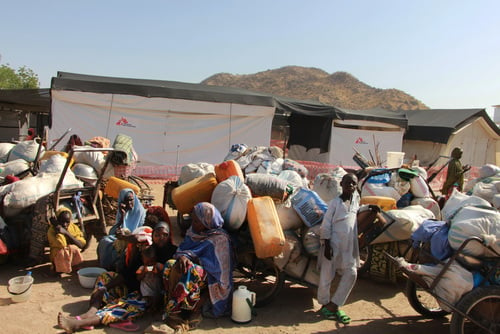
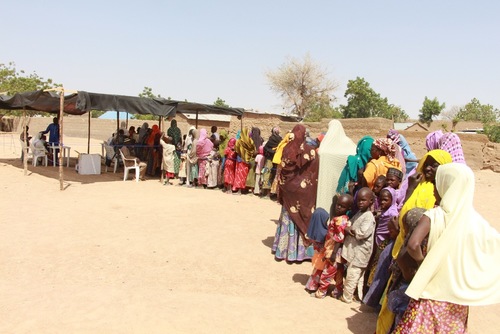
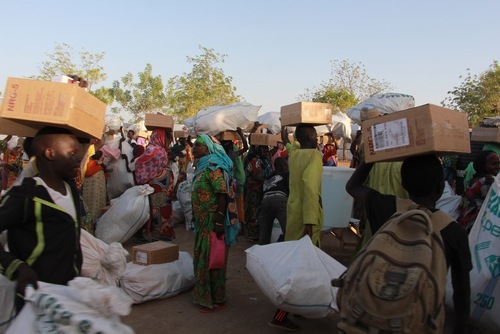
Newly displaced people carrying their belongings set foot inside the hospital compound where most of the people arriving in Pulka first settle.
More than 42,000 people are estimated to be living in Pulka now, according to local authorities. They are made up of internally displaced persons (IDPs), returnees and members of the host community who did not flee when Boko Haram attacked the town.
Since January, Pulka has registered more than 11,300 new arrivals.
2.IMG_
Newly displaced people carrying their belongings into the hospital compound where most of the people arriving in Pulka first settle.
Malik Samuel/MSF
The hospital compound where MSF provides medical assistance and some other basic services along with other NGOs and actors. MSF does medical and nutritional screenings of the new arrivals, checks their general health condition and refers those requiring further medical care to the clinic.

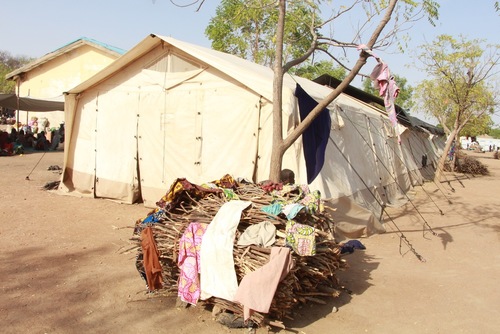
In March, around 900 families were moved to newly constructed camps, but many more need a proper location to live with adequate services in place, like latrines and a regular water supply.
The hospital compound where MSF provides medical assistance and some other basic services along with other NGOs. MSF carries out medical and nutritional screenings of the new arrivals, checks their general health and refers those requiring further medical care to the clinic. In March, around 1,000 families were moved to newly constructed camps, but many more need a proper location to live with adequate services in place, like latrines and a regular water supply.
Malik Samuel/MSF
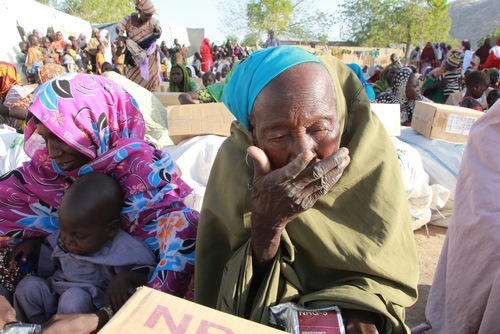
A displaced person receives some food.
MSF also gives food and non-food items for new arrivals. 

The security situation in Pulka is still volatile, with movements in and out of the town highly regulated by the military. People cannot go very far to farm or fetch firewood because of fear of attacks.
This is why residents largely depend on food distributions made by the government and humanitarian agencies.
A displaced person receives some food. MSF also gives food and non-food items for new arrivals. The security situation in Pulka is still volatile, with movements in and out of the town highly regulated by the military. People cannot go very far to farm or fetch firewood because of fear of attacks. This is why residents largely depend on food distributions made by the government and humanitarian agencies.
Malik Samuel/MSF
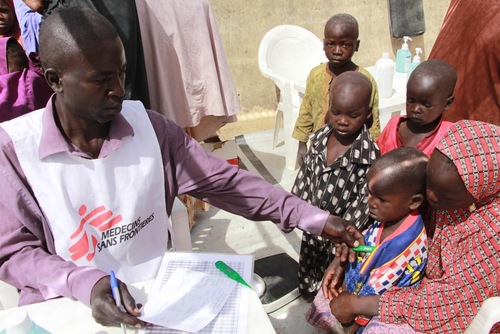
An MSF staff member checks a child’s health condition.

Most of the children arriving in Pulka have never been vaccinated. Therefore, MSF filters children from six months to 10 years old to include them in an expanded programme of immunisation (EPI) against measles, whooping cough, etc.
An MSF staff member checks a child’s health condition. Most of the children arriving in Pulka have never been vaccinated. Therefore, MSF filters children from six months to 10 years old to include them in an expanded programme of immunisation (EPI) against measles, whooping cough, etc.
Malik Samuel/MSF
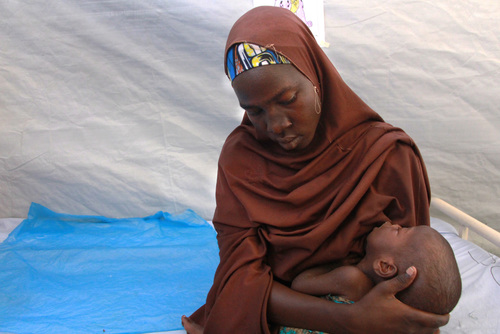
A mother with her baby at the MSF hospital in Pulka. She arrived in Pulka some weeks ago fleeing the ongoing conflict in Borno state. 

The most common morbidities among the patients are acute respiratory infections, acute non-bloody watery diarrhoea, malaria, gastritis and conjunctivitis. MSF’s primary goal is to take care of these people’s health needs but, due to the magnitude of the problems they face and the inadequacy of the support, the organisation has to step in to provide shelter as well.
A mother with her baby at the MSF hospital in Pulka. She arrived in Pulka some weeks ago after fleeing the ongoing conflict in Borno State. The most common morbidities among the patients are acute respiratory infections, acute non-bloody watery diarrhoea, malaria, gastritis and conjunctivitis. MSF’s primary goal is to take care of these people’s health needs but, due to the magnitude of the problems they face and the inadequate support, the organisation has to step in to provide shelter too.
Malik Samuel/MSF
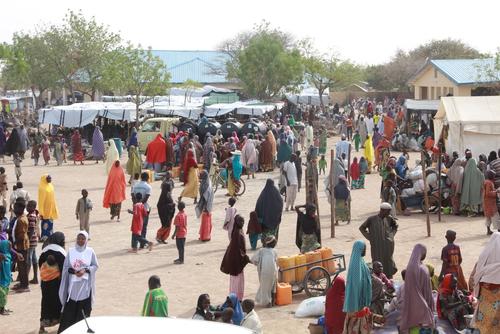
A general view of the hospital compound.
Due to the ongoing insecurity, most of the eastern countryside of Borno state where these large displacements are happening remains difficult to reach for humanitarian organisations, with the exception of a few towns. Most of the aid agencies working in the state are present in the capital, Maiduguri, but only a few are able to operate continually in the hard-to-reach areas where assistance is most needed.
A general view of the hospital compound. Due to the ongoing insecurity, most of the eastern countryside of Borno State, where these large displacements are happening, remains difficult to reach for humanitarian organisations, with the exception of a few towns. Most of the aid agencies working in the state are present in the capital, Maiduguri, but only a few are able to operate continually in the hard-to-reach areas where assistance is most needed.
Malik Samuel/MSF
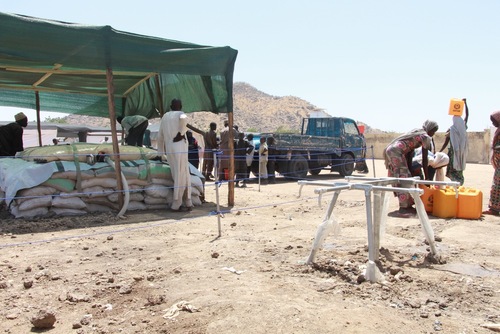
Access to water is an essential need for newly displaced people. To facilitate it, MSF has built some water points inside the hospital compound and organised two trucks to bring in water on a daily basis. Currently, MSF is providing 12,000 litres of water per day to complement what is being done by another actor, Oxfam.

As the population in Pulka increases, so does the pressure for the existing resources being provided by the few humanitarian actors present.
Access to water is an essential need for newly displaced people. MSF has built water points inside the hospital compound and organised two trucks to bring in water on a daily basis. Currently, MSF is providing 8,000 litres of water per day in the town to complement what is being provided by Oxfam. As the population in Pulka increases, so does pressure on existing resources provided by the few humanitarian workers present.
Malik Samuel/MSF
Displaced people receive food and non-food items.
Malik Samuel/MSF
Firewood is currently one of the main needs in Pulka. It is very expensive, so many families cannot afford to buy it.
Despite the availability of food, people still go hungry, sometimes for days, because of the lack of firewood. Two pieces of firewood cost N50 (US$0.15), which is expensive for the people and not enough to cook a family meal.
Firewood is currently one of the main needs in Pulka. It is very expensive, so many families can’t afford to buy it. Despite the availability of food, people still go hungry, sometimes for days, because of the lack of firewood. Two pieces of firewood cost N50 (US$0.15), which is not only expensive but also not enough to cook a family meal.
Malik Samuel/MSF
A woman being attended at the MSF hospital in Pulka. She arrived some weeks ago fleeing the ongoing conflict. 
Many displaced people report that in the places they fled survival is a struggle, as there are no functioning hospitals or markets because they have been burned down or demolished, and their farming activities were very limited. As a result, most of them arrive in poor condition due to the deprivations they have had to endure.
A woman being cared for at the MSF hospital in Pulka. She arrived some weeks ago, fleeing the ongoing conflict. Many displaced people report that in the places they fled survival is a struggle. There are no functioning hospitals or markets because they have been burned down or demolished, and farming activities were very limited. As a result, most of them arrive in poor condition due to the deprivations they have had to endure.
Malik Samuel/MSF