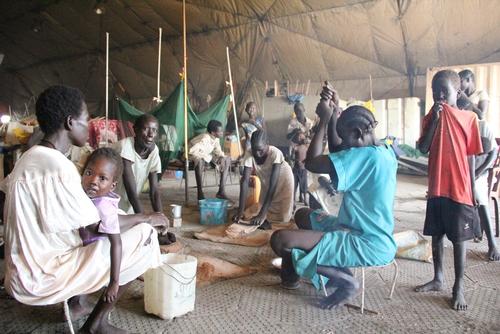
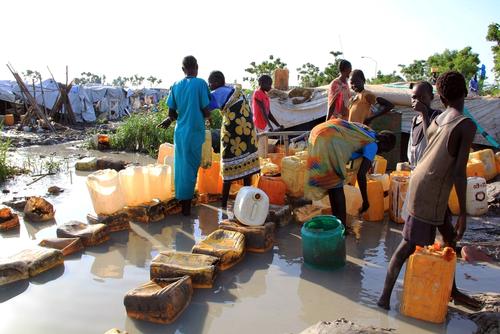
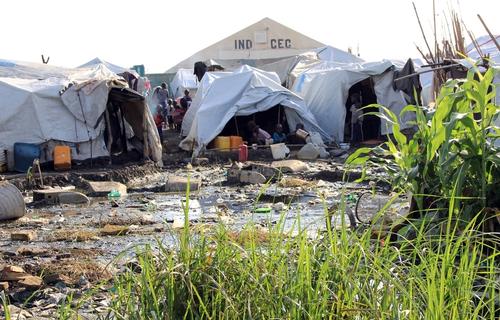
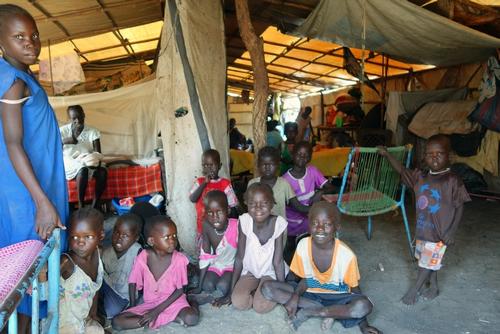
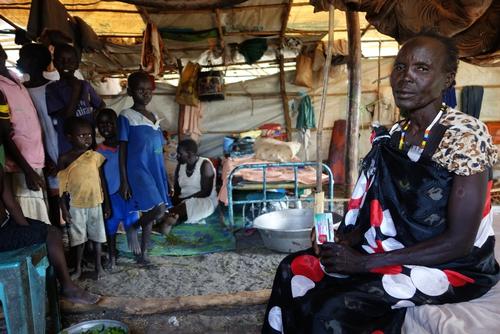
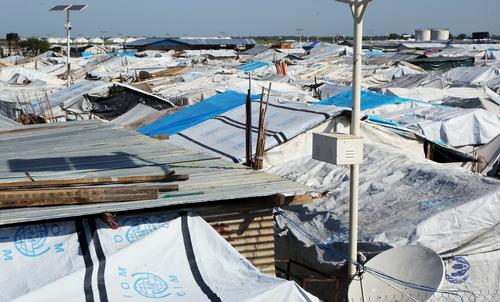
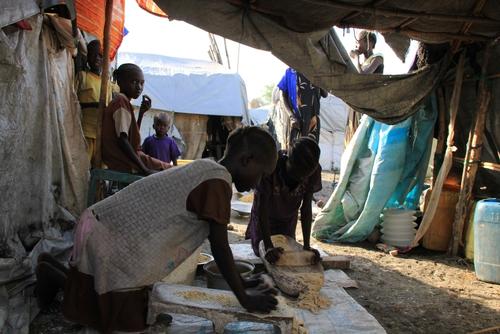
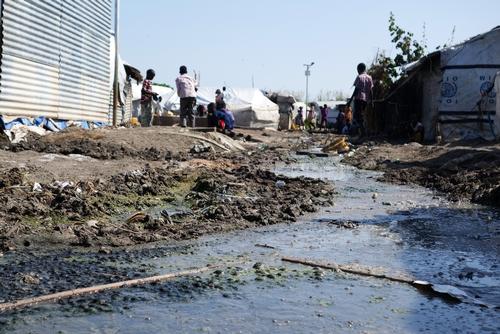
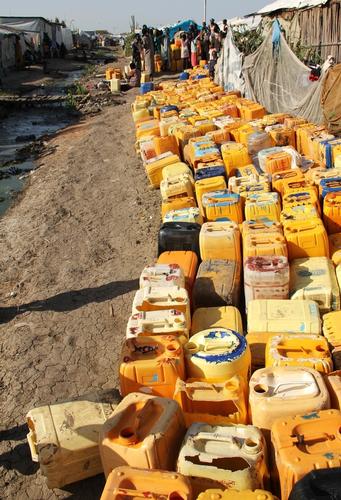
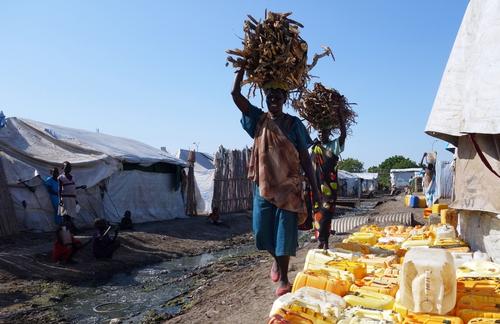
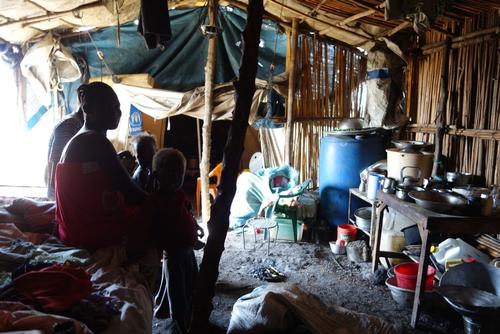
In the daytime it gets stifling hot inside these shelters, but the camp is so packed with thousands of tents and temporary shelters there is very little communal space. In the most
crowded section of the camp, there is less than 4.5 square meters of space per person, less than one seventh of the space required by minimum humanitarian standards. Only about half a square kilometre has been designated by the United Nations for the displaced population to live in, comprising a population the size of a small city.
In the daytime it gets stifling hot inside these shelters, but the camp is so packed with thousands of tents and temporary shelters there is very little communal space. In the most crowded section of the camp, there is less than 4.5 square meters of space per person, less than one seventh of the space required by minimum humanitarian standards.
© Jacob Kuehn/MSF

Malakal, An Inadequate Refuge

In the daytime it gets stifling hot inside these shelters, but the camp is so packed with thousands of tents and temporary shelters there is very little communal space. In the most crowded section of the camp, there is less than 4.5 square meters of space per person, less than one seventh of the space required by minimum humanitarian standards.
© Jacob Kuehn/MSF
Ebola disease in DRC: find out how we're responding
Learn more

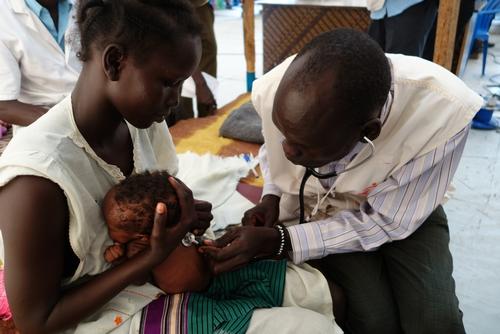
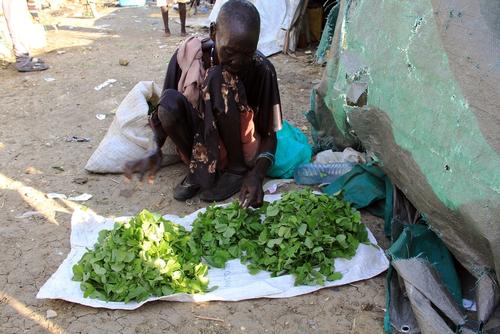
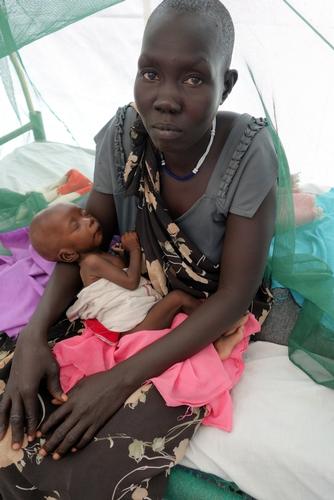
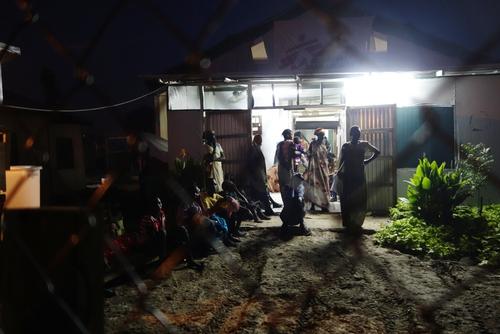
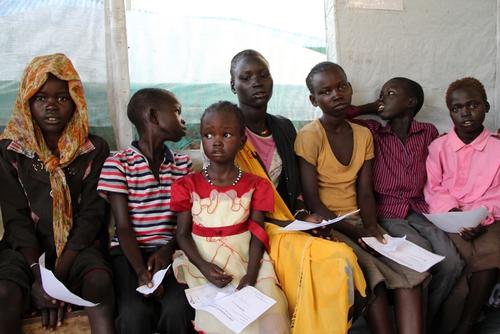
The number of patients treated by MSF on a weekly basis in the UN Protection of Civilians Camp (PoC) in Malakal has tripled since June, as the health of the population sheltering in the camp is being jeopardised by overcrowding and substandard living conditions. Presently, almost 48,000 people are living in the Malakal PoC following an influx of more than 16,000 people in July and August. Many came from areas where humanitarian access was cut off by insecurity for months, forcing thousands to flee from conflict and hunger. Most people arrived with nothing.