


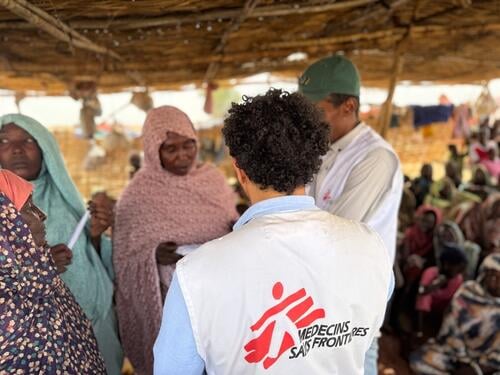
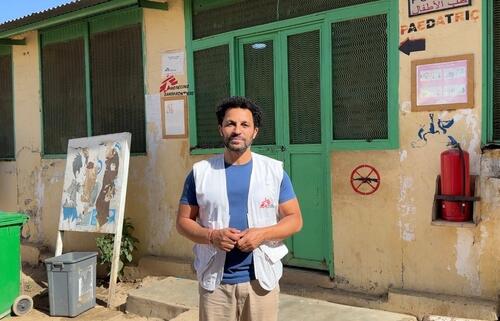
Dr Javid Abdelmoneim, International President of Médecins Sans Frontières (MSF), has just completed a visit to MSF’s projects across Darfur, Sudan. In this interview, he shares his impressions, the urgent humanitarian needs he witnessed, and the situation facing civilians in what is currently one of the world’s largest humanitarian crises.
You recently visited Darfur for the first time after previously visiting other parts of Sudan. What struck you the most during this trip?
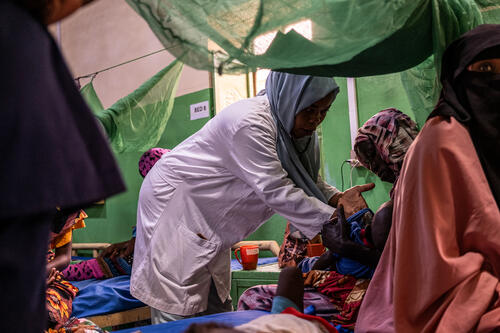
I visited five MSF-supported hospitals across Darfur. Many of the MSF projects are hospitals, some in partnership with the Ministry of Health and others run directly by MSF. What struck me the most is the level of healthcare MSF is achieving. I was particularly struck when I walked into an MSF hospital in Tawila, in a hot desert environment, and saw a neonatal intensive care unit in a tent, with double-layer insulation, air conditioning, and a level of care for newborns that was really impressive.
It’s important to note that it’s not just general healthcare, vaccinations, outbreak response, water and sanitation — we are providing all levels of care, including sexual and reproductive health services.
There is also significant work to rebuild and rehabilitate hospitals with the Ministry of Health in Nyala and Zalingei. There is a lot to contend with, but achieving this level of care, it put a smile on my face.
Dr Javid Abdelmoneim, MSF International President
“There is a lot to contend with, but achieving this level of care, it put a smile on my face.”
What are the most urgent humanitarian needs you observed?
The needs I observed are extremely worrying. With the rainy season approaching, we can expect cholera, malaria, and increased difficulty in accessing healthcare, which will likely lead to more deaths.
Another major concern is ongoing attacks on healthcare. It’s not just about the huge needs, the services trying to meet those needs are themselves under attack, creating a chilling effect.
There are also significant gaps in the response. There are fewer organisations working in Darfur than there should be, partly due to global funding cuts that have triggered a crisis in aid. In Central Darfur, support has been withdrawn from over 45 general healthcare centres.
Whatever MSF is able to do is not enough to meet the scale of needs. We are calling on other organisations to do their utmost to bring services to Darfur.
As a doctor, how did it feel to witness the living conditions of people in Darfur?
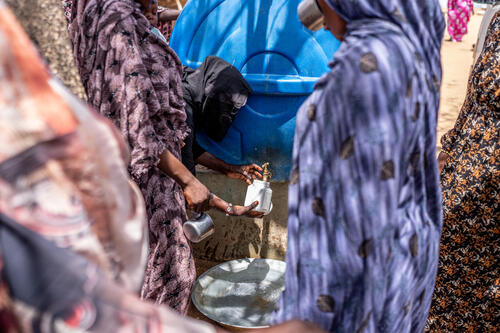
I’m deeply concerned. I spent a day in the camps around Tawila, where hundreds of thousands of people live in awful conditions. People reported having just one meal a day. They spoke of thirst, long queues for water, and rapidly diminishing supplies.
They are also worried about the rainy season. Their shelters are made of reeds and grass, and the emergency latrines are already full, forcing people to go outdoors. With the rains, this creates serious health risks. These are serious warning signs, and it raises questions about why, months after people arrived, such gaps in basic services still exist.
Can you speak about the barriers and challenges people face accessing healthcare?
The remoteness in Darfur is striking and the distances are vast — some projects in the Jebel Marra area can only be reached by donkey for several hours and can be cut off during the rainy season, affecting supplies and patient access. We travelled four to six hours, in a car, between towns with hospitals, across difficult terrain. For people needing care, a woman in labour or someone with an urgent injury, reaching a facility is extremely challenging. Transport costs money, often involves donkey carts, and takes time — time that should be spent receiving treatment.
Distance, cost, and lack of infrastructure all increase the risk of illness and death.
Sudan has seen repeated attacks on healthcare. How is this affecting patients and staff?
Repeated attacks on healthcare are creating a real sense of fear among staff. If you know a drone strike could hit your hospital at any moment, you will be worried. We’ve seen attacks in recent months, including on Al-Jabalain hospital, in White Nile State, and Ad-Daein in East Darfur, resulting in deaths of patients and healthcare workers — this should never happen.
MSF continues to remind warring parties of their obligations under international law. Hospitals should be protected spaces. While we take precautions, ultimately little can protect healthcare facilities against a large-scale drone strike.
What gives you hope in this situation?
I’m realistic about the prospects of peace and do not see signs of the war ending soon. This is a crisis of global scale.
In moments of helplessness, I focus on small acts of care and solidarity — everyday human interactions that still make a difference. This is a strong feature of Sudanese society. There is a deep sense of hospitality and determination to support one another. This is what gives me hope. It exists among Sudanese communities and within MSF, and it continues to drive us to provide care.
For people needing care, a woman in labour or someone with an urgent injury, reaching a facility is extremely challenging. Transport costs money, often involves donkey carts, and takes time — time that should be spent receiving treatment.Dr Javid Abdelmoneim, MSF International President
Is there anything from your interactions with communities or staff that stood out?
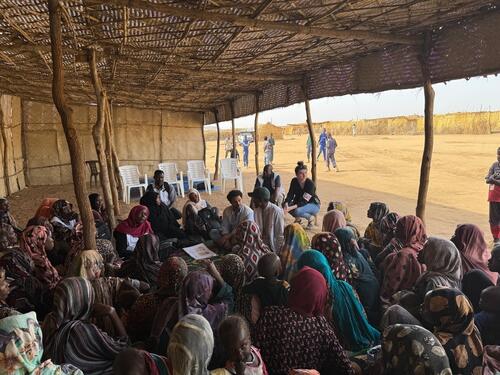
Sexual violence is a feature of this conflict across Sudan. During community meetings in Tawila, I asked about maternal deaths, child deaths, and sexual violence to understand people’s experiences.
In terms of sexual violence, responses are often limited due to stigma. However, women said they knew where to access care and even knew the names of MSF staff providing services. This is a small positive sign, that people know where to seek care, but it also highlights how widespread the violence is.
What would you want people outside Sudan to understand about the situation?
People need to know that this is a war against civilians. There has been mass violence, displacement, attacks on healthcare, and an almost total collapse of the health system. There is no electricity network, no functioning phone network, no banking system, and barely an economy. There are drone strikes. It is an extremely difficult environment to live in.
At the same time, there are disease outbreaks, malnutrition, a maternal health crisis, sexual violence, and ethnic violence. This is a complex and prolonged conflict with a devastating impact on people. What is urgently needed is for the warring parties to respect and protect civilians.
Dr Javid Abdelmoneim visited Tawila in North Darfur; Zalingei and Rokero in Central Darfur; Nyala and Kas in South Darfur; and El Geneina in West Darfur.
Sudan
Aid cuts force mass clinic closures across Sudan, leaving millions without healthcare
Press Release
8 Sep 2026
Conflict in Sudan
Bringing water and healthcare to displaced people in Abu Jubayhah, South Kordofan
Project Update
1 Sep 2026