


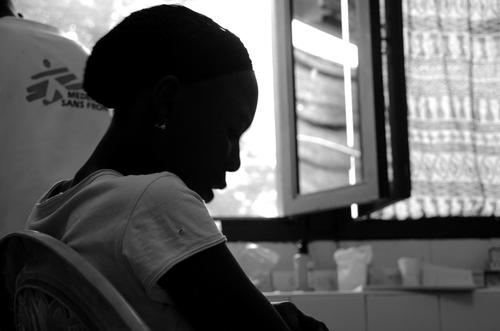
Being raped can result in lifelong trauma for survivors of sexual assault. Having been brutally raped in front of one’s children and fearing sexually transmitted diseases in the aftermath only adds to the psychological and physical impact of the assault. Sadly, living with such trauma is part of life for an countless women in the Central African Republic, a country that descended into extreme levels of anarchy, violence and lawlessness at the end of last year.
Since July 2014, MSF has offered assistance and support to victims of rape who find their way to one of two clinics in the capital of Bangui. From July through September, 247 victims of sexual violence have received help. Most have been women, but girls as young as eight, and several men have also sought assistance and support.
They have come to the clinic even though being the victim of rape is taboo in the Central African society.
“People are ashamed to come, but when they have the possibility of free care and support, they muster up the courage and come nevertheless,” says Helene Thomas, an MSF clinical psychologist at the clinic at Bangui’s General Hospital. Radio-spots played on the local radio stations have made this new offer known and sought after, in spite of the risk of being stigmatized or left and rejected by one’s husband.
The support at the clinics ranges from psychological consultations to tests for pregnancy and sexually transmitted diseases, including HIV. These provide the patients with a safe space to share their experiences and to discuss their feelings of sorrow, humiliation and fear. Helene Thomas also checks for signs of depression during the series of consultations that normally last a few months. She encourages the patients to find their inner strengths to rely on, so as to start feeling better.
No one knows how many adults and children have been, and continue to be, raped. “I am convinced that we are only seeing the tip of the iceberg,” says Thomas, “there are many, many more victims out there.”
One of the women who has mustered up the courage to seek help is a 24 year-old woman from the city of Bambari. “It was the month of May. Two men from a rebel group came to my home. They asked for my husband – but he was not there, so they told me that I would have to pay,” she explains in a quiet voice while looking down at her hands. “They tore my clothes off, my children started to cry, and they raped me in front of them. Now, I always feel abdominal pain,” she says. “In the beginning, I could not sleep, but now it is a bit better. My son, who is five years old, started to talk to me about what he saw, but I cannot talk to him about it – I do not want to hear his words,” she says.
Another soft-spoken woman cries quietly while she tells about her ordeal when four rebels assaulted her in January. The children saw it all – including her passing out from the pain and waking up several hours later, in the middle of the night. She is waiting for the tests that will tell if she is now HIV-positive. “I cannot be with my husband. I feel numb”, she says and talks about the continued pain she also feels in her abdomen.
It remains a rarity in the Central African Republic that victims of rape see their perpetrators brought to justice. In some cases, the family even forces the victim to live with the rapist out of shame about what happened.
“I just recently worked with a family who had forced their 15 year-old daughter to live with the boy who had raped her,” says Thomas. “She had attempted to take her own life and was referred to us by a social worker. We tried to intervene, and explained to the family that no one should be forced to live with their rapist – but rather that rape is a crime, and that the rapist should be brought to justice.”
As horrifying as these experiences of sexual assault are, consultations can have a positive impact. “There is almost always a change for the better,” says Sylvie Nadege Gonekra, who is a midwife at the clinic in Bangui’s General Hospital. “After a few consultations, I notice a change on most patients’ faces,” she says.
“Some of the women will remain traumatized for life,” says Thomas, “but if, for example, we can get the family to be very supportive of the victim then there is a chance. The assault will never be forgotten – but they can pull through and end up having a life without severe psychological trauma.”