


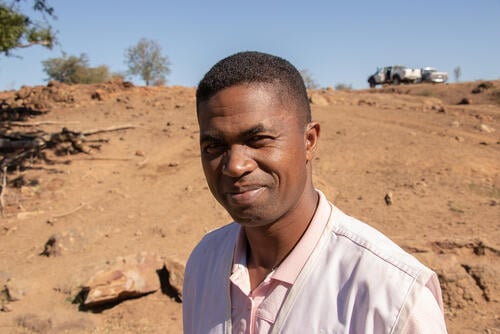
Aina, water and sanitation manager

“In Fenoarivo, we have launched a watertrucking program, the goal is to bring drinking water to villages in difficulty. This is an emergency solution while waiting for a lasting solution. We are also on the construction of nine sustainable structures. Here they are constructions of nozzle wells started at the beginning of June. They will be finished at the end of this month. The goal is for people to consume drinking water, which has not had any external contamination, that is, water without pathogenic organisms. Many people here have parasitic diseases and diarrhea, the goal is to reduce the diseases associated with the consumption of contaminated water and for the populations to be healthy. "
Aina, water and sanitation manager in Fenoarivo, where the team have launched a watertrucking programme. Madagascar, July 2021.
© Solen Mourlon/MSF
Jobs in the Field

Water, Hygiene, and Sanitation Manager

Aina, water and sanitation manager in Fenoarivo, where the team have launched a watertrucking programme. Madagascar, July 2021.
© Solen Mourlon/MSF
Ebola disease in DRC: find out how we're responding
Learn more

Our Water, Hygiene, and Sanitation (Watsan) Managers ensure that we provide essential services to people affected by crises.

From establishing the infrastructure necessary for clean water to managing waste disposal in emergency settings, our Watsan Managers are vital in maintaining the health and dignified living conditions of the communities we serve.

This is a dynamic and hands-on role, involving some or all of the following:

Responsibilities:

  • Plan, coordinate, implement, and monitor logistics activities related to water, sanitation and hygiene (WASH) activities based on MSF’s protocols and standards.
  • Collaborate with the Project and Logistics Coordinators to develop and review the annual WASH budget to meet the needs of the project.
  • Ensure daily compliance with MSF’s WASH standards and protocols by overseeing the implementation of WASH activities.
  • Design, implement, and manage water supply, excreta disposal, waste management, hygiene, and infection control interventions.
  • Conduct assessments in collaboration with medical teams, identifying needs and recommending response activities to project leaders.
  • Contribute to the development of emergency response strategies with medical and logistical teams.
  • Ensure the availability of necessary materials and equipment for WASH activities by overseeing procurement, organisation, and inventory.
  • In partnership with the Human Resources Coordinator, recruit, train, brief, and evaluate Watsan staff, ensuring the team is appropriately sized and equipped.
  • Provide technical support to medical teams, identifying risk factors for infection control and integrating WASH activities into medical interventions.
  • Ensure accurate data collection and analysis of WASH activities and provide regular reporting to line management.
MSF activities in Wadi Fira
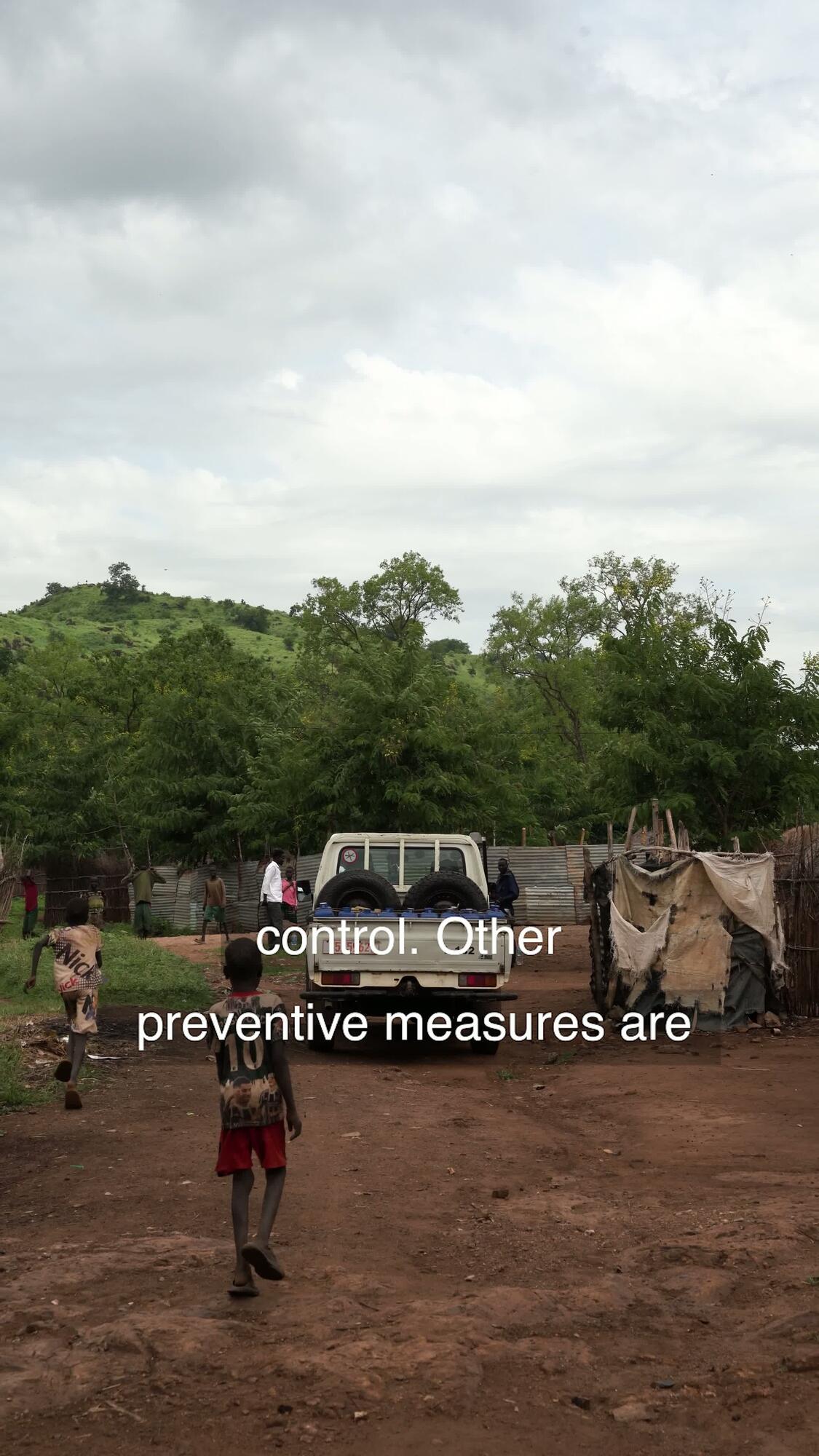
Our work has consisted on the one hand of increasing the quantity of water available for the refugees and their livestock as well as for the local host communities. Roland Couprie, water, hygiene, and sanitation team leader

Bringing Water and Hope: A Month of Humanitarian Action in Korobo

Requirements:

  • An academic background in engineering or relevant training.
  • At least six months of hands-on field experience in WASH activities in a humanitarian or international development setting.
  • Proficiency in the local language of the project area is essential.
  • Basic computer literacy.

Assets:

  • WASH in Emergencies Training within MSF is recommended.
  • Experience with at least two of the following activities in two different contexts: water supply, excreta disposal, waste management, vector control, or respectful management of corpses.
  • Knowledge of additional local languages is a plus.
  • A background or experience in public health.
  • Familiarity with local operations and emergency response in diverse contexts.
  • People management and development.
  • Commitment to MSF principles.
  • Behavioural flexibility.
  • Results and quality orientation.
  • Teamwork and cooperation.

Water, Hygiene, and Sanitation Manager

Transporter Item

Work with MSF

In 2024, 67,000 people worked with Médecins Sans Frontières and contributed to giving lifesaving medical assistance to people who would otherwise be denied access to healthcare, clean water and shelter.

A large majority of MSF staff, about 90 per cent, are locally hired in their country of residence, working for MSF assistance programmes in proximity with the people and communities we support, or in MSF offices around the world.  

About 10 per cent of people working for MSF are internationally mobile staff, specialists or senior managers hired on fixed-term contracts to carry out assignments in countries of intervention.  

MSF doesn’t employ only doctors and nurses. To fulfill our social mission, we recruit employees from a large range of professions in the medical, finance, logistics, IT, administration, human resources, and communications fields, and in other areas.  

If you would like to work with MSF, you will find information about our behaviour commitments, minimum requirements, our recruitment processes and our current international job vacancies.  

To know more about MSF’s remuneration policies, you can also visit msf.org/rewards.

MSF has section offices in 24 countries and 18 MSF branch offices. View the worldwide map of MSF offices.

Our behavioural commitments

The integrity of our organisation is upheld by the good conduct of each individual staff member, in any location, with full respect for the communities we serve.

When you join us, we expect you to commit to our social mission and Charter; helping to deliver medical assistance to populations in distress and to people affected by natural or man-made disasters. 

For us, this means not tolerating any behaviour from our staff that exploits the vulnerability of others, or of employees taking advantage of their position for personal gain. 

We do not tolerate any physical or psychological abuse against individuals, sexual harassment, sexual relations with minors, or any behaviour that does not respect human dignity. 

MSF promotes a working environment free of harassment and abuse. Our leadership has unequivocally committed to fight abuse and to reinforce mechanisms and procedures to prevent and address it. 

Depuis janvier 2014, MSF travaille dans le centre de santé de Mamadou M’Baiki - situé dans le quartier de PK5, à Bangui - où nous offrons des soins de santé primaire aux enfants âgés de moins de 15 ans. Pendant le pic annuel de paludisme, le centre de santé de Mamadou M’Baiki peut recevoir jusqu'à 800 enfants par semaine. En 2014, sur nos différents projets menés dans le quartier de PK5 (centre de santé + dispensaires mobiles à la grande mosquée et à Kpéténé), nous avons dispensé près de 40 000 consultations (29% de cas de paludisme). <br/> 

Since January 2014, MSF has been working in Mamadou M'Baiki health center - located in the PK5 district in Bangui - where we offer primary health care to children under 15. During the annual malaria peak, Mamadou M'Baiki health center can receive up to 800 children a week. In 2014, on our various projects in the PK5 area (health center + mobile clinics at the Grand Mosque and Kpéténé area) we have provided almost 40,000 consultations (29% for malaria cases).
 *** Local Caption *** En RCA, le contexte sanitaire  est catastrophique, les indicateurs particulièrement dégradés : le paludisme (1ère cause de morbidité et mortalité) est endémique, chaque enfant âgé de moins de 5 ans fait en moyenne deux crises par an. La couverture vaccinale est très basse. Le pays possède la plus haute prévalence de VIH-Sida des pays d’Afrique Centrale (entre 5 et 10% suivant les zones). Le système de santé offre un accès aux soins limité et coûteux, les ressources humaines qualifiées manquent, les problèmes d’approvisionnement en médicaments sont récurrents. Dans ce pays à l’Etat fantôme, les opérations menées par MSF se substituent à celles du ministère de la Santé.<br/>

In CAR, health situation is catastrophic, indicators particularly degraded: malaria (first cause of morbidity and mortality) is endemic, every child under 5 years has an average of two attacks per year. Vaccination coverage is very low. The country has the highest prevalence of HIV-AIDS among the countries of Central Africa (between 5 and 10% depending on the area). The health system offers limited and expensive access to care, skilled medical human resources are lacking, drug supply problems are recurrent. In this country without State, MSF operations substitute those of the MOH.
Video

Welcome to Médecins Sans Frontières/Doctors Without Borders

Who we need in our assistance programmes

Anchor Links
Hero Image
Group photo ICCM team: (front) Christophe, Awa, Rigini, (Back) Chol, Kat, Charles, Martine
Hero Pathing Form
Work With Us (Field)
Headline
Work with us
Background
Image
Hero Alignment
top
Schedule content for publication
Off
Description
We rely on a strong network of professionals to deliver lifesaving medical aid. Discover what it means to work for MSF, including our social mission, Association and behavioural commitments.
Select caption
Short caption
Use a custom breadcrumb
No